


Prevalence of disturbed eating behavior and associated symptoms of anxiety and depression among adult males and females with type 1 diabetes
- PMID: 30214804
- PMCID: PMC6131775
- DOI: 10.1186/s40337-018-0209-z
Prevalence of disturbed eating behavior and associated symptoms of anxiety and depression among adult males and females with type 1 diabetes
Abstract
Background: The increased prevalence of disturbed eating behaviors (DEB), depression, and anxiety in type 1 diabetes (T1D) is generally well established; however the majority of existing research to date has focused on female adolescents and young adults. Data on males and older females is scarce. The aim of this study was to assess prevalence of DEB and symptoms of depression and anxiety among adult males and females with type 1 diabetes, to investigate differences between individuals scoring below and above the cut-off on psychopathology, and to examine patterns of eating disorder psychopathology by age and weight.
Methods: A total of 282 adults with type 1 diabetes aged 18-79 years participated in the study. Measures included the Diabetes Eating Problem Survey - Revised (DEPS-R), the Hospital Anxiety and Depression Scale (HADS), and clinical data from the Norwegian Quality Improvement of Laboratory Examinations (NOKLUS) system.
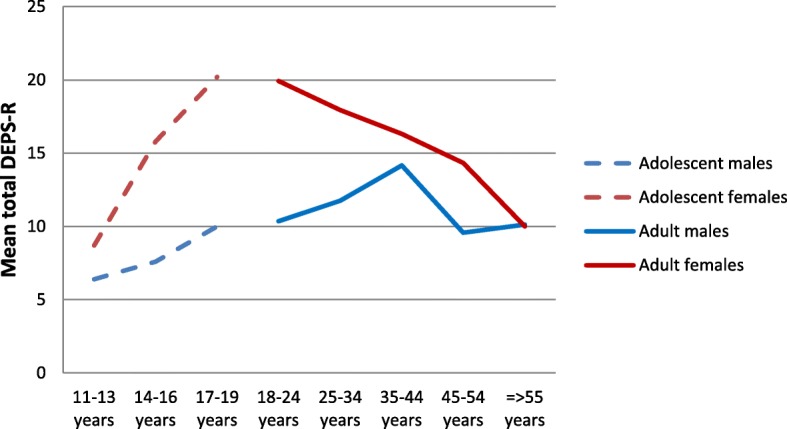
Results: A total of 20.3% of the whole sample (13.3% among males and 24.8% among females) scored above the DEPS-R cut-off score for DEB. As for depression and anxiety, the prevalence in the whole sample was 6.2% and 19.0%, respectively. The prevalence was generally higher in females than males across all psychopathology measures. HbA1c was significantly associated with the DEPS-R total score (p < .01) among females, but not with depression and anxiety. Mean DEPS-R score decreased with increasing age, and when our previous reported data from children and adolescents are included, a peak prevalence in DEB in adolescence and young adult age is demonstrated.
Conclusions: The results of this study point to the need for increased awareness of psychological comorbidity among adults with type 1 diabetes, in particular young adult females. Screening is recommended to secure early detection and subsequent intervention for these individuals.
Conflict of interest statement
The Regional Committees for Medical and Health Research Ethics approved the study, and written consent was obtained from all participants.Not applicableThe authors declare that they have no competing interests.Springer Nature remains neutral with regard to jurisdictional claims in published maps and institutional affiliations.
Figures
References
-
- American Psychiatric Association . The Diagnostic and Statistical Manual of Mental Disorders: DSM-5. Fifth. Washington DC: American Psychiatric Association; 2013.
-
- Nielsen S. Eating disorders in females with type 1 diabetes: an update of a meta-analysis. Eur Eat Disord Rev. 2002;10(4):241–254. doi: 10.1002/erv.474. - DOI
-
- Young V, Eiser C, Johnson B, Brierley S, Epton T, Elliott J, et al. Eating problems in adolescents with type 1 diabetes: a systematic review with meta-analysis. Diabet Med. 2012;30(2):189–98. - PubMed
LinkOut - more resources
Full Text Sources
Other Literature Sources
Research Materials
