


Ischemic Conditioning and neonatal hypoxic ischemic encephalopathy: a literature review
- PMID: 30215057
- PMCID: PMC6131706
Ischemic Conditioning and neonatal hypoxic ischemic encephalopathy: a literature review
Abstract
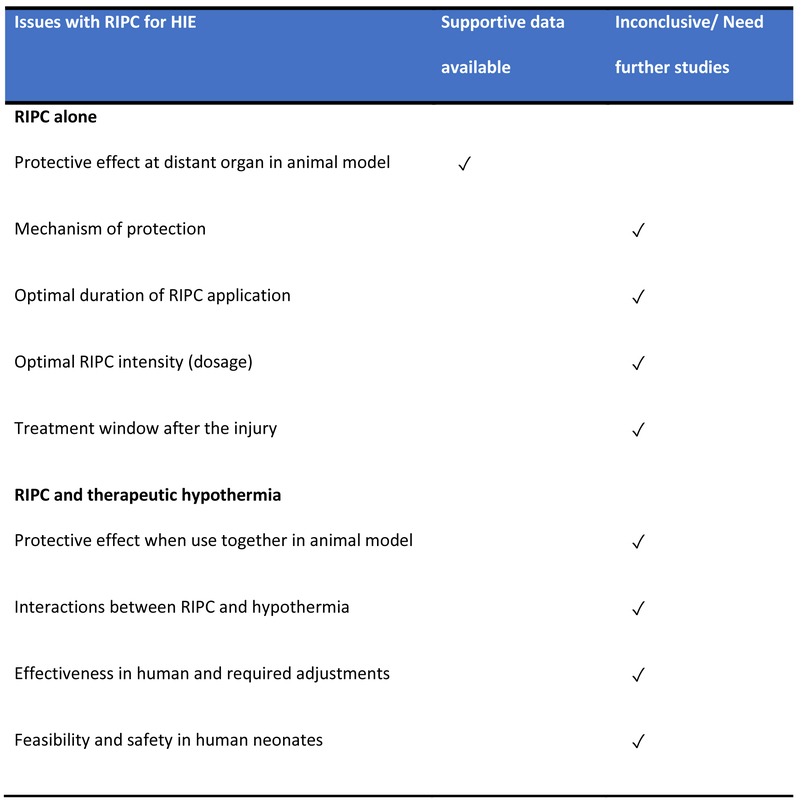
Hypoxic Ischemic Encephalopathy (HIE) is the result of severe anoxic brain injury during the neonatal period and causes life-long morbidity and premature mortality. Currently, therapeutic hypothermia immediately after birth is the standard of care for clinically relevant HIE. However, therapeutic hypothermia alone does not provide complete neuroprotection and there is an urgent need for adjunctive therapies. Ischemic conditioning is an adaptive process of endogenous protection in which small doses of sub-lethal ischemia can provide a protection against a lethal ischemic event. Remote Ischemic Post-conditioning (RIPC), a form of ischemic conditioning, is highly translatable for HIE diagnosed immediately after birth as the conditioned ischemic stimulus is applied at the limb after the lethal ischemic episode. A number of studies in neonatal rats have demonstrated that RIPC is effective at reducing injury in focal cerebral ischemia models and improves neurological outcomes. In this review, we focus on the available data on HIE and its current treatment, models in HIE studies, ischemic conditioning/RIPC and its mechanism. We discuss in particular the effect of RIPC on neonatal brain with HIE. We postulate that combining RIPC with standard therapeutic hypothermia can be an attractive therapeutic approach for HIE.
Keywords: hypothermia; hypoxic ischemic encephalopathy; remote ischemic post-conditioning.
Figures
References
-
- Alka T (2009, October). Neuroprotective effects of ischemic tolerance (preconditioning) and postconditioning. Turk Neurosurg, 19(4), 406–12. - PubMed
-
- Alkan T, Goren B, Vatansever E, & Sarandol E (2008). Effects of hypoxic preconditioning in antioxidant enzyme activities in hypoxic-ischemic brain damage in immature rats. Turk. Neurosurg, 18, 165–171. - PubMed
-
- Amess P, Penrice J, Cady E, Lorek A, Wylezinska M, Cooper C, … Reynolds E (1997). Mild hypothermia after severe transient hypoxia-ischemia reduces the delayed rise in cerebral lactate in the newborn piglet. Pediatr Res, 41, 803–808. - PubMed
-
- Azzopardi D, Strohm B, Edwards A, Dyet L, Halliday H, Juszczak E, … Brocklehurst P (2009). Moderate hypothermia to treat perinatal asphyxial encephalopathy. N Engl J Med, 361, 1349–1358. - PubMed
-
- Bona E, Hagberg H, Loberg E, Bagenholm R. a., & Thoresen M (1998). Protective effects of moderate hypothermia after neonatal hypoxiaischemia: Short- and long-term outcome. Pediatr Res, 43, 738–745. - PubMed
Grants and funding
LinkOut - more resources
Full Text Sources