


Evaluating the Use of Silicone Wristbands To Measure Personal Exposure to Brominated Flame Retardants
- PMID: 30216050
- PMCID: PMC6445795
- DOI: 10.1021/acs.est.8b03755
Evaluating the Use of Silicone Wristbands To Measure Personal Exposure to Brominated Flame Retardants
Abstract
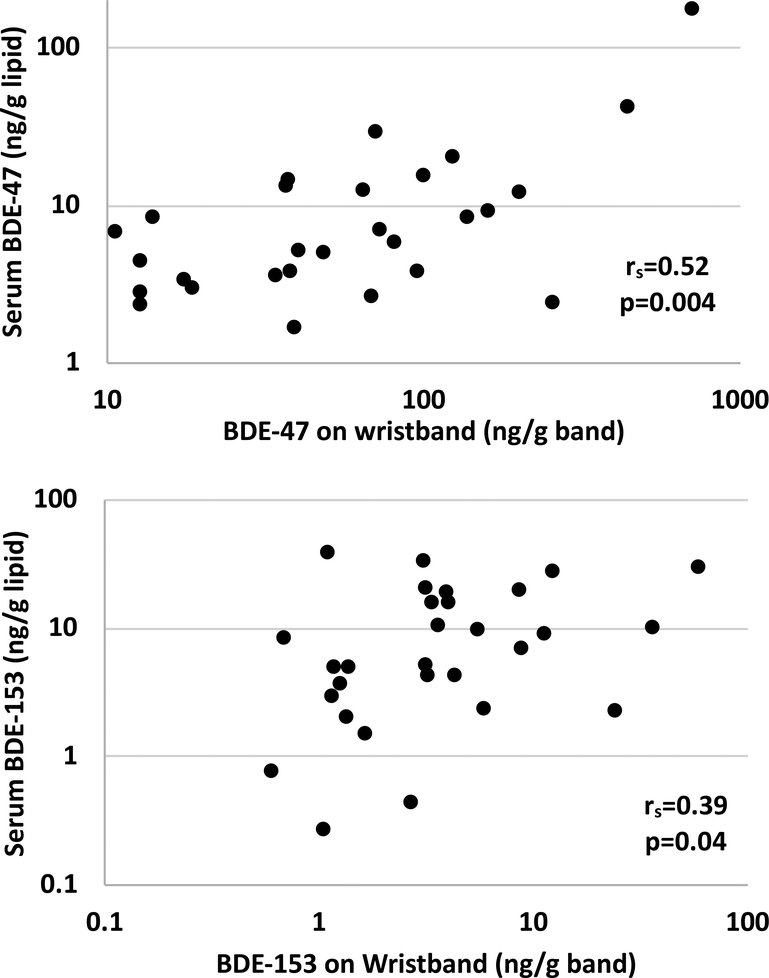
Biomarkers remain the gold standard for assessing chemical exposure. However, silicone wristbands may provide some added benefits for characterizing personal exposures compared to single biomarker measurements, such as decreased costs, noninvasive sampling, and increased ease of analysis. Previously, we validated their use in characterizing exposure to organophosphate flame retardants (PFRs). However, it is unclear whether these results would extend to chemicals like polybrominated diphenyl ethers (PBDEs), which biomagnify and have longer half-lives than PFRs in the body. This study sought to determine if accumulation of PBDEs on wristbands was correlated to serum biomarkers. Adult participants ( n = 30) provided serum samples and wore wristbands for 7 days. PBDEs and 6 novel brominated flame retardants (BFRs) were measured on wristbands, and serum samples were analyzed for PBDE biomarkers. Like most PBDE congeners, 5 of 6 novel BFRs were frequently detected on wristbands (≥90% of bands). In particular, decabromodiphenyl ethane (DBDPE) was detected in all wristbands in this study and was significantly correlated with BDE-209, suggesting a similar source and exposure pathway. Wristband levels of BDE-47, -99, -100, and -153 were significantly and positively associated with respective serum biomarkers ( rs = 0.39-0.57, p < 0.05). This study demonstrates that silicone wristbands can accurately detect personal PBDE exposures.
Conflict of interest statement
All of the authors declare no competing financial interest.
Figures
References
-
- Rahman F; Langford KH; Scrimshaw MD; Lester JN Polybrominated diphenyl ether (PBDE) flame retardants. Sci. Total Environ 2001, 275 (1–3), 1–17. - PubMed
-
- U.S. EPA Design for the Environment. An Alternatives Assessment for the Flame Retardant Decabromodiphenyl Ether (DecaBDE); 2014.
-
- Cooper EM; Kroeger G; Davis K; Clark CR; Ferguson PL; Stapleton HM Results from Screening Polyurethane Foam Based Consumer Products for Flame Retardant Chemicals: Assessing Impacts on the Change in the Furniture Flammability Standards. Environ. Sci. Technol 2016, 50 (19), 10653–10660. - PMC - PubMed
-
- Toxic Free Future; Clean Production Action. TV Reality: Toxic Flame Retardants in TVs; 2017.
Publication types
MeSH terms
Substances
Grants and funding
LinkOut - more resources
Full Text Sources
Other Literature Sources
