. 2018 Sep 13;18(9):3080.
doi: 10.3390/s18093080.

Unobtrusive Vital Sign Monitoring in Automotive Environments-A Review

Affiliations

Unobtrusive Vital Sign Monitoring in Automotive Environments-A Review

Steffen Leonhardt et al. Sensors (Basel). .

Abstract

This review provides an overview of unobtrusive monitoring techniques that could be used to monitor some of the human vital signs (i.e., heart activity, breathing activity, temperature and potentially oxygen saturation) in a car seat. It will be shown that many techniques actually measure mechanical displacement, either on the body surface and/or inside the body. However, there are also techniques like capacitive electrocardiogram or bioimpedance that reflect electrical activity or passive electrical properties or thermal properties (infrared thermography). In addition, photopleythysmographic methods depend on optical properties (like scattering and absorption) of biological tissues and-mainly-blood. As all unobtrusive sensing modalities are always fragile and at risk of being contaminated by disturbances (like motion, rapidly changing environmental conditions, triboelectricity), the scope of the paper includes a survey on redundant sensor arrangements. Finally, this review also provides an overview of automotive demonstrators for vital sign monitoring.

Keywords: PPG imaging; RADAR; ballistocardiography; capacitive electrocardiogram; car seat, driver state monitoring; eddy currents; electrocardiogram; infrared thermography; magnetic impedance; photoplethysmography; steering wheel; unobtrusive monitoring techniques; vehicle.


Conflict of interest statement

The authors declare no conflict of interest.

Figures
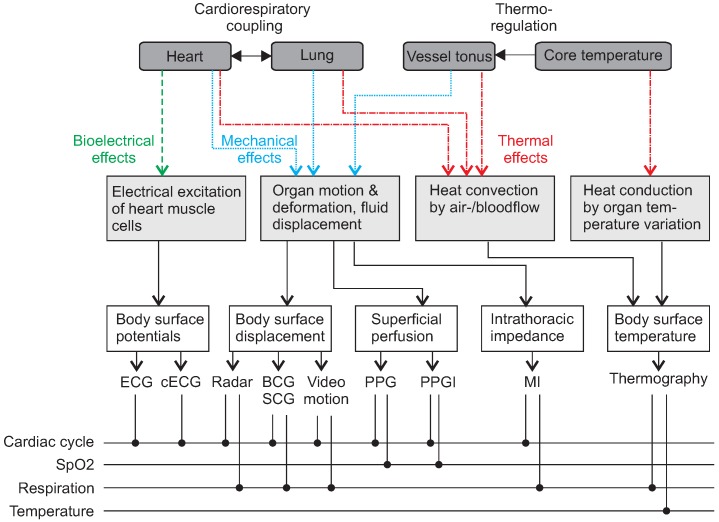
Figure 1
Figure 1
Overview of physiological sources, effects, unobtrusive and non-contact sensors, and obtainable vital signals, modified and extended from [3] (see Figure 1).
Figure 2
Figure 2
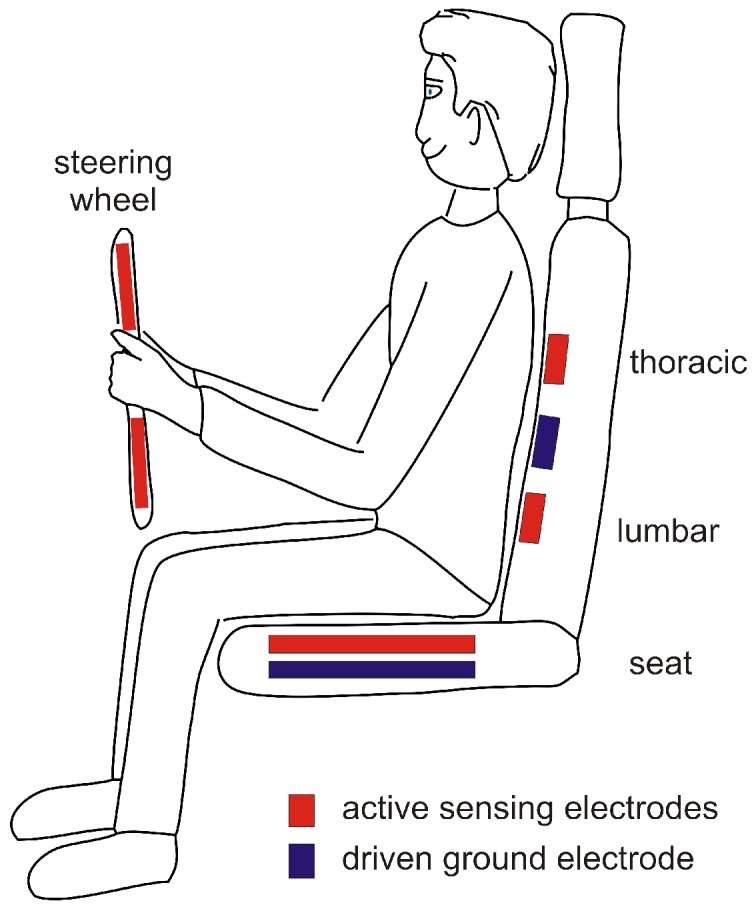
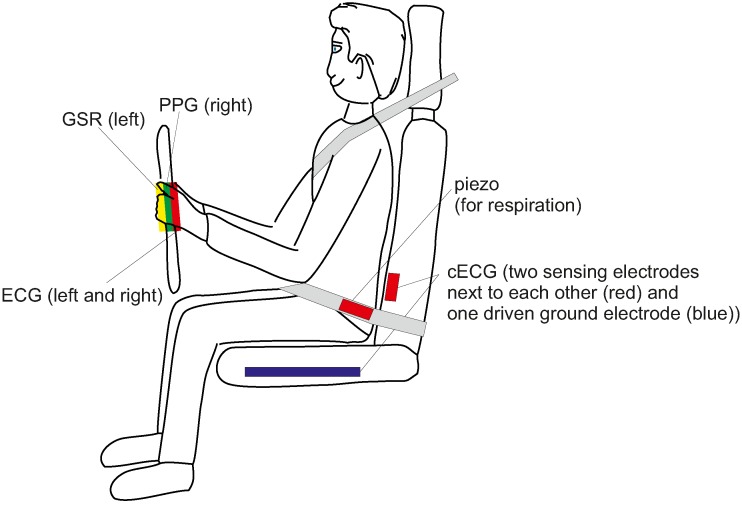
Electrode locations for conductive and low-contact ECG monitoring around a car seat. Red blocks indicate tested locations for sensing electrodes, blue blocks indicate published locations for the driven ground electrode.
Figure 3
Figure 3
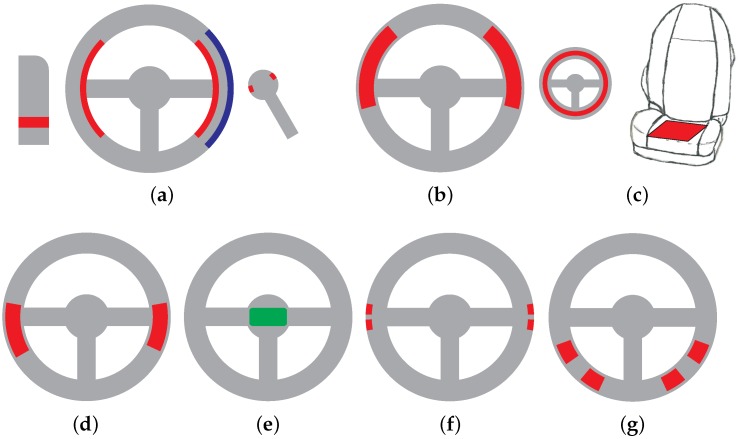
Overview of several designs for contact-based ECG monitoring (red: active electrodes, blue: driven ground electrode, green: electronics, precise electrode position on steering wheel not revealed): (a) Jeong [20]; (b) Lee [21], Silva [29], Vavrinsky [30,31]; (c) Matsuda [32], Xu [33]; (d) Heuer [25]; (e) D’Angelo [27]; (f) Gomez-Clapers [28]; (g) Jung [24].
Figure 4
Figure 4
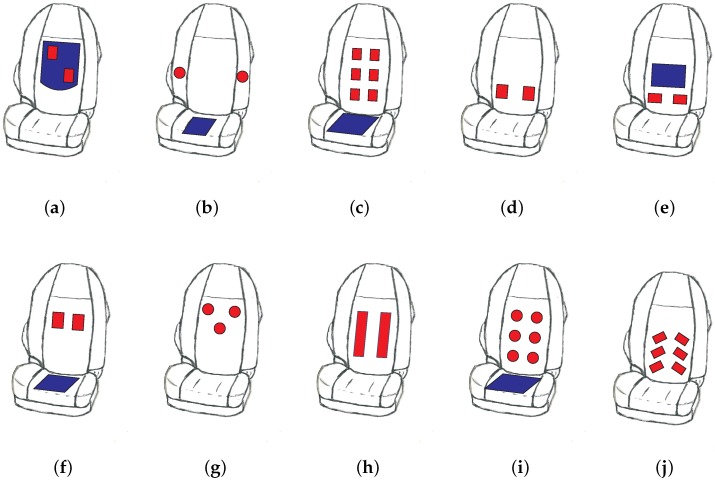
Overview of several low-contact ECG electrode arrangements and their year of introduction to the public (red: active electrodes, blue: driven ground electrode). (a) SMART seat (Leonhardt, 2008) [42]; (b) Daimler S-Class (Chamadiya, 2008) [43]; (c) Ford S-Max (Eilebrecht, 2011) [44]; (d) Daimler car (Chamadiya, 2011) [58]; (e) Audi Q5 (Schneider, 2012) [48]; (f) Car seat (Jung, 2012) [49]; (g) EPIC System (Plessey, 2014) [59]; (h) Ford S-Max (Leicht, 2014) [60]; (i) Ford car (Leicht, 2015) [61]; (j) WARDEN (Plessey, 2017) [52].
Figure 5
Figure 5
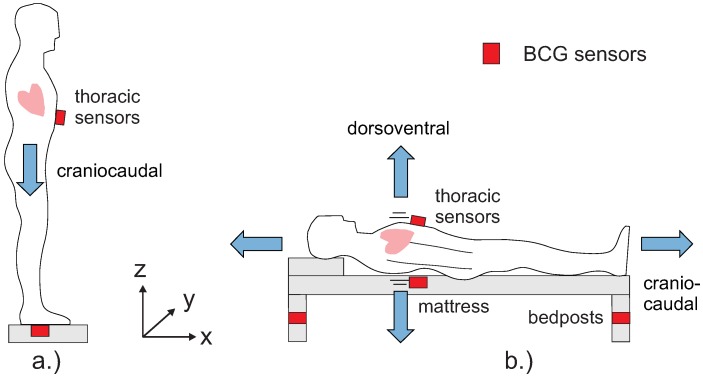
Potential BCG sensor locations: (a) measuring cardiac acitivity on a weighing scale (craniocaudal component of the BCG momentum); (b) measuring both cardiac and respiratory activiy in bed (dorsoventral component of the BCG momentum).
Figure 6
Figure 6
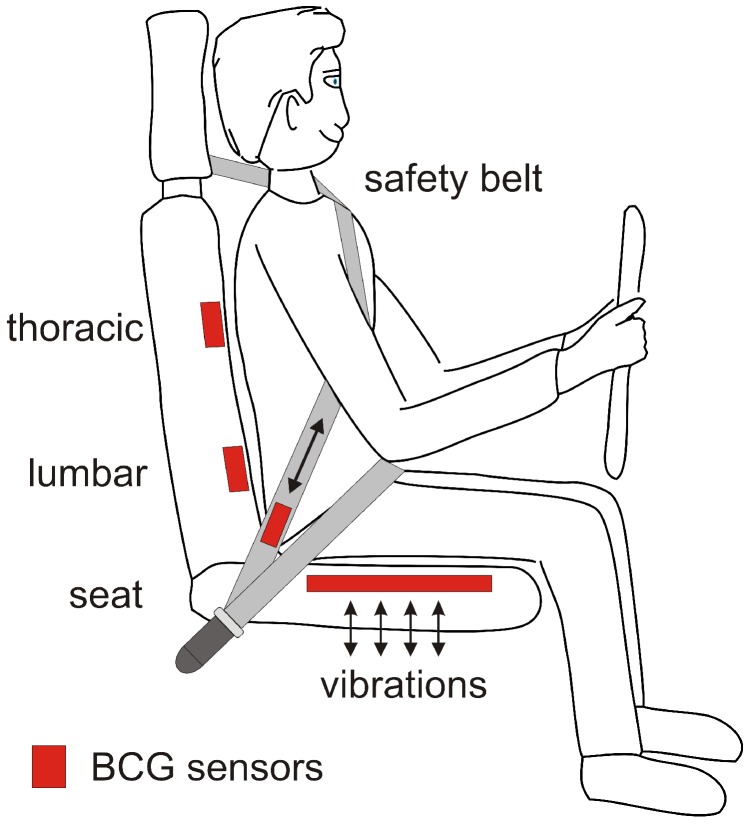
Potential BCG sensor locations in a car seat. Note that the lumbar and especially the thoracic sensor location in the backrest are likely to have contact problems. By contrast, sensors in the seating area as well as in the safety belts will face vibrations coupled from the vehicle body.
Figure 7
Figure 7
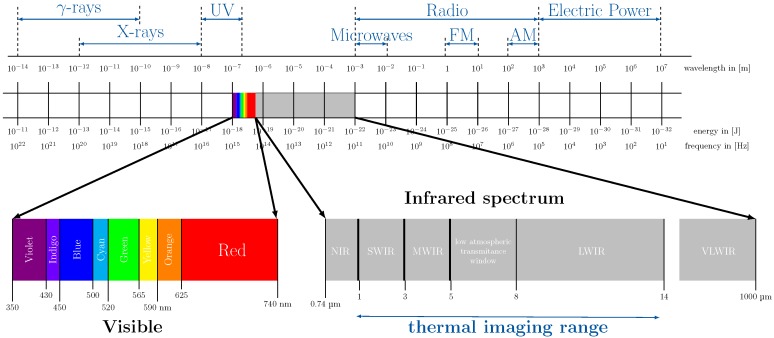
Frequency ranges (VIS, NIR, FIR) usable for optical monitoring techniques.
Figure 8
Figure 8
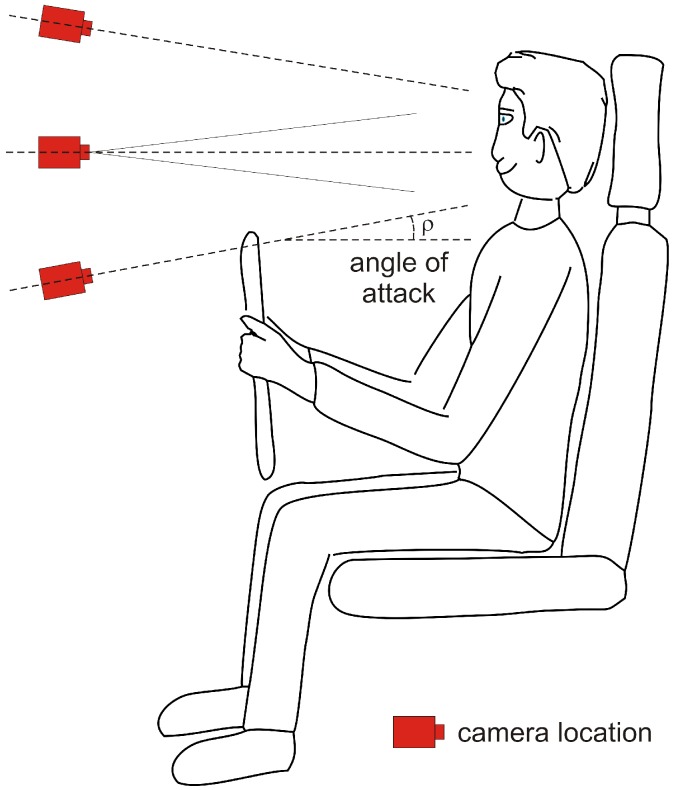
Proper locations for cameras. Locations can be differentiated by the angle of attack ρ.
Figure 9
Figure 9
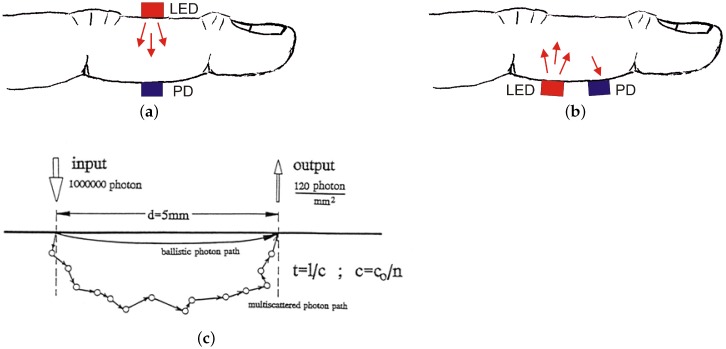
LED and PD placement for transmissive and reflective photoplethysmography. In reflective mode, on average only 50 out of 106 photons leave the tissue to reach the PD. (a) transmissive PPG (tPPG); (b) reflective PPG (rPPG); (c) typical banana-shaped pathways of scattered photons in rPPG.
Figure 10
Figure 10
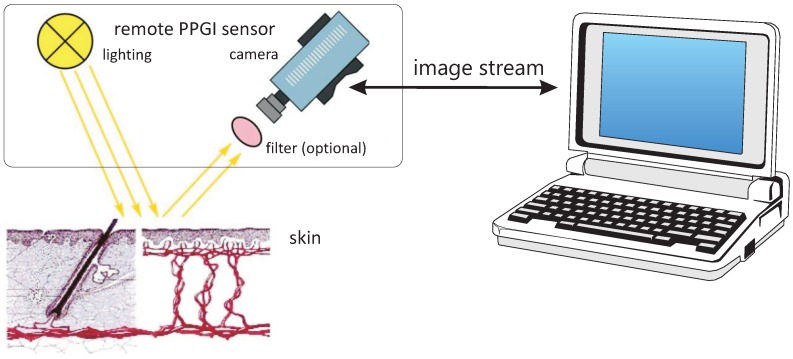
Principle of PPG imaging (PPGI).
Figure 11
Figure 11
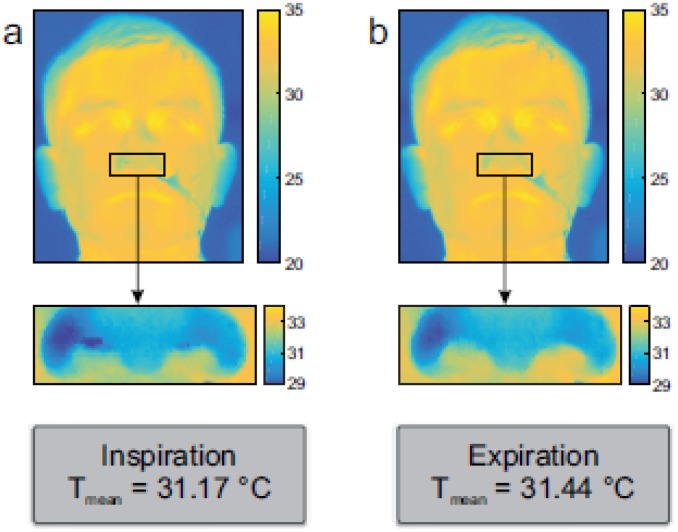
Temperature variation around the nostrils during inspiration and expiration. Thermograms of the nose during (a) inhalation and (b) exhalation from [127] (Figure 1).
Figure 12
Figure 12
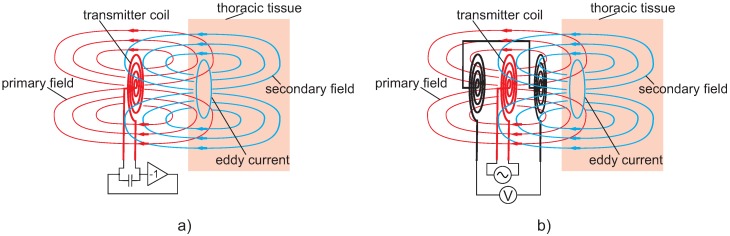
Principle of magnetic induction monitoring. (a) single coil approach with frequency modulation and (b) multi-coil approach based on a gradiometer.
Figure 13
Figure 13
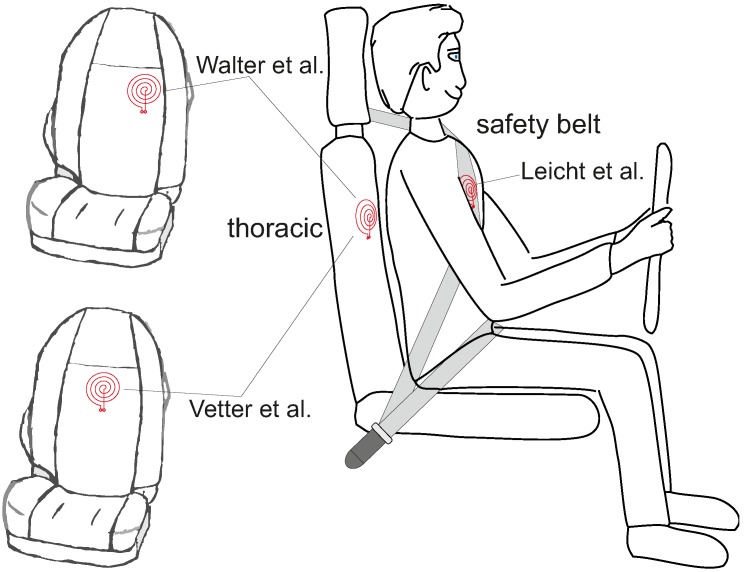
Coil locations of published in-car MI monitoring systems.
Figure 14
Figure 14
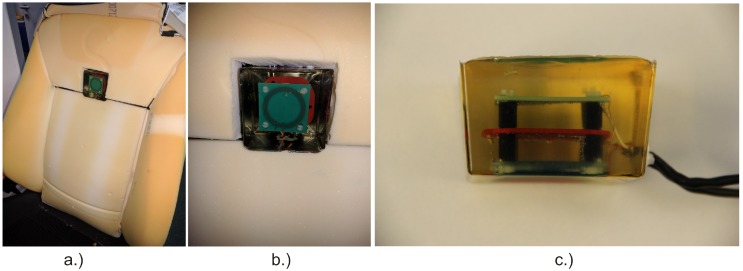
Gradiometer sensor inside a resin block integrated into the driver seat (a), modified and extended from [165]. Middle and right figure are magnified views of the sensor from top (b) and from the side (c) showing the spatial structure of the gradiometer.
Figure 15
Figure 15
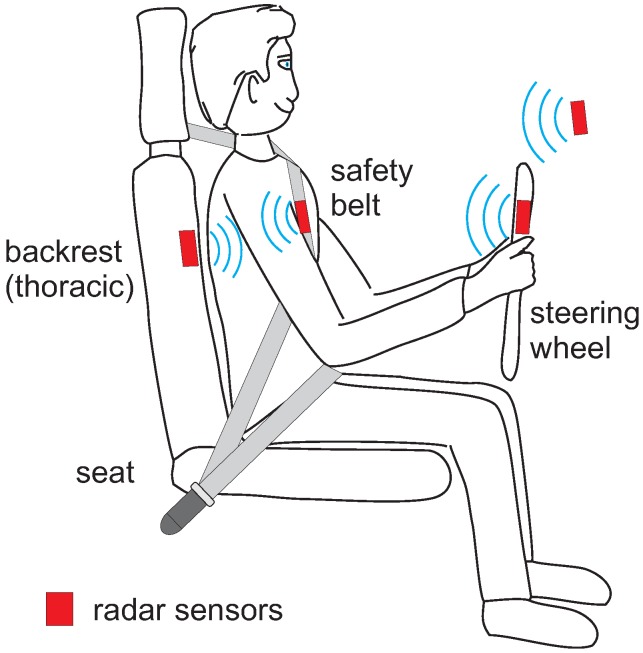
Potential locations of radar sensors inside a car.
Figure 16
Figure 16
Early concept for sensor fusion inside the U-car [34].

References

    1. Anonymous. Vital Signs (Wikipedia Article) [(accessed on 14 May 2018)]; Available online: https://en.wikipedia.org/wiki/Vital_signs.
    1. Elliott M., Coventry A. Critical care: The eight vital signs of patient monitoring. Br. J. Nurs. 2012;21:621–625. doi: 10.12968/bjon.2012.21.10.621. - DOI - PubMed
    1. Brueser C., Hoog Antink C., Wartzek T., Walter M., Leonhardt S. Ambient and Unobtrusive Cardiorespiratory Monitoring Techniques. IEEE Rev. Biomed. Eng. 2015;8:30–43. doi: 10.1109/RBME.2015.2414661. - DOI - PubMed
    1. Naziyok T.P., Zeleke A.A., Röhrig R. Contactless Patient Monitoring for General Wards: A Systematic Technology Review. Stud. Health Technol. Inform. 2016;228:707–711. - PubMed
    1. Zaunseder S., Henning A., Wedekind D., Trumpp A., Malberg H. Unobtrusive acquisition of cardiorespiratory signals—Available techniques and perspectives for sleep medicine. Somnologie. 2017;21:93–100. doi: 10.1007/s11818-017-0112-x. - DOI