


Cluster analysis of hemorrhagic disease in Missouri's white-tailed deer population: 1980-2013
- PMID: 30217140
- PMCID: PMC6137738
- DOI: 10.1186/s12898-018-0188-6
Cluster analysis of hemorrhagic disease in Missouri's white-tailed deer population: 1980-2013
Abstract
Background: Outbreaks of deer hemorrhagic disease (HD) have been documented in the USA for many decades. In the year 2012, there was a severe HD outbreak in Missouri with mortalities reaching approximately 6.9 per thousand. Moreover, Missouri accounted for more than 43% of all reported epizootic HD cases in captive white-tailed deer. Using the data of suspected HD occurrence in Missouri, the primary goal of this paper was to determine if HD in Missouri's white-tailed deer occurs in spatial clusters.
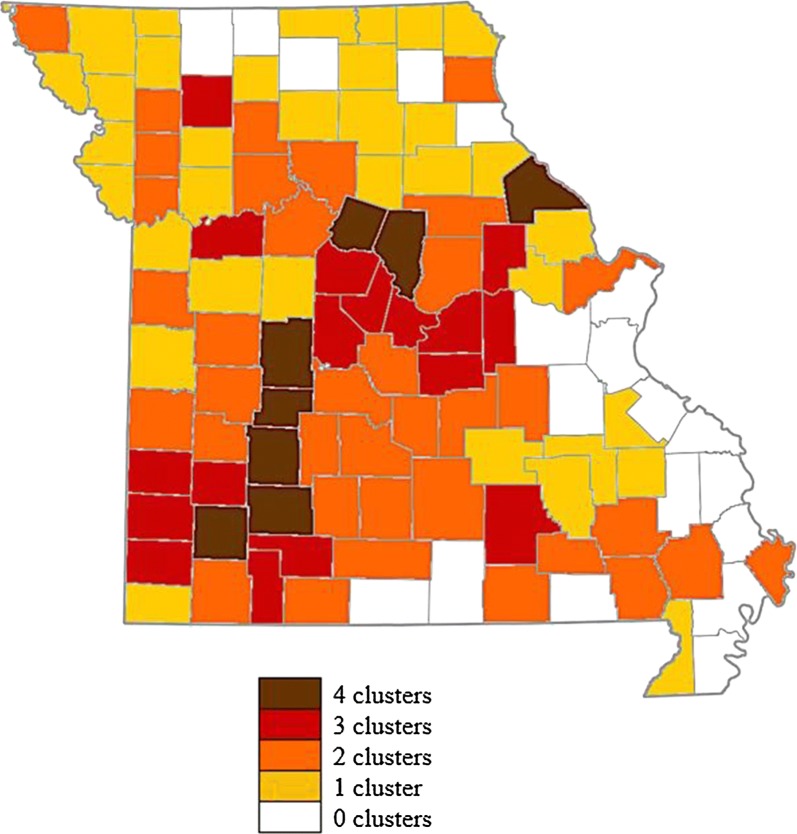
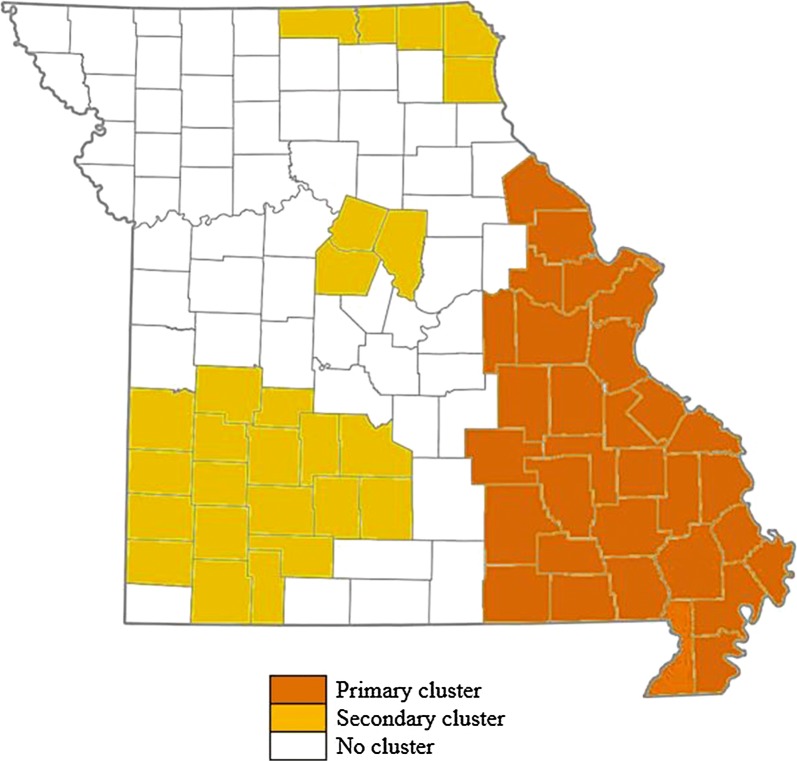
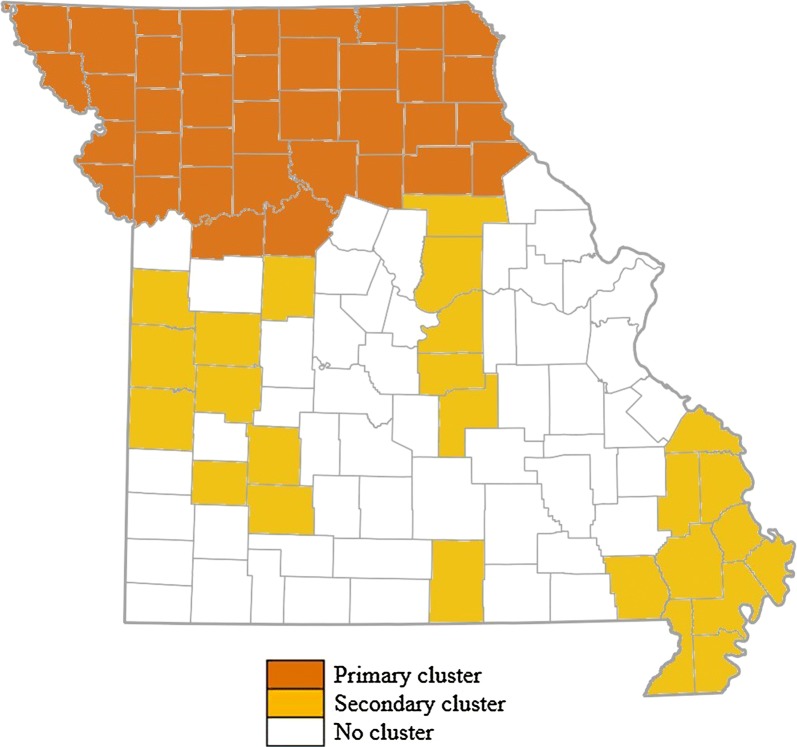
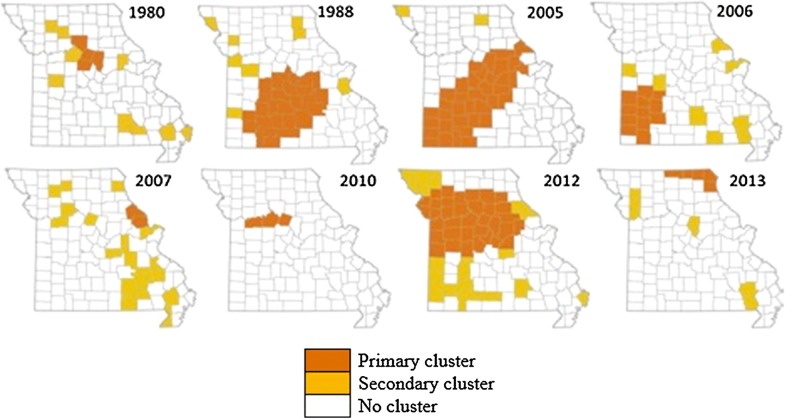
Results: The main results of the cluster analysis are as follows. First, the spatial clusters of years 1980, 1988, 2005-2007, 2010, 2012, and 2013 suggest patterns of outbreaks every 6-8 years, with a potential outbreak in years 2018-2020. Secondly, these spatial clusters were more frequent in the central and southern counties.
Conclusions: The clustering analyses employed in this study have potential applications for improving surveillance programs and designing early warning systems for effective deer population management and potentially reducing the number of HD cases.
Keywords: Cluster analysis; Culicoides midges; Hemorrhagic disease; Missouri; SaTScan; White-tailed deer.
Figures
References
-
- Nettles VF, Stallknecht DE. History and progress in the study of hemorrhagic disease of deer. Trans N Am Wildl Nat Resour. 1992;57:499–516.
-
- Hoff G, Trainer DO. Hemorrhagic disease in wild ruminants. In: Davis JW, Karstad LH, Trainer DO, editors. Infectious diseases of wild mammals. Ames: Iowa State University Press; 1981. pp. 45–53.5.
Publication types
MeSH terms
Grants and funding
LinkOut - more resources
Full Text Sources
Other Literature Sources
