


Palmitoyl ascorbic acid 2-glucoside has the potential to protect mammalian cells from high-LET carbon-ion radiation
- PMID: 30218013
- PMCID: PMC6138748
- DOI: 10.1038/s41598-018-31747-1
Palmitoyl ascorbic acid 2-glucoside has the potential to protect mammalian cells from high-LET carbon-ion radiation
Abstract
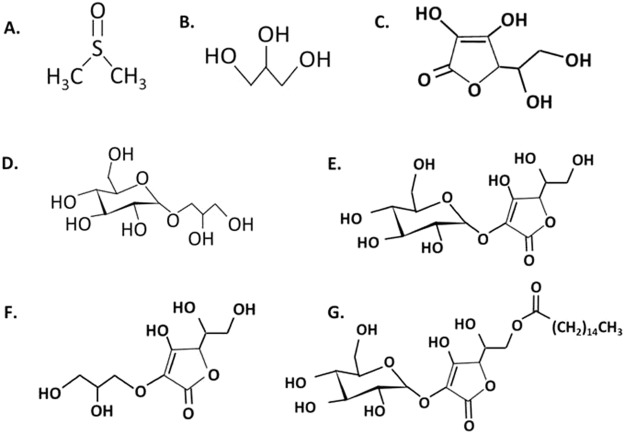
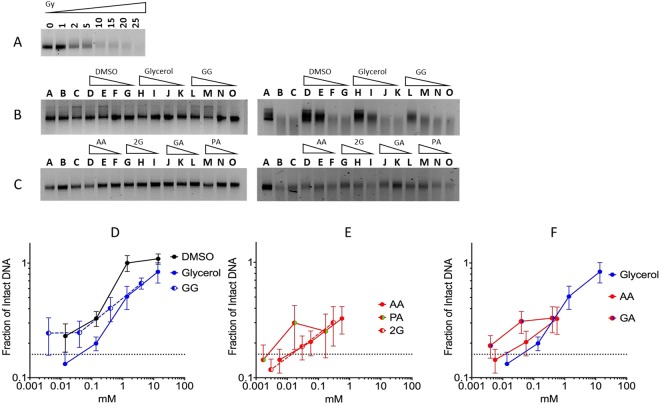
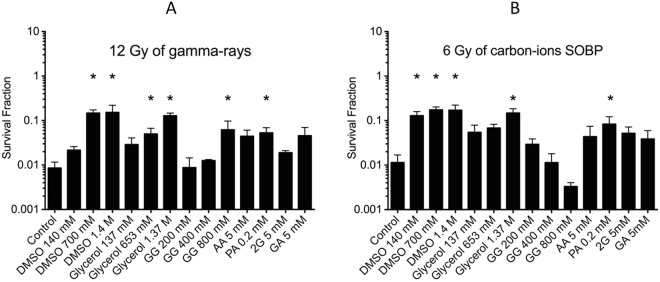
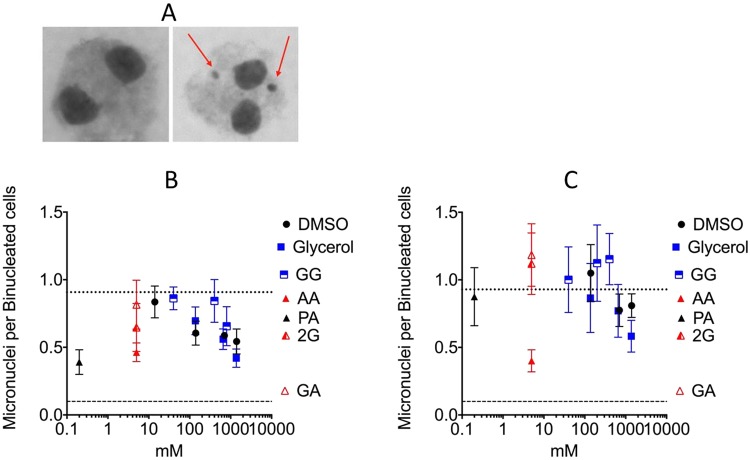
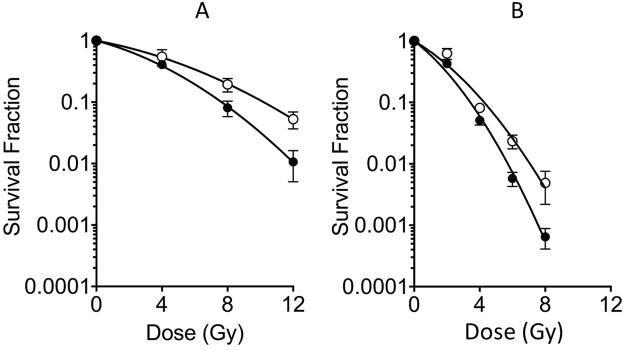
DMSO, glycerol, and ascorbic acid (AA) are used in pharmaceuticals and known to display radioprotective effects. The present study investigates radioprotective properties of novel glyceryl glucoside, ascorbic acid 2-glucoside, glyceryl ascorbate, and palmitoyl ascorbic acid 2-glucoside (PA). Gamma-rays or high-LET carbon-ions were irradiated in the presence of tested chemicals. Lambda DNA damage, cell survival, and micronuclei formation of CHO cells were analyzed to evaluate radioprotective properties. Radiation-induced Lambda DNA damage was reduced with chemical pre-treatment in a concentration-dependent manner. This confirmed tested chemicals were radical scavengers. For gamma-irradiation, enhanced cell survival and reduction of micronuclei formation were observed for all chemicals. For carbon-ion irradiation, DMSO, glycerol, and PA displayed radioprotection for cell survival. Based on cell survival curves, protection levels by PA were confirmed and comparable between gamma-rays and high-LET carbon-ions. Micronuclei formation was only decreased with AA and a high concentration of glycerol treatment, and not decreased with PA treatment. This suggests that mechanisms of protection against high-LET carbon-ions by PA can differ from normal radical scavenging effects that protect DNA from damage.
Conflict of interest statement
The authors declare no competing interests.
Figures
References
-
- Husain N, Kumar A. Reactive oxygen species and natural antioxidants: a review. Adv. Biores. 2012;3:164–175.
Publication types
MeSH terms
Substances
Grants and funding
LinkOut - more resources
Full Text Sources
Other Literature Sources
Medical
