Review
. 2018 Nov;14(11):637-655.
doi: 10.1038/s41574-018-0076-3.

Role of phosphate sensing in bone and mineral metabolism

Affiliations
Review

Role of phosphate sensing in bone and mineral metabolism

Sampada Chande et al. Nat Rev Endocrinol. 2018 Nov.

Abstract

Inorganic phosphate (Pi) is essential for signal transduction and cell metabolism, and is also an essential structural component of the extracellular matrix of the skeleton. Pi is sensed in bacteria and yeast at the plasma membrane, which activates intracellular signal transduction to control the expression of Pi transporters and other genes that control intracellular Pi levels. In multicellular organisms, Pi homeostasis must be maintained in the organism and at the cellular level, requiring an endocrine and metabolic Pi-sensing mechanism, about which little is currently known. This Review will discuss the metabolic effects of Pi, which are mediated by Pi transporters, inositol pyrophosphates and SYG1-Pho81-XPR1 (SPX)-domain proteins to maintain cellular phosphate homeostasis in the musculoskeletal system. In addition, we will discuss how Pi is sensed by the human body to regulate the production of fibroblast growth factor 23 (FGF23), parathyroid hormone and calcitriol to maintain serum levels of Pi in a narrow range. New findings on the crosstalk between iron and Pi homeostasis in the regulation of FGF23 expression will also be outlined. Mutations in components of these metabolic and endocrine phosphate sensors result in genetic disorders of phosphate homeostasis, cardiomyopathy and familial basal ganglial calcifications, highlighting the importance of this newly emerging area of research.


Conflict of interest statement

Competing interests

The authors declare no competing interests.

Figures
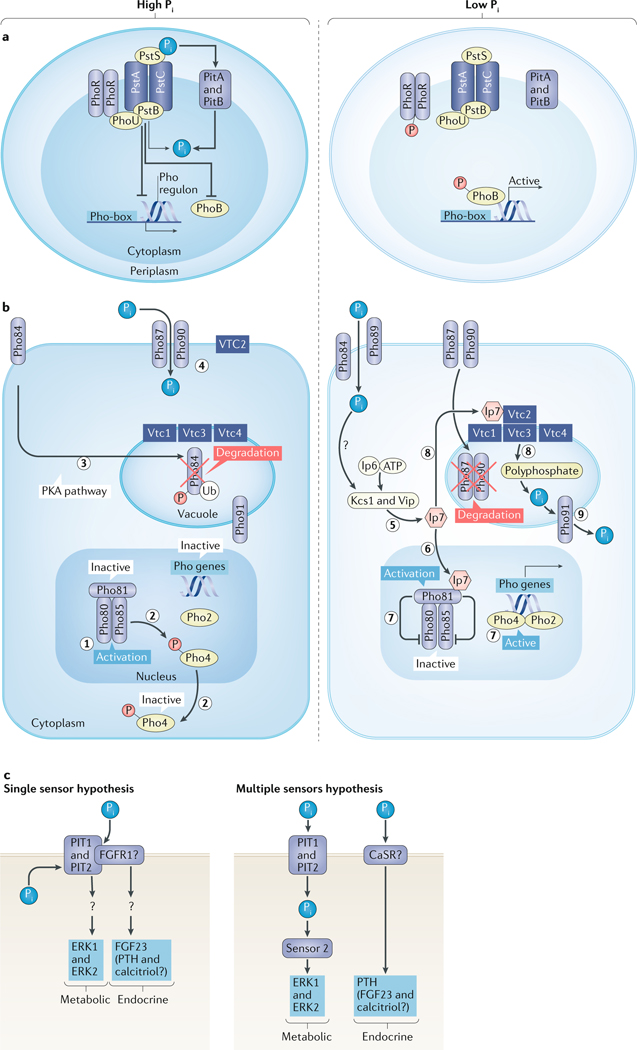
Fig. 1 |
Fig. 1 |. Pi sensing pathways.
a | Pi sensing in bacteria. High Pi levels are sensed by PstS. Then, together with the Pst–ABC complex (PstA, PstB and PstC), it forms a plasma membrane protein complex in the bacterial inner membrane that stimulates the binding of PhoU to PhoB and PhoR. This process inactivates the transcription factor PhoB and the Pho regulon. The low-affinity Pi transporters 1 and 2 (PitA and PitB) facilitate uptake of Pi for cellular metabolism. Under low Pi conditions, PhoR is autophosphorylated and phosphorylates PhoB and activates the Pho box, allowing downstream activation of the Pho regulon. b | In yeast, high Pi levels activate the Pho80 and Pho85 cyclin–cyclin-dependent kinase complex (1), which results in the phosphorylation and export of Pho4 into the cytosol (2) and inactivation of the yeast Pho regulon. The high-affinity Pi transporter and sensor Pho84 is internalized and degraded (3), whereas the low-affinity Pi transporters Pho87 and Pho90 are responsible for Pi uptake in high Pi conditions (4). Low Pi levels stimulate synthesis of Ip7 by the yeast inositol hexakisphosphate (Ip6) kinase 1 (Kcs1) and Vip (5), which activates Pho81 (6). Pho81 inhibits Pho80 and Pho85, preventing phosphorylation of Pho4, resulting in the association of Pho4 with Pho2 (7) in the nucleus to activate the Pho regulon. Ip7 also stimulates Vtc proteins 1–4, which stimulate polyphosphate synthesis from ATP (8) and the conversion of polyphosphate into Pi by endopolyphosphatase (Phm5). Pi is transported by Pho91 from the vacuole to the cytosol (9), thereby indirectly using ATP to supply Pi for metabolic processes. Pho84 and Pho89 are responsible for Pi uptake in low Pi condition, whereas Pho87 and Pho90 are internalized and degraded. c | Metabolic Pi sensing in mammalian cells is mediated by PIT1 and/or PIT2, resulting in activation of the ERK1 and ERK2 pathway, which might also have a role in endocrine Pi sensing but could require co-receptors (single sensor hypothesis), possibly FGFR1, which was shown to be activated by Pi and might regulate FGF23 secretion by osteocytes. Alternatively, endocrine Pi sensing might involve the calcium-sensing receptor (CaSR) or other molecules as a second sensor (multiple sensor hypothesis), which might mediate secondary hyperparathyroidism in the parathyroids. Question marks indicate unknown mechanisms or sensors. P, phosphate; PTH, parathyroid hormone; Ub, ubiquitin.
Fig. 2 |
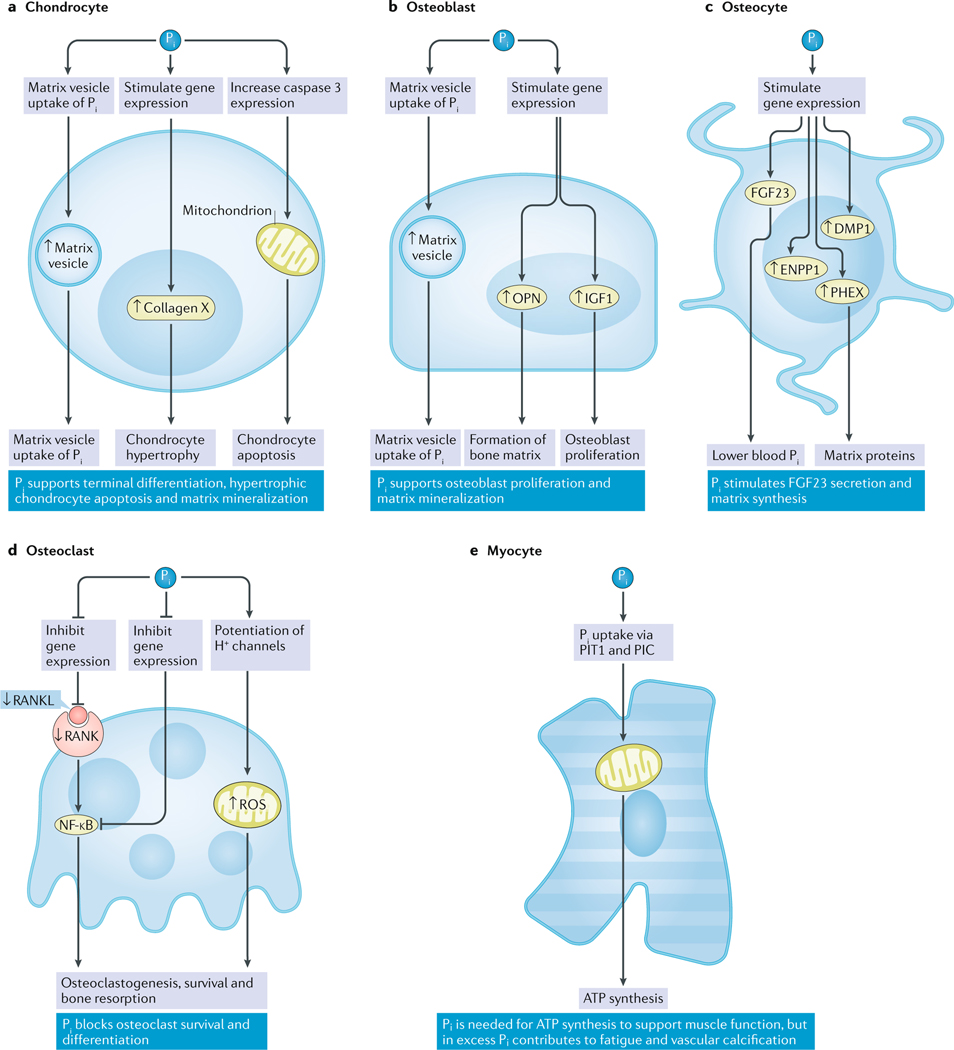
Fig. 2 |. Regulation of bone cell function and matrix mineralization by Pi.
a | In chondrocytes, Pi stimulates the expression of hypertrophic chondrocyte markers (that is, collagen X) and induces apoptosis via the mitochondrial caspase 3 pathway in an ERK1-dependent and ERK2-dependent fashion. Pi also stimulates PIT1-dependent matrix vesicle mineralization. b | In osteoblasts, Pi induces the expression of osteopontin (OPN) through an ERK1-dependent and ERK2-dependent mechanism to support the formation of bone matrix. Pi also stimulates IGF1 secretion, which increases osteoblast proliferation in an autocrine fashion. c | In osteocytes, DMP1, ENPP1 and PHEX expression are stimulated by Pi (REF.), which also induces the secretion of bioactive intact FGF23 (REF.). d | In osteoclasts, Pi reduces gene expression of RANKL and thereby suppresses RANK, which results in the inhibition of osteoclastogenesis and bone resorption. Pi also induces the production of ROS, possibly through proton (H+) channels, which increases osteoclast function and survival. e | In myocytes, Pi is important for the function of the mitochondrial respiratory chain and ATP synthesis. This process is possibly due to the function of the muscle-specific isoform of PIC, which mediates mitochondrial uptake of Pi (REF.), and PIT1 (REF.). ↑, upregulation; ↓, downregulation.
Fig. 3 |
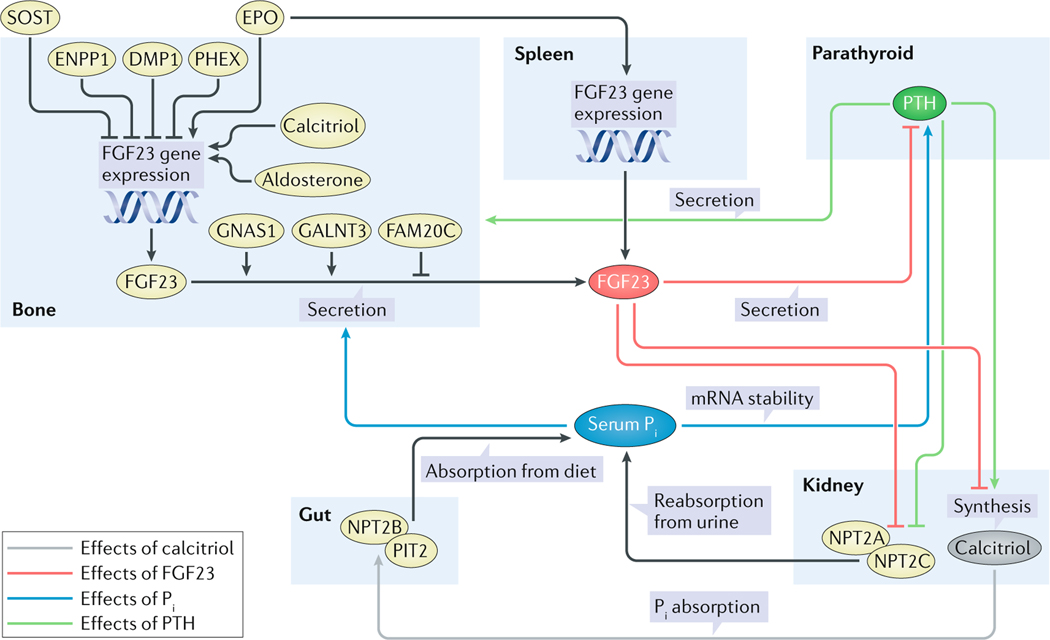
Fig. 3 |. Endocrine regulation of Pi homeostasis.
Serum Pi stimulates secretion of bioactive FGF23 in osteoblasts and osteocytes (blue arrow), which directly or indirectly acts at the proximal tubule of the kidneys to inhibit synthesis of calcitriol and the function of NPT2A and NPT2C (red arrows). Inhibition of calcitriol reduces absorption of Pi from the diet in the gut (grey arrow) and mobilization of Pi from bone mineral. Downregulation of NPT2A and NPT2C reduces renal phosphate reabsorption (black arrows). The net effect of FGF23 action is to lower blood levels of Pi. Similar to FGF23, parathyroid hormone (PTH) downregulates NPT2A and NPT2B and reduces renal phosphate reabsorption (green arrows). However, different from FGF23, PTH induces calcitriol and bone turnover, which increase blood Pi (green arrows). However, the net effect of PTH is to lower blood levels of Pi. Although not completely understood, FAM20C, DMP1, ENPP1 and PHEX reduce FGF23 expression or secretion whereas phosphate, iron deficiency, erythropoietin (EPO), GALNT3 and GNAS1 stimulate it (black arrows),. In addition, sclerostin (SOST) seems to negatively regulate FGF23 (black arrows). Furthermore, EPO might directly upregulate FGF23 gene expression in myeloid lineage stem cells of the spleen, providing a link to iron homeostasis (black arrows). PTH is suppressed by FGF23 in rodents but not in humans (red arrow).
Fig. 4 |
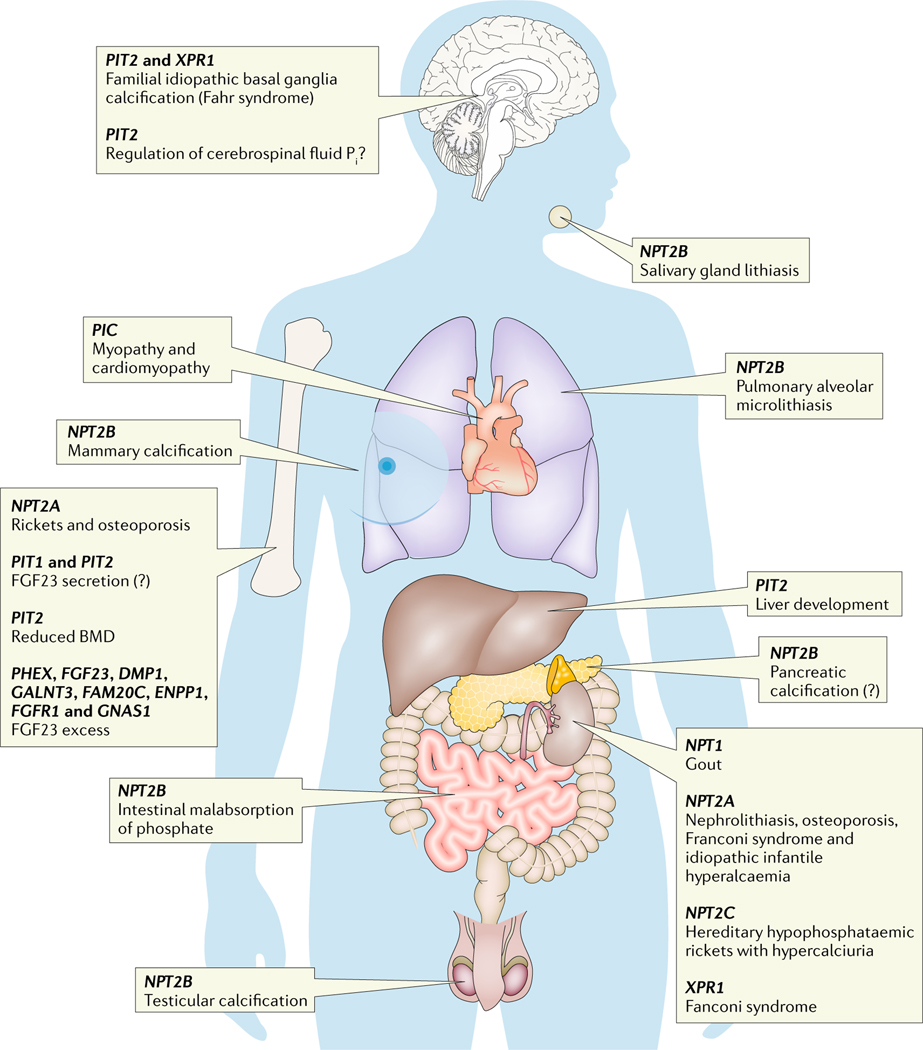
Fig. 4 |. Diseases of phosphate homeostasis organized by organ system.
Linkage analysis in human disorders of inorganic phosphate (Pi) homeostasis, cardiomyopathy and familial basal ganglial calcifications identified several novel genes important for the regulation of Pi homeostasis. DMP1, dentin matrix acidic phosphoprotein 1; ENPP1, ectonucleotide pyrophosphatase-phosphodiesterase family member 1; FAM20C, Golgi-associated secretory pathway kinase; FGF23, fibroblast growth factor 23; FGFR1, FGF receptor 1; GALNT3, polypeptide N-acetylgalactosaminyltransferase 3; GNAS1, guanine nucleotide-binding protein G(s), subunit α; NPT1, sodium-dependent phosphate transport protein 1; NPT2A, sodium-dependent phosphate transport protein 2A; PHEX, phosphate-regulating endopeptidase homologue, X-linked; PIT, sodium-dependent Pi transporter; SLC25A3, solute carrier family 25 member 3; XPR1, xenotropic and polytropic retrovirus receptor 1. Question mark indicates unknown.

References

    1. Bevington A., Kemp GJ., Graham R. & Russell G. Phosphate-sensitive enzymes: possible molecular basis for cellular disorders of phosphate metabolism. Clin. Chem. Enzym. Comms. 4, 235–257 (1992).
    1. Chakraborty A, Kim S. & Snyder SH Inositol pyrophosphates as mammalian cell signals. Sci. Signal. 4, re1 (2011). - PMC - PubMed
    1. Angelova PR, Baev AY, Berezhnov AV & Abramov AY Role of inorganic polyphosphate in mammalian cells: from signal transduction and mitochondrial metabolism to cell death. Biochem. Soc. Trans. 44, 40–45 (2016). - PubMed
    1. Herman H. & Dallemagne MJ The main mineral constituent of bone and teeth. Arch. Oral Biol. 5, 137–144 (1961). - PubMed
    1. Bergwitz C. & Juppner H. Regulation of phosphate homeostasis by PTH, vitamin D, and FGF23. Annu. Rev. Med. 61, 91–104 (2010). - PMC - PubMed

Publication types