Application of a non-parametric non-mixture cure rate model for analyzing the survival of patients with colorectal cancer in Iran
- PMID: 30220192
- PMCID: PMC6280070
- DOI: 10.4178/epih.e2018045
Application of a non-parametric non-mixture cure rate model for analyzing the survival of patients with colorectal cancer in Iran
Abstract
Objectives: Colorectal cancer (CRC) patients are considered to have been cured when the mortality rate of individuals with the disease returns to the same level as expected in the general population. This study aimed to assess the impact of various risk factors on the cure fraction of CRC patients using a real dataset of Iranian CRC patients with a non-mixture non-parametric cure model.
Methods: This study was conducted on the medical records of 512 patients who were definitively diagnosed with CRC at Taleghani Hospital, Tehran, Iran from 2001 to 2007. A non-mixture non-parametric cure rate model was applied to the data after using stepwise selection to identify the risk factors of CRC.
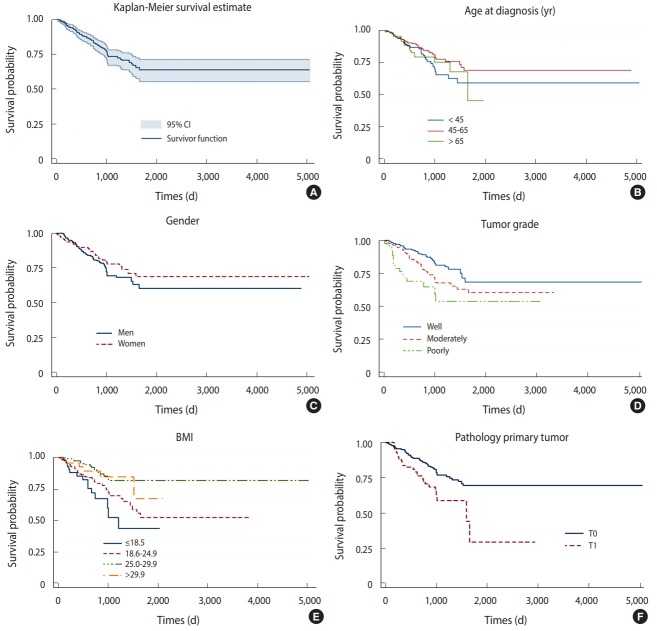
Results: For non-cured cases, the mean survival time was 1,243.83 days (95% confidence interval [CI], 1,174.65 to 1,313.00) and the median survival time was 1,493.00 days (95% CI, 1,398.67 to 1,587.33). The 1- and 3-year survival rates were 92.9% (95% CI, 91.0 to 95.0) and 73.4% (95% CI, 68.0 to 79.0), respectively. Pathologic stage T1 of the primary tumor (estimate=0.58; p=0.013), a poorly differentiated tumor (estimate=1.17; p<0.001), a body mass index (BMI) between 18.6 and 24.9 kg/m2 (estimate=-0.60; p=0.04), and a BMI between 25.0 and 29.9 kg/m2 (estimate=-1.43; p<0.001) had significant impacts on the cure fraction of CRC in the multivariate analysis. The proportion of cured patients was 64.1% (95% CI, 56.7 to 72.4).
Conclusions: This study found that the pathologic stage of the primary tumor, tumor grade, and BMI were potential risk factors that had an impact on the cure fraction. A non-mixture non-parametric cure rate model provides a flexible framework for accurately determining the impact of risk factors on the long-term survival of patients with CRC.
Keywords: Body mass index; Colorectal cancer; Iran; Non-mixture cure rate models; Survival analysis.
Conflict of interest statement
The authors have no conflicts of interest to declare for this study.
Figures
References
-
- GBD 2015 Risk Factors Collaborators Global, regional, and national comparative risk assessment of 79 behavioural, environmental and occupational, and metabolic risks or clusters of risks, 1990-2015: a systematic analysis for the Global Burden of Disease Study 2015. Lancet. 2016;388:1659–1724. - PMC - PubMed
-
- Arnold M, Sierra MS, Laversanne M, Soerjomataram I, Jemal A, Bray F. Global patterns and trends in colorectal cancer incidence and mortality. Gut. 2017;66:683–691. - PubMed
-
- Ferlay J, Soerjomataram I, Dikshit R, Eser S, Mathers C, Rebelo M, et al. Cancer incidence and mortality worldwide: sources, methods and major patterns in GLOBOCAN 2012. Int J Cancer. 2015;136:E359–E386. - PubMed
-
- Center MM, Jemal A, Smith RA, Ward E. Worldwide variations in colorectal cancer. CA Cancer J Clin. 2009;59:366–378. - PubMed
-
- American Cancer Society What causes colorectal cancer? [cited 2018 Oct 4]. Available from: https://www.cancer.org/cancer/colonrectal-cancer/causes-risks-prevention....
MeSH terms
LinkOut - more resources
Full Text Sources
Other Literature Sources
Medical