Producing Gene Deletions in Escherichia coli by P1 Transduction with Excisable Antibiotic Resistance Cassettes
- PMID: 30222159
- PMCID: PMC6235078
- DOI: 10.3791/58267
Producing Gene Deletions in Escherichia coli by P1 Transduction with Excisable Antibiotic Resistance Cassettes
Abstract
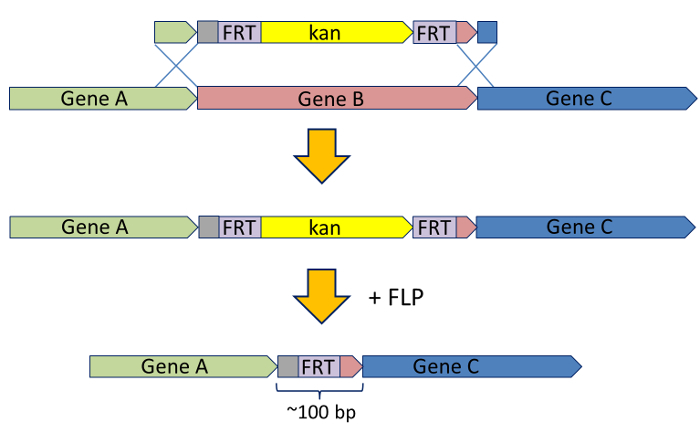
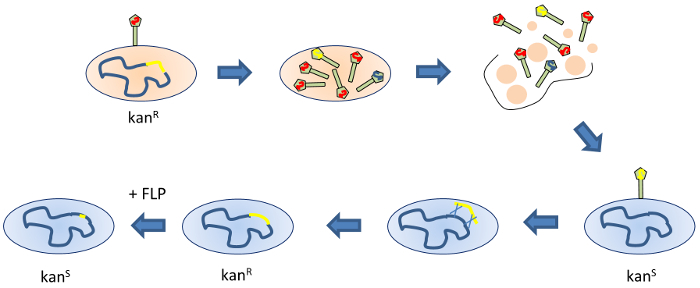
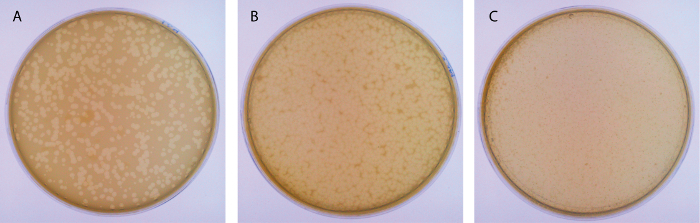
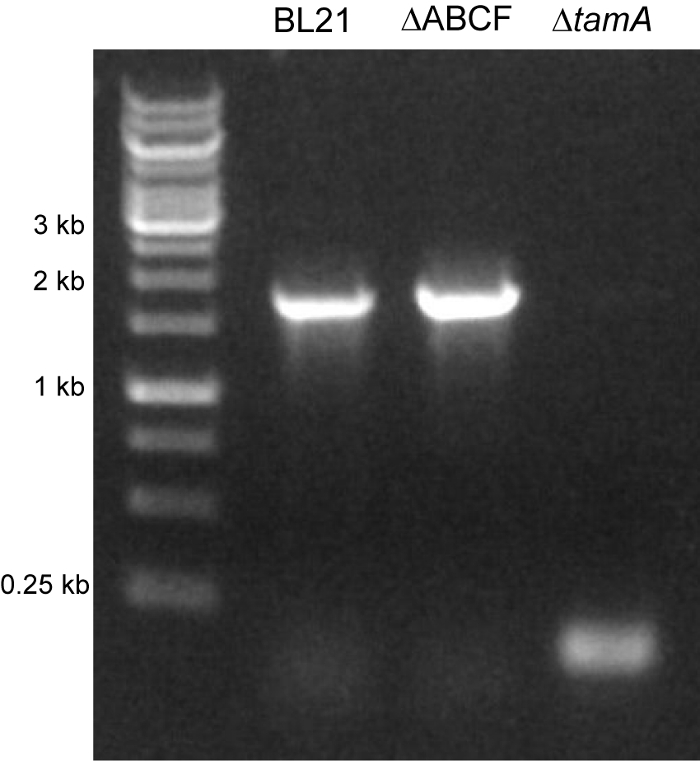
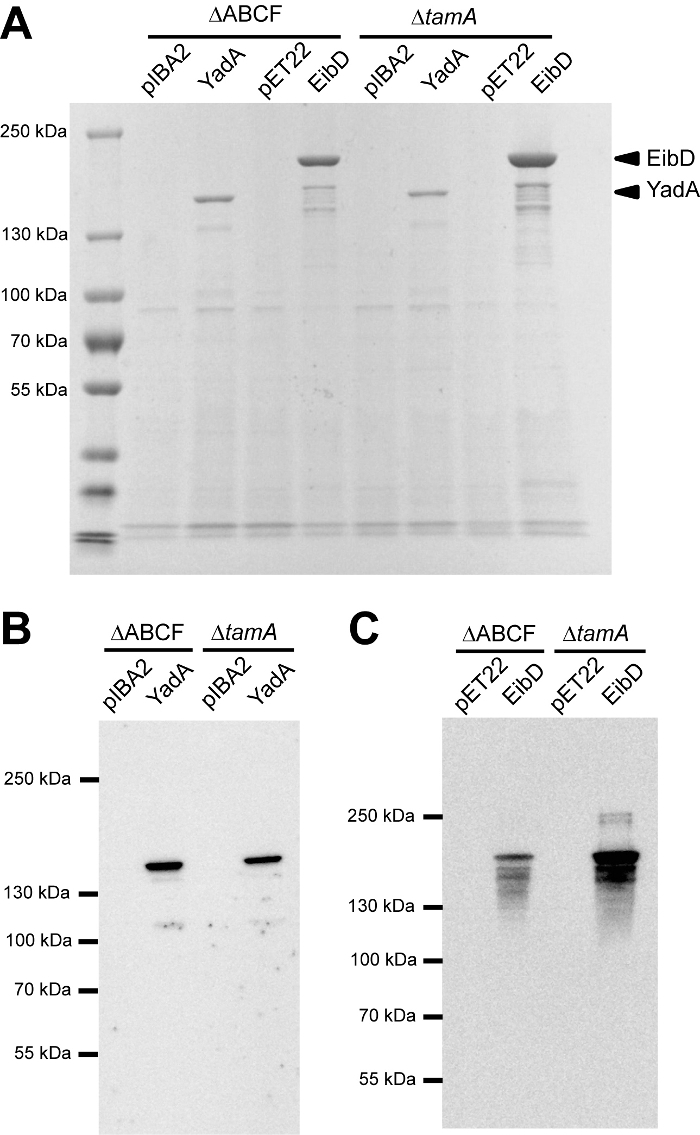
A first approach to study the function of an unknown gene in bacteria is to create a knock-out of this gene. Here, we describe a robust and fast protocol for transferring gene deletion mutations from one Escherichia coli strain to another by using generalized transduction with the bacteriophage P1. This method requires that the mutation be selectable (e.g., based on gene disruptions using antibiotic cassette insertions). Such antibiotic cassettes can be mobilized from a donor strain and introduced into a recipient strain of interest to quickly and easily generate a gene deletion mutant. The antibiotic cassette can be designed to include flippase recognition sites that allow the excision of the cassette by a site-specific recombinase to produce a clean knock-out with only a ~100-base-pair-long scar sequence in the genome. We demonstrate the protocol by knocking out the tamA gene encoding an assembly factor involved in autotransporter biogenesis and test the effect of this knock-out on the biogenesis and function of two trimeric autotransporter adhesins. Though gene deletion by P1 transduction has its limitations, the ease and speed of its implementation make it an attractive alternative to other methods of gene deletion.

References
-
- Sawitzke JA, Thomason LC, Costantino N, Bubunenko M, Datta S, Court DL. Recombineering: in vivo genetic engineering in E. coli, S. enterica, and beyond. Methods in Enzymology. 2007;421:171–199. - PubMed
Publication types
MeSH terms
LinkOut - more resources
Full Text Sources
Other Literature Sources
Medical
Research Materials