


Effects of aging on timing of hibernation and reproduction
- PMID: 30224823
- PMCID: PMC6141465
- DOI: 10.1038/s41598-018-32311-7
Effects of aging on timing of hibernation and reproduction
Erratum in
-
Author Correction: Effects of aging on timing of hibernation and reproduction.Sci Rep. 2019 Oct 24;9(1):15553. doi: 10.1038/s41598-019-51736-2. Sci Rep. 2019. PMID: 31645665 Free PMC article.
Abstract
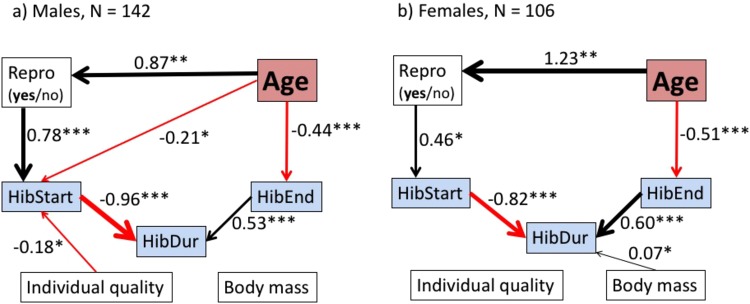
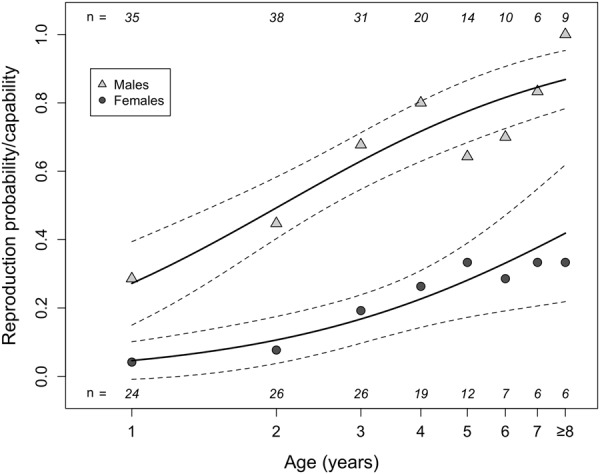
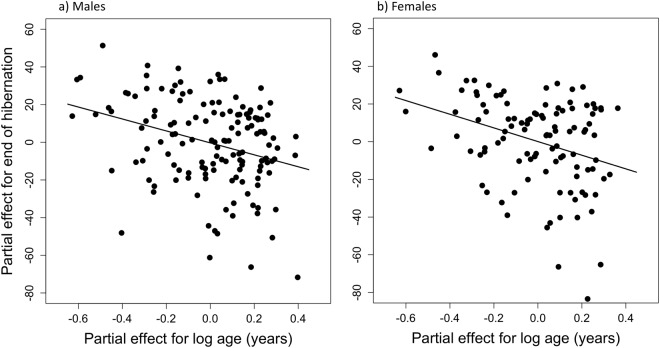
Small hibernators are long-lived for their size because seasonal dormancy greatly reduces predation risk. Thus, within a year, hibernators switch between states of contrasting mortality risk (active season versus hibernation), making them interesting species for testing the predictions of life-history theory. Accordingly, we hypothesized that, with advancing age and hence diminishing reproductive potential, hibernators should increasingly accept the higher predation risk associated with activity to increase the likelihood of current reproductive success. For edible dormice (Glis glis) we show that age strongly affects hibernation/activity patterns, and that this occurs via two pathways: (i) with increasing age, dormice are more likely to reproduce, which delays the onset of hibernation, and (ii) age directly advances emergence from hibernation in spring. We conclude that hibernation has to be viewed not merely as an energy saving strategy under harsh climatic conditions, but as an age-affected life-history trait that is flexibly used to maximize fitness.
Conflict of interest statement
The authors declare no competing interests.
Figures
References
-
- Dobson, F. S. & Oli, M. K. Fast and slow life histories of mammals. Ecoscience14, 292–299, doi:10.2980/1195-6860(2007)14[292:FASLHO]2.0.CO;2 (2007).
-
- Sherman PW, Jarvis JUM. Extraordinary life spans of naked mole-rats (Heterocephalus glaber) J Zool. 2002;258:307–311. doi: 10.1017/S0952836902001437. - DOI
Publication types
MeSH terms
Grants and funding
LinkOut - more resources
Full Text Sources
Other Literature Sources
Medical
