


Review
doi: 10.1016/j.jor.2018.08.040.
eCollection 2018 Dec.
Restoration of center of rotation and balance of THR
Affiliations
- PMID: 30224857
- PMCID: PMC6138845
- DOI: 10.1016/j.jor.2018.08.040
Item in Clipboard
Review
Restoration of center of rotation and balance of THR
J Orthop.
.
Abstract
Improvements in early hip arthroplasties focused on surgical techniques with subsequent studies emphasizing restoration of the hip center of rotation for longevity of the implant. Current literature suggests femoral stem anteversion of 10-20°, cup anteversion of 20-25° and a combined anteversion of 25-40° in males, 30-45° in females. Inclination goal appears to be 45° precisely to balance between impingement & dislocation versus edge loading & accelerated wear. Restoration of the acetabular center of rotation will improve joint reactive forces and reduce wear. Here we describe techniques to achieve a well balanced total hip with restoration of the center of rotation.
Figures
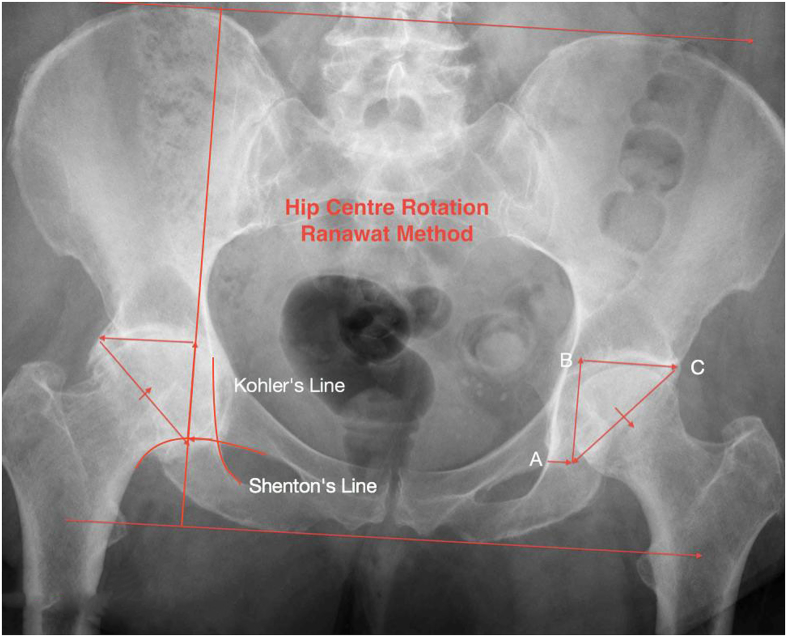
Ranawat Triangle for locating the center of rotation of the acetabulum.
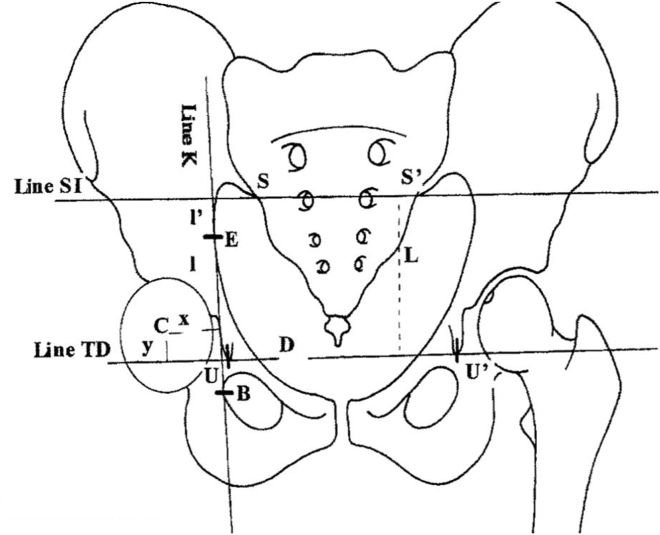
The French method by Fessy et al. locating the center of rotation of the hip.
References
-
- Stulberg SDH W.H. Acetabular dysplasia, development of osteoarthritis of the hip. In: Harris W., editor. The Hip Proceedings of the Second Open Scientific Meeting of the Hip Society. C.V. Mosby Co.; MO): 1974. pp. 82–93.
-
- Dorr L.D., Yohei Y. Chapter 3: principles of total hip replacement. Successful techniques for total hip replacement. In: Dorr L.D., editor. Future Medicine. August 2014. pp. 18–33.
-
- McKibbin B. Anatomical factors in the stability of the hip joint in the newborn. J Bone Joint Surg Br. 1970 Feb;52(1):148–159. - PubMed
-
- Ranawat C.S., Maynard M.J. Modern techniques of cemented total hip arthroplasty. Tech Orthop. 1991;(6):17–25.
Publication types
LinkOut - more resources
Full Text Sources
Other Literature Sources
