


The relationship of self-efficacy to catastrophizing and depressive symptoms in community-dwelling older adults with chronic pain: A moderated mediation model
- PMID: 30226892
- PMCID: PMC6143242
- DOI: 10.1371/journal.pone.0203964
The relationship of self-efficacy to catastrophizing and depressive symptoms in community-dwelling older adults with chronic pain: A moderated mediation model
Abstract
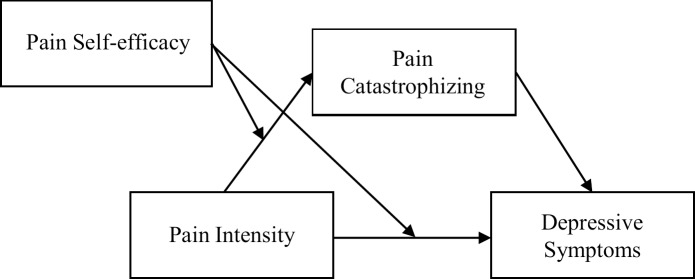
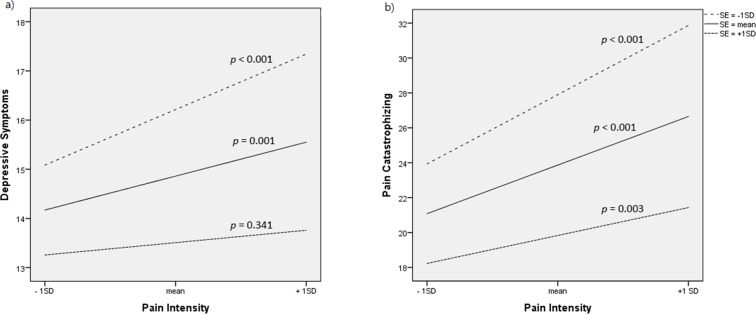
Self-efficacy has been consistently found to be a protective factor against psychological distress and disorders in the literature. However, little research is done on the moderating effect of self-efficacy on depressive symptoms in the context of chronic pain. This cross-sectional study aimed to examine if pain self-efficacy attenuated the direct relationship between pain intensity and depressive symptoms, as well as their indirect relationship through reducing the extent of catastrophizing when feeling pain (moderated mediation). 664 community-dwelling Chinese older adults aged 60-95 years who reported chronic pain for at least three months were recruited from social centers. They completed a battery of questionnaires on chronic pain, pain self-efficacy, catastrophizing, and depressive symptoms in individual face-to-face interviews. Controlling for age, gender, education, self-rated health, number of chronic diseases, pain disability, and pain self-efficacy, pain catastrophizing was found to partially mediate the connection between pain intensity and depressive symptoms. Furthermore, the relationship between pain intensity and depressive symptoms was moderated by pain self-efficacy. Self-efficacy was also found to moderate the relationship between pain intensity and catastrophizing and the moderated mediation effect was confirmed using bootstrap analysis. The results suggested that with increasing levels of self-efficacy, pain intensity's direct effect on depressive symptoms and its indirect effect on depressive symptoms via catastrophizing were both reduced in a dose-dependent manner. Our findings suggest that pain self-efficacy is a significant protective factor that contributes to psychological resilience in chronic pain patients by attenuating the relationship of pain intensity to both catastrophizing and depressive symptoms.
Conflict of interest statement
The authors have declared that no competing interests exist.
Figures
References
-
- Helme RD, Gibson SJ. The epidemiology of pain in elderly people. Clin Geriatr Med 2001;17(3):417 - PubMed
Publication types
MeSH terms
Associated data
LinkOut - more resources
Full Text Sources
Other Literature Sources
Medical
