


Hemodialysis-related changes in phenotypical features of monocytes
- PMID: 30228352
- PMCID: PMC6143543
- DOI: 10.1038/s41598-018-31889-2
Hemodialysis-related changes in phenotypical features of monocytes
Abstract
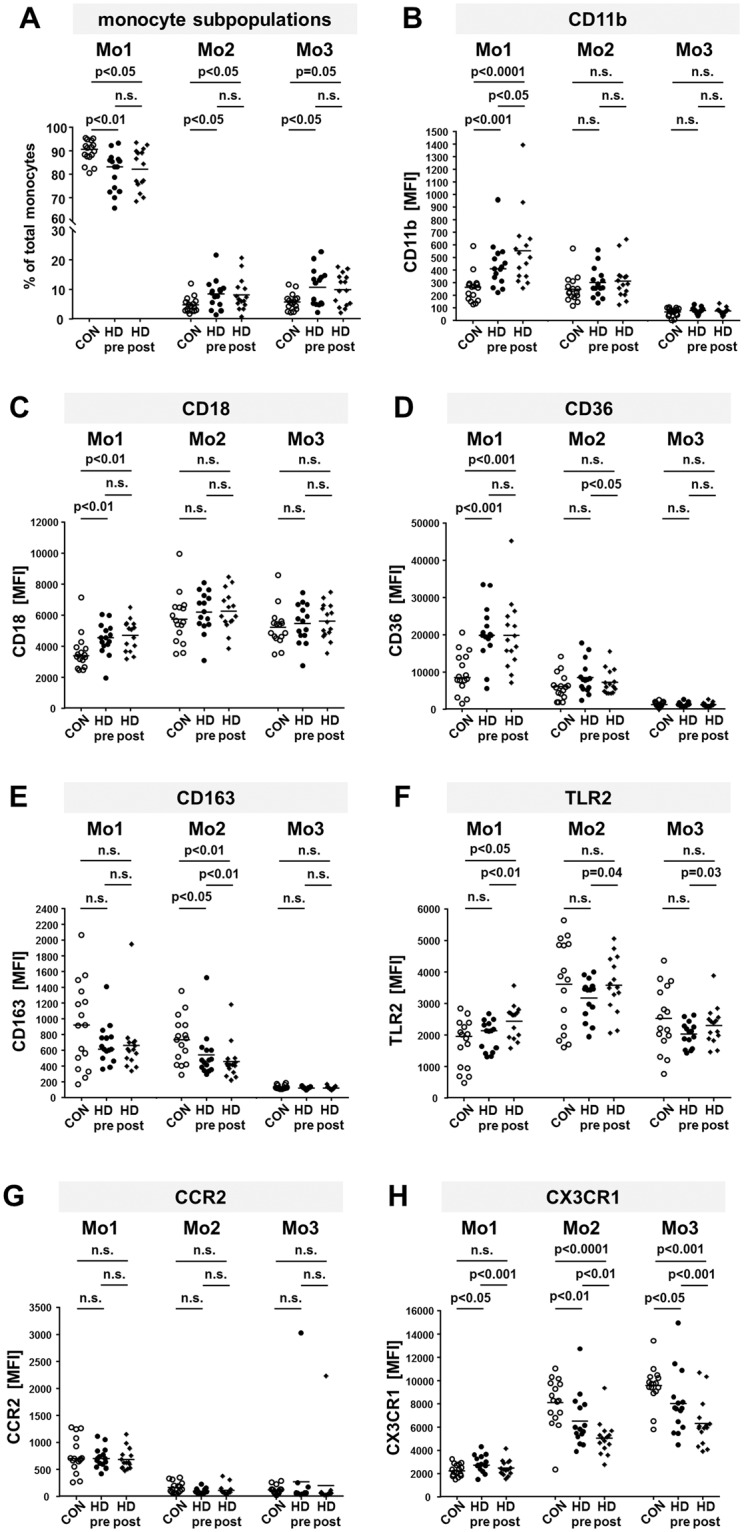
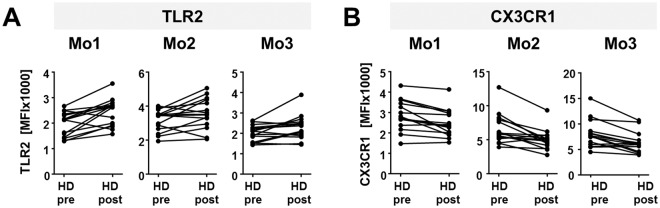
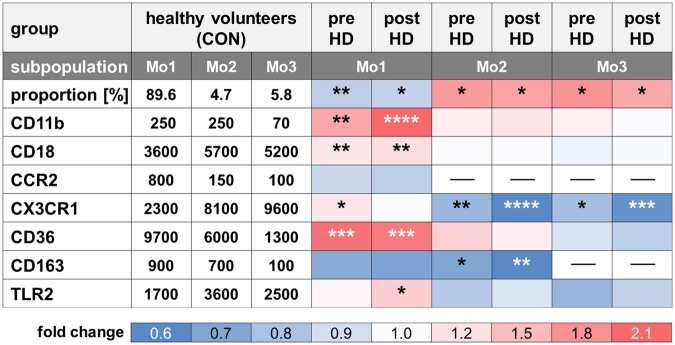
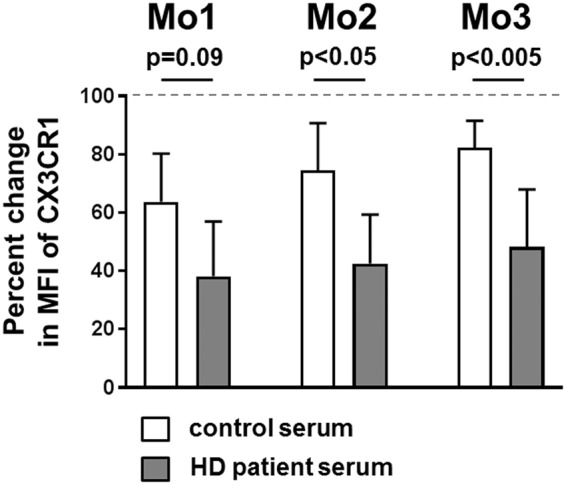
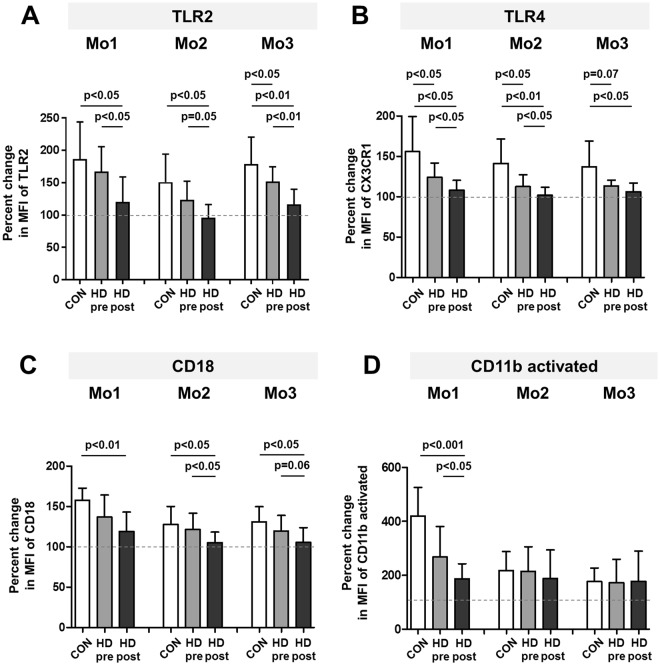
Hemodialysis (HD) patients exhibit chronic inflammation and leukocyte activation. We investigated the surface-marker profile of monocytes by flow cytometry to assess the chronic effect of uremia and the acute effect of dialysis on their phenotypical and functional features in 16 healthy controls (CON) and 15 HD patients before and after a polysulfone-based dialysis session. Median fluorescence intensities were analyzed indicating expression of CD14, CD16, integrins (CD11b, CD18), chemokine receptors (CCR2, CX3CR1), scavenger receptors (CD36, CD163) and Toll-like receptor-2 (TLR2). Before and after dialysis, HD patients harbour 0.9-fold less CD14++CD16- (Mo1), 1.8-fold more CD14++CD16+ (Mo2) and CD14+CD16++ (Mo3) monocytes than CON. HD patients' Mo1 showed elevated expression of CD11b (1.7-fold), CD18 (1.2-fold) and CD36 (2.1-fold), whereas CD163 expression was reduced in Mo1 and Mo2 (0.6-fold) compared to CON. These markers remained unaffected by dialysis. CX3CR1 expression on Mo2 and Mo3 was lower in HD patients before (0.8-fold) and further diminished after dialysis (0.6-fold). Stimulation of monocytes resulted in diminished responses in HD patients compared to CON. In conclusion, a systematic analysis of the expression of particular surface markers on distinct monocyte subsets may help to distinguish between uremia and/or dialysis induced effects and to evaluate the functionality of monocytes and biocompatibility of HD.
Conflict of interest statement
The authors declare no competing interests.
Figures
References
-
- Hauser AB, et al. Characteristics and causes of immune dysfunction related to uremia and dialysis. Perit Dial Int. 2008;28(Suppl 3):S183–187. - PubMed
Publication types
MeSH terms
Substances
LinkOut - more resources
Full Text Sources
Other Literature Sources
Medical
Research Materials
