


Optimizing a Nurse-led Transitional Home Visit Program in Preparation for a Randomized Control Trial
- PMID: 30229150
- PMCID: PMC6132790
- DOI: 10.1097/pq9.0000000000000012
Optimizing a Nurse-led Transitional Home Visit Program in Preparation for a Randomized Control Trial
Abstract
Introduction: The Hospital to Home Outcomes study began with the end goal of evaluating the effectiveness of a single, nurse-led transitional home visit (home visit) program, for acutely ill, pediatric patients, which had been piloted at our institution. As part of the overall study design, building on prior randomized control trials that utilized a run-in period prior to the trial, our study team designed an optimization period to test the home visit and study procedures under real-world conditions.
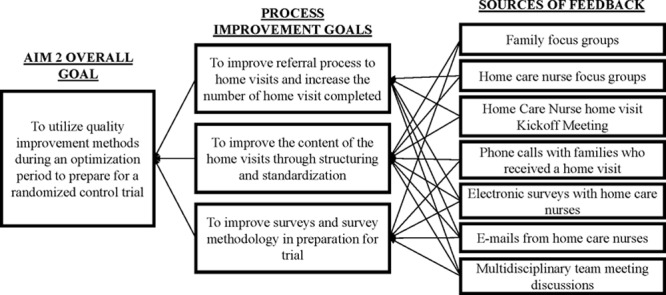
Methods: For this optimization project, there were 3 process improvement goals: to improve the referral process to the home visit, to optimize the home visit content, and to define and operationalize measures of patient- and family-centered outcomes to be used in the subsequent randomized control trial. During the optimization period, a multidisciplinary study team met weekly to review family and stakeholder feedback about the iterative modifications made to the home visit process, content, and outcome measures.
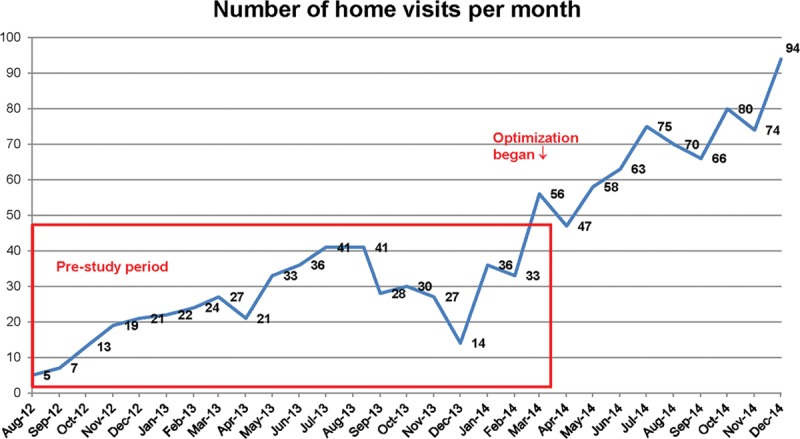
Results: Optimization home visits were completed with 301 families across a variety of discharge diagnoses. The outcomes planned for the clinical trial were tested and refined. Feedback from families and stakeholders indicated that the content changes made to the home visits resulted in increased family knowledge of warning signs to monitor postdischarge. Thirty-one percent of families reported that they altered the care of their child after the home visit.
Conclusion: Through iterative testing, informed by multistakeholder feedback, we leveraged patient and family engagement to maximize the effectiveness and generalizability of the home visit intervention.
Figures
References
-
- Pickler R, Wade-Murphy S, Gold J, et al. ; (on behalf of the H2O Study Group). A nurse transitional home visit following pediatric hospitalizations.. J Nurs Admin. 2016;46(12):642–647.. - PubMed
-
- Tubbs-Cooley HL, Pickler RH, Simmons JM, et al. Testing a post-discharge nurse-led transitional home visit in acute care pediatrics: the Hospital-To-Home Outcomes (H2O) study protocol.. J Adv Nurs. 2016;72(4):915–925.. - PubMed
-
- Solan LG, Beck AF, Brunswick SA, et al. The family perspective on hospital to home transitions: a qualitative study.. Pediatrics. 2015;136(6):e1539–1549.. - PubMed
-
- Pablos-Méndez A, Barr R, Shea S. Run-in periods in randomized trials: implications for the application of results in clinical practice.. JAMA. 1998;279(3):222–225.. - PubMed
-
- Haynes RB, Dantes R. Patient compliance and the conduct and interpretation of therapeutic trials.. Control Clin Trials. 1987;8(1):12–19.. - PubMed
LinkOut - more resources
Full Text Sources
Other Literature Sources
Medical
Research Materials
Miscellaneous