


Analysis of autoantibody profiles in two asbestiform fiber exposure cohorts
- PMID: 30230971
- PMCID: PMC6336195
- DOI: 10.1080/15287394.2018.1512432
Analysis of autoantibody profiles in two asbestiform fiber exposure cohorts
Abstract
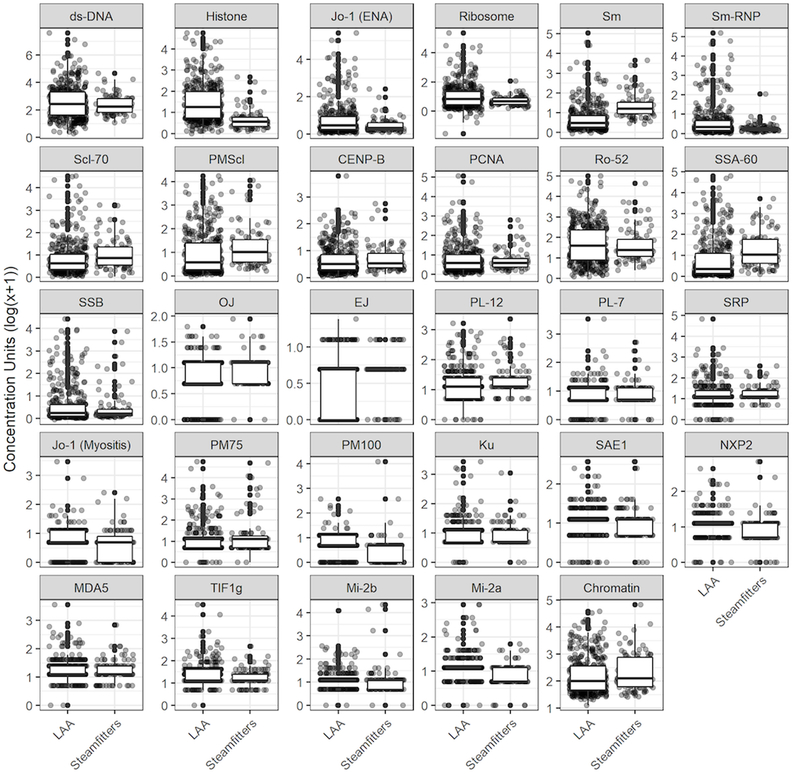
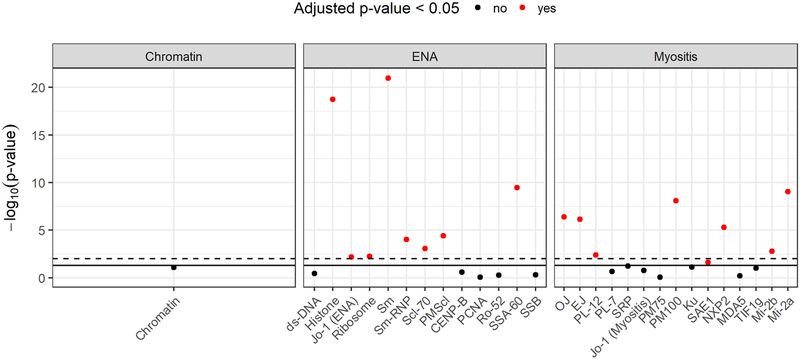
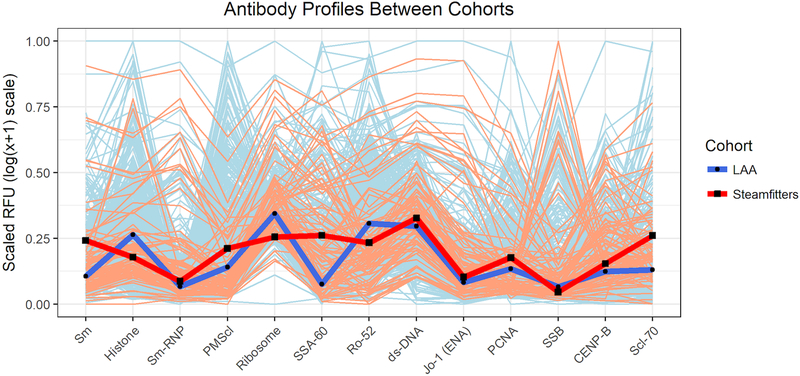
An increased risk for Systemic Autoimmune Diseases (SAID) was reported in the population of Libby, Montana, where extensive exposure to asbestiform amphiboles occurred through mining and use of asbestiform fiber-laden vermiculite. High frequencies of antinuclear autoantibodies (ANA) were detected in individuals and mice exposed to Libby Asbestiform Amphiboles (LAA). Among the 6603 individuals who have undergone health screening at the Center for Asbestos Related Diseases (CARD, Libby MT), the frequencies of rheumatoid arthritis, systemic lupus erythematosus, sarcoidosis, and systemic sclerosis are significantly higher than expected prevalence in the United States. While these data support the hypothesis that LAA can trigger autoimmune responses, evidence suggests that chrysotile asbestos does not. Serological testing was therefore performed in subjects exposed to LAA or predominantly chrysotile (New York steamfitters) using multiplexed array technologies. Analyses were performed in order to determine a) autoantibody profiles in each cohort, and b) whether the two populations could be distinguished through predictive modeling. Analysis using perMANOVA testing confirmed a significant difference between autoantibody profiles suggesting differential pathways leading to autoantibody formation. ANA were more frequent in the LAA cohort. Specific autoantibodies more highly expressed with LAA-exposure were to histone, ribosomal P protein, Sm/Ribonucleoproteins, and Jo-1 (histidyl tRNA synthetase). Myositis autoantibodies more highly expressed in the LAA cohort were Jo-1, PM100, NXP2, and Mi2a. Predictive modeling demonstrated that anti-histone antibodies were most predictive for LAA exposure, and anti-Sm was predictive for the steamfitters' exposure. This emphasizes the need to consider fiber types when evaluating risk of SAID with asbestos exposure.
Keywords: Asbestos; amphibole; autoantibodies; chrysotile; libby montana.
Conflict of interest statement
Disclosure of Interest:
Dr. Fritzler is a consultant to Inova Diagnostics Inc. (San Diego, CA) and Werfen International (Barcelona, Spain) and his laboratory has received gifts in kind from Euroimmun GmbH (Luebeck, Germany). The other authors have no conflicts of interest to disclose.
Figures
References
-
- Anderson MJ 2001. A new method for non-arametric multivariate analysis of ariance. Austral Ecol 26: 32–46. doi:Doi 10.1046/J.1442-9993.2001.01070.X - DOI
-
- Benjamini Y, and Hochberg Y. 1995. Controlling the false discovery rate: A practical and powerful approach to multiple testing. J Roy Stat Soc Ser B 57289–300.
-
- Bernatsky SM, Smargiassi A, Joseph L, Awadall P, Comegna I, Hudson M, Fritzler MJ. 2017. Industrial air emissions, and proximity to major industrial emitters, are associated with anti-citrullinated protein antibodies. Environ Res 157:60–63. - PubMed
-
- Bernatsky SM, Pfau JC, and Fritzler MJ. 2017. Environmental exposures and biomarkers predictive of rheumatoid arthritis and the pathway to precision medicine. J Lab Precision Med 2: 1–4.
MeSH terms
Substances
Grants and funding
LinkOut - more resources
Full Text Sources
Other Literature Sources
Medical