Meta-Analysis
. 2018 Sep 19;13(9):e0202620.
doi: 10.1371/journal.pone.0202620. eCollection 2018.

The efficacy and safety of dexmedetomidine in cardiac surgery patients: A systematic review and meta-analysis

Affiliations
Meta-Analysis

The efficacy and safety of dexmedetomidine in cardiac surgery patients: A systematic review and meta-analysis

Guobin Wang et al. PLoS One. .

Abstract

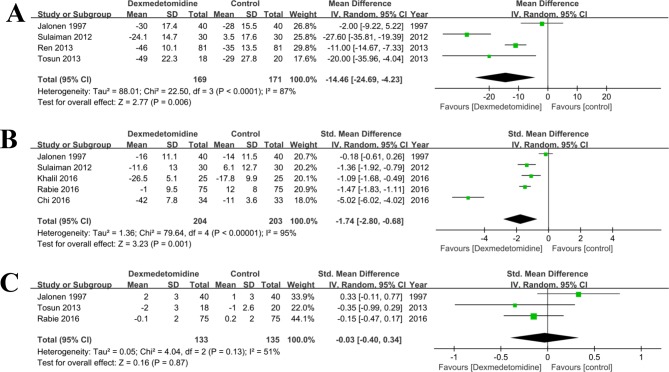
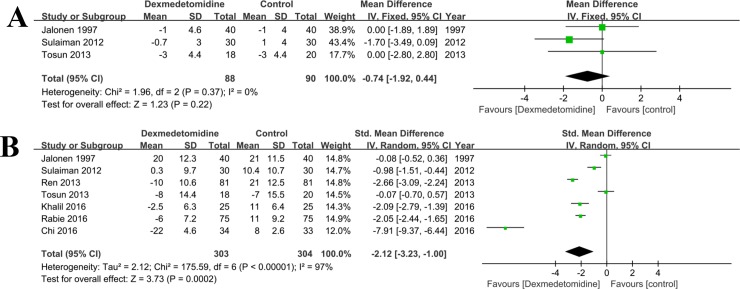
This study aimed to evaluate the efficacy and safety of dexmedetomidine versus any other treatment without dexmedetomidine in patients who have undergone cardiac surgery. Electronic databases including PubMed, Embase, and Cochrane Library were systematically searched without limitations of language and publication time. Randomized controlled trials (RCTs) aiming to evaluate the efficacy and safety of dexmedetomidine versus any other treatment without dexmedetomidine in patients that have undergone cardiac surgery were selected. Endpoints such as hemodynamic indexes and adverse events in eligible studies were extracted by two researchers, independently. The data was analyzed using RevMan 5.3 and Stata 11.0 software. A total of 18 RCTs met the inclusion criteria, involving 1730 patients. Compared to control (any treatment without dexmedetomidine), dexmedetomidine showed a pooled mean difference (MD) of -14.46 [95% confidence interval(CI): -24.69, -4.23; p<0.01] for systolic arterial pressure, a standardized mean difference (SMD) of -1.74 for mean arterial blood pressure (95% CI: -2.80, -0.68; P < 0.01), -2.12 (95%CI: -3.23, -1.00; p<0.01) for heart rate, and combined odds ratio (OR) of 0.22 (95%CI: 0.11, 0.44; p<0.01) for tachycardia, 3.44 (95%CI: 1.95, 5.96; p<0.01) for bradycardia, 0.74 (95%CI: 0.49, 1.12; p>0.05) for atrial fibrillation, and 0.99 (95%CI: 0.51, 1.90; p>0.05) for hypotension. In addition, dexmedetomidine could reduce time of surgery and stay in intensive care units, improve delirium with good safety. Our study shows clinical application of dexmedetomidine in cardiac surgery patients can reduce risks of abnormal hemodynamics with good safety.


Conflict of interest statement

The authors have declared that no competing interests exist.

Figures
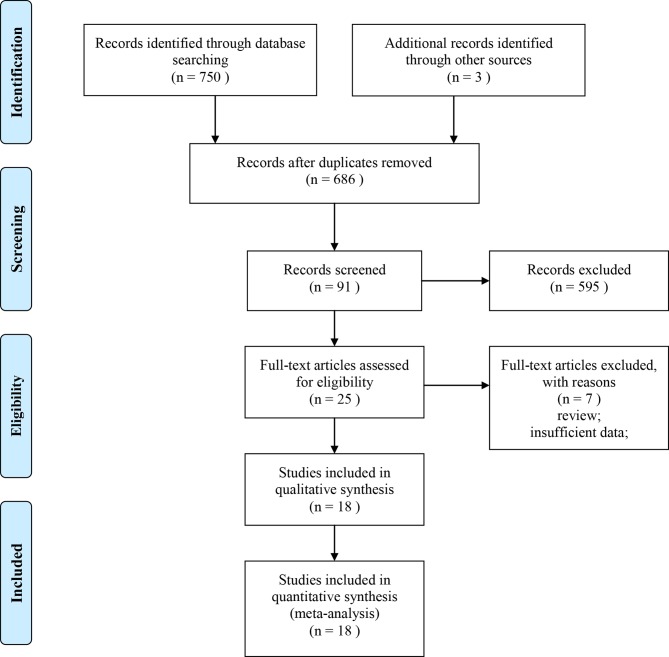
Fig 1
Fig 1. Flow diagram following the PRISMA guideline.
Fig 2
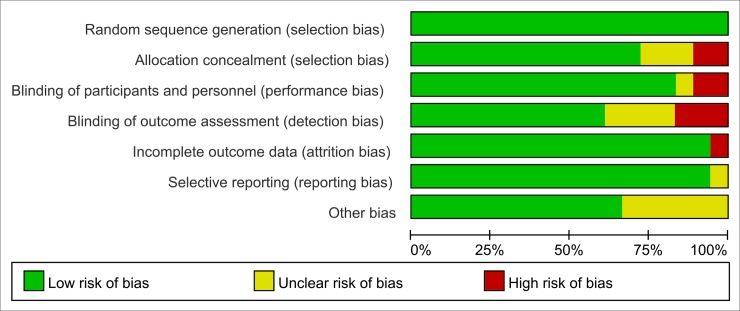
Fig 2. Risk of bias graph: Review authors' judgements about each risk of bias item presented as percentages across all included studies.
Fig 3
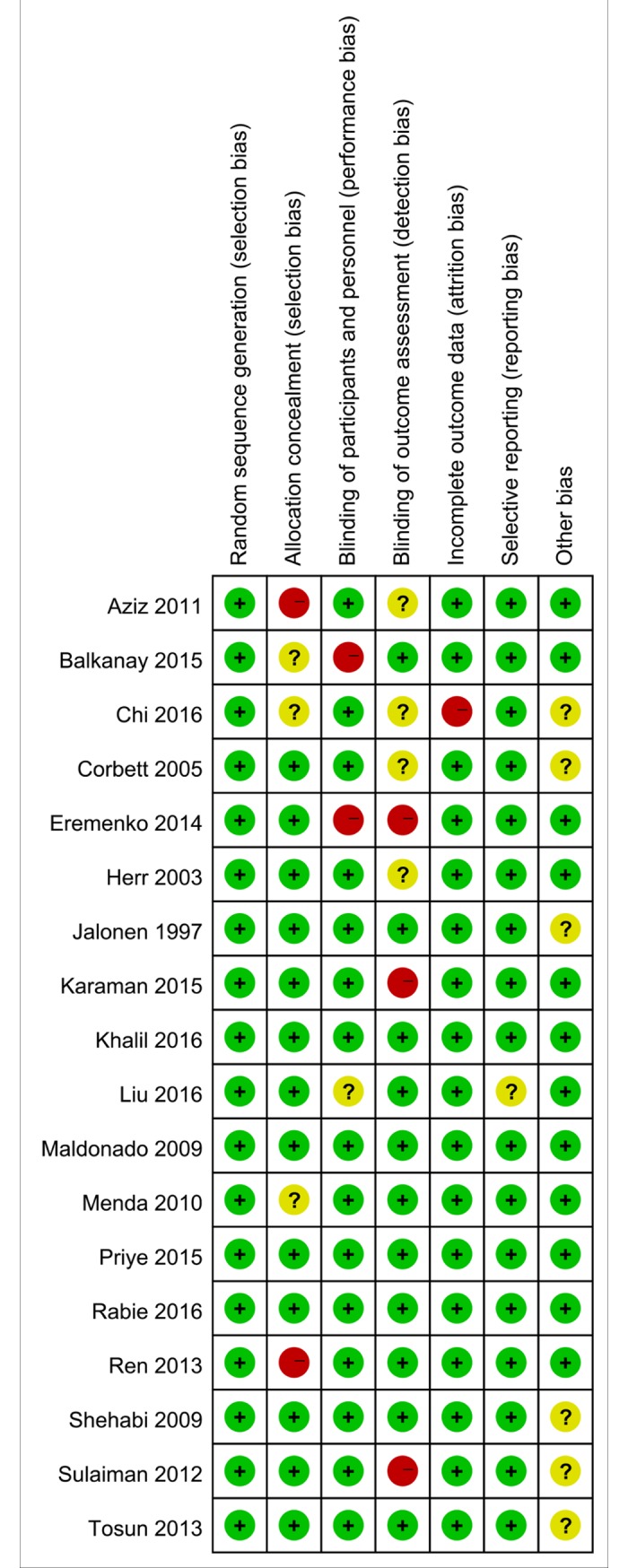
Fig 3. Risk of bias summary: Review authors' judgements about each risk of bias item for each included study.
Fig 4
Fig 4
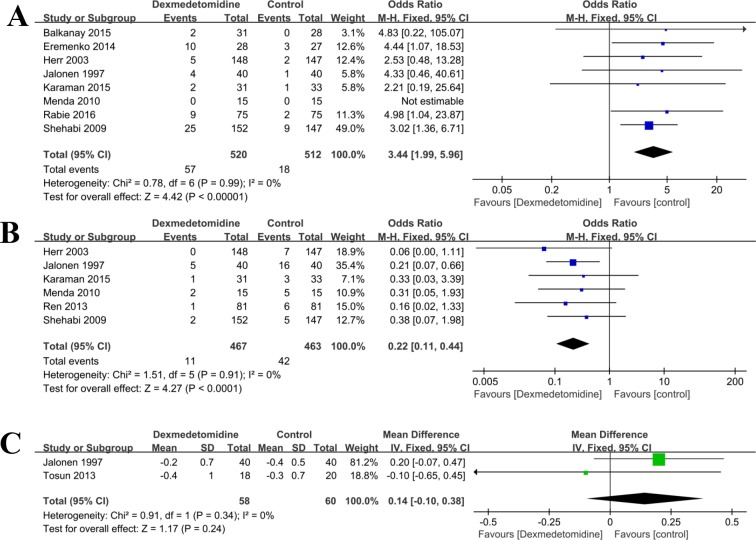
Forest plot of comparison: 1 Dexmedetomidine VS. Control (any treatment without dexmedetomidine) for patients undergoing cardiac surgery, outcome: A, Systolic arterial pressure; B, mean arterial blood pressure; C, Central venous pressure.
Fig 5
Fig 5
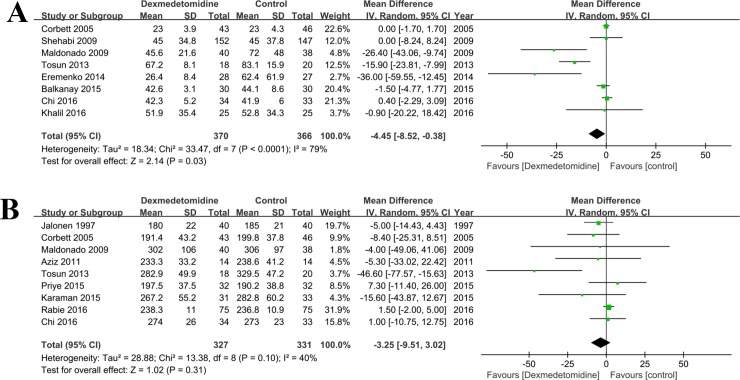
Forest plot of comparison: 1 Dexmedetomidine VS. Control (any treatment without dexmedetomidine) for patients undergoing cardiac surgery, outcome: A, Pulmonary artery mean pressure; B, Heart rate.
Fig 6
Fig 6
Forest plot of comparison: 1 Dexmedetomidine VS. Control (any treatment without dexmedetomidine) for patients undergoing cardiac surgery, outcome: A, Bradycardia; B, Tachycardia; C, Cardiac index.
Fig 7
Fig 7
Forest plot of comparison: 1 Dexmedetomidine VS. Control (any treatment without dexmedetomidine) for patients undergoing cardiac surgery, outcome: A, ICU stay; B, Duration of surgery.
Fig 8
Fig 8
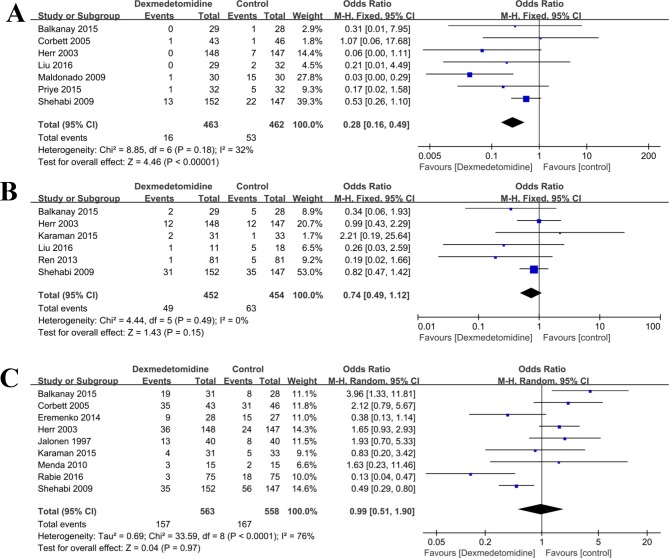
Forest plot of comparison: 1 Dexmedetomidine VS. Control (any treatment without dexmedetomidine) for patients undergoing cardiac surgery, outcome: A, Delirium; B, Atrial fibrillation; C, Hypotension.
Fig 9
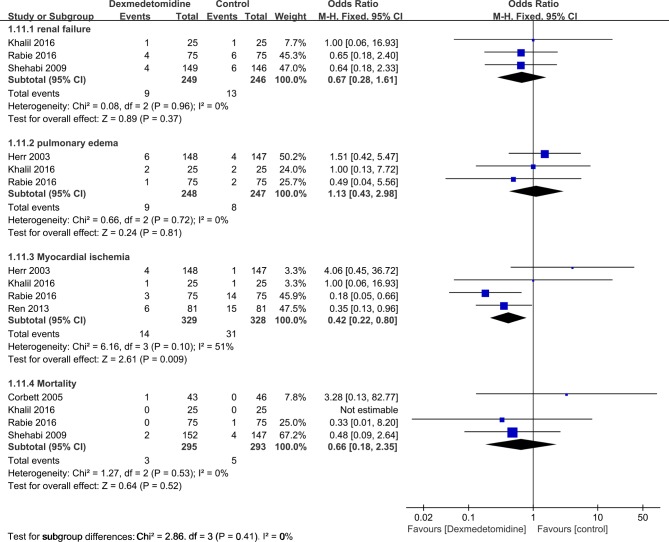
Fig 9. Forest plot of comparison: 1 Dexmedetomidine VS. Control (any treatment without dexmedetomidine) for patients undergoing cardiac surgery, outcome: Adverse events: renal failure; pulmonary edema; myocardial ischemia; mortality.

References

    1. Mao H, Katz N, Ariyanon W, Blanca-Martos L, Adybelli Z, Giuliani A, et al. Cardiac surgery-associated acute kidney injury. Cardiorenal Med. 2013; 3: 178–199. 10.1159/000353134 - DOI - PMC - PubMed
    1. Soliman R, Zohry G. The myocardial protective effect of dexmedetomidine in high-risk patients undergoing aortic vascular surgery. Ann Card Anaesth. 2016; 19: 606–613. 10.4103/0971-9784.191570 - DOI - PMC - PubMed
    1. Bulow NM, Colpo E, Pereira RP, Correa EF, Waczuk EP, Duarte MF, et al. Dexmedetomidine decreases the inflammatory response to myocardial surgery under mini-cardiopulmonary bypass. Braz J Med Biol Res. 2016; 49: e4646 10.1590/1414-431X20154646 - DOI - PMC - PubMed
    1. Ueki M, Kawasaki T, Habe K, Hamada K, Kawasaki C, Sata T. The effects of dexmedetomidine on inflammatory mediators after cardiopulmonary bypass. Anaesthesia. 2014; 69: 693–700. 10.1111/anae.12636 - DOI - PubMed
    1. Magapu P, Haskard D, Fisher M. A review of the peri-operative risk stratification assessment tools used for the prediction of cardiovascular complications in non-cardiac surgery. Perfusion. 2016; 31: 358–365. 10.1177/0267659115615207 - DOI - PubMed

Publication types

MeSH terms