


Internet-delivered aftercare following multimodal rehabilitation program for chronic pain: a qualitative feasibility study
- PMID: 30233229
- PMCID: PMC6129031
- DOI: 10.2147/JPR.S157939
Internet-delivered aftercare following multimodal rehabilitation program for chronic pain: a qualitative feasibility study
Abstract
Purpose: Methods for delivering aftercare to help chronic pain patients to continue practice self-management skills after rehabilitation are needed. Internet-delivered cognitive behavioral therapy (ICBT) has the potential to partly fill this gap given its accessibility and emphasis on self-care. Methods for engaging and motivating patients to persist throughout the full length of treatment are needed. The aim of this study was to describe how chronic pain patients work in an ICBT program, through their descriptions of what is important when they initiate behavior change in aftercare and their descriptions of what is important for ongoing practice of self-management skills in aftercare.
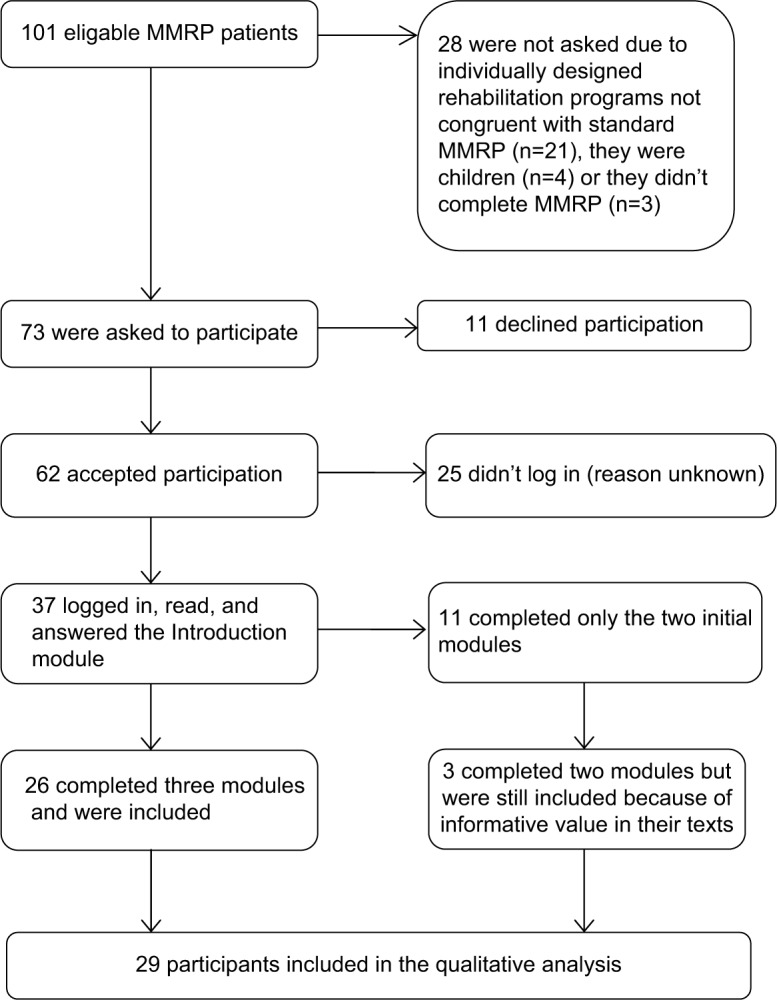
Patients and methods: Following a multimodal rehabilitation program, 29 chronic pain patients participated in a 20-week-long Internet-delivered aftercare program (ACP) based on acceptance-based cognitive behavioral therapy. Latent content analysis was made on 138 chapters of diary-like texts written by participants in aftercare.
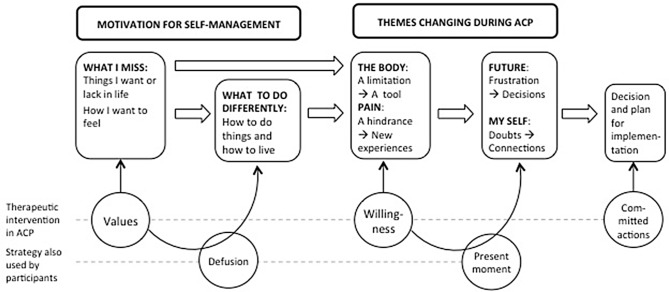
Results: Attitudes regarding pain and body changed during ACP, as did attitudes toward self and the future for some participants. How participants practiced self-management skills was influenced by how they expressed motivation behind treatment goals. Whether they practiced acceptance strategies influenced their continuous self-management practice. Defusion techniques seemed to be helpful in the process of goal setting. Mindfulness strategies seemed to be helpful when setbacks occurred.
Conclusion: Self-motivating goals are described as important both to initiate and in the ongoing practice of self-management skills. Experiencing a helpful effect of acceptance strategies seems to encourage participants to handle obstacles in new ways and to persist throughout treatment. Research on whether tailored therapist guidance might be helpful in stating self-motivating goals and contribute to ongoing practice of self-management skills is needed.
Keywords: Internet-delivered cognitive-behavioral therapy; acceptance and commitment therapy; chronic pain; qualitative analysis; self-management.
Conflict of interest statement
Disclosure The authors report no conflicts of interest in this work.
Figures
References
-
- Eccleston C, Morley SJ, Williams AC. Psychological approaches to chronic pain management: evidence and challenges. Br J Anaesth. 2013;111(1):59–63. - PubMed
-
- Hann KEJ, McCracken LM. A systematic review of randomized controlled trials of acceptance and commitment therapy for adults with chronic pain: outcome domains, design quality, and efficacy. J Contextual Behav Sci. 2014;3(4):217–227.
-
- Turk DC, Rudy TE. Neglected topics in the treatment of chronic pain patients – relapse, noncompliance, and adherence enhancement. Pain. 1991;44(1):5–28. - PubMed
LinkOut - more resources
Full Text Sources
Other Literature Sources
Miscellaneous
