


Neurofeedback for the enhancement of dynamic balance of judokas
- PMID: 30237667
- PMCID: PMC6135976
- DOI: 10.5114/biolsport.2018.71488
Neurofeedback for the enhancement of dynamic balance of judokas
Abstract
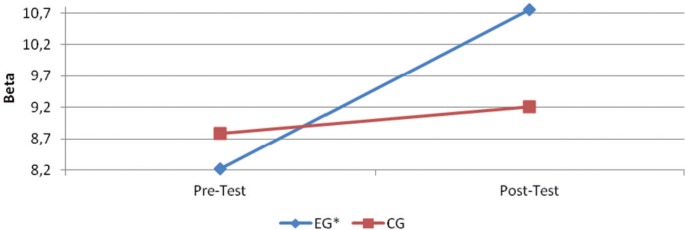
Physical balance is an important factor in sport. Neurofeedback (EEG biofeedback) can be used to improve concentration and focus. The present study investigated and determined the impact of neurofeedback training on dynamic balance in judo. Eighteen judokas voluntarily participated in this study. The participants were divided into two groups: experimental (EG) and control (CG). In the experimental group subjects were trained to inhibit 3-8 Hz while they were also trained to reinforce 14-19 Hz brainwave activities at points O1 and O2 for ten sessions and 25 minutes per session. The participants in the control group were exposed to the same conditions but instead were provided with sham feedback. EEG and dynamic balance tests were executed before and at the end of the fifteenth session of training. The one-way ANOVA with repeated measures revealed that dynamic balance scores significantly improved at the post-test (F=12.4, p=0.001) in the EG group. The findings demonstrate that neurofeedback training can enhance dynamic balance of judokas.
Keywords: Biofeedback; Dynamic balance; EEG; Judo; Neurofeedback.
Figures

References
-
- Hammond DC. Neurofeedback treatment of depression and anxiety. J Adult Dev. 2005:12(2–3):131-137.
-
- Hammond DC. Neurofeedback to improve physical balance, incontinence, and swallowing. J. Neurother. 2005;9(1):27–36.
-
- Walker JE, Kozolowsky GP. Neurofeedback treatmaent of epilepsy. Child Adol Psych Cl. 2005;14(1):163–176. - PubMed
-
- Monastra VJ. Electroencephalographic biofeedback (neurotherapy) as a treatment for attention deficit hyperactivity disorder: Rationale and empirical foundation. Child Adolesc Psychiatr Clin N Am. 2005;14(1):55–82. - PubMed
-
- Chung-Hee C, Byoung-Jun K, Chang-Yong J, Eun-Kyu C. Effects of Concentration Training with Brainwave Biofeedback on Tennis Performance. J Phys Ther Sci. 2016;28(10):2938–2941.
LinkOut - more resources
Full Text Sources
Other Literature Sources
