


Effects of variability in daily light integrals on the photophysiology of the corals Pachyseris speciosa and Acropora millepora
- PMID: 30240397
- PMCID: PMC6150484
- DOI: 10.1371/journal.pone.0203882
Effects of variability in daily light integrals on the photophysiology of the corals Pachyseris speciosa and Acropora millepora
Abstract
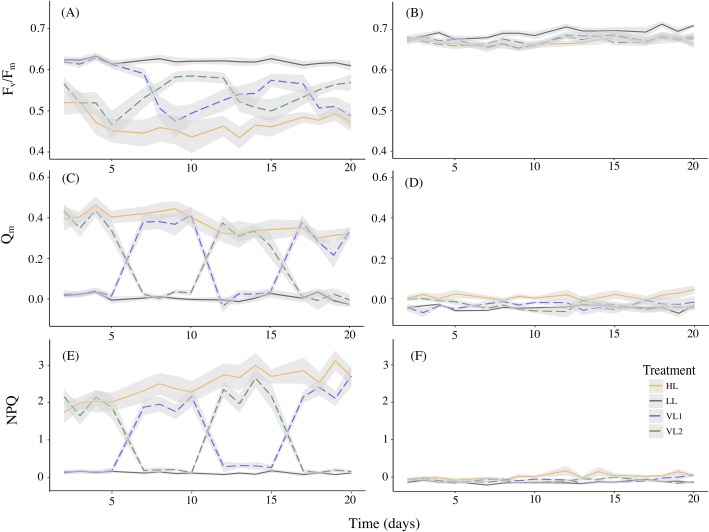
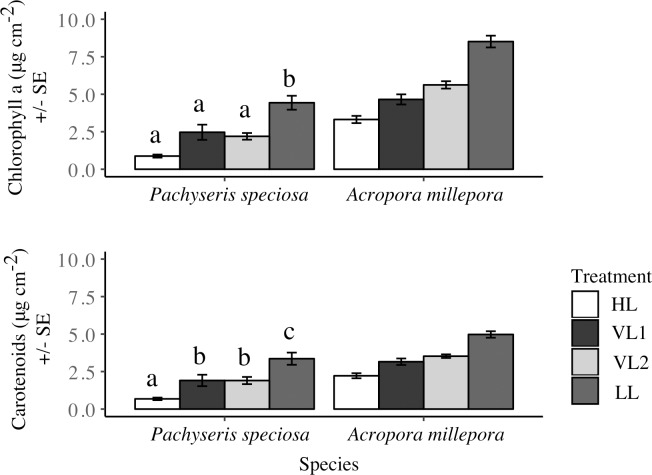
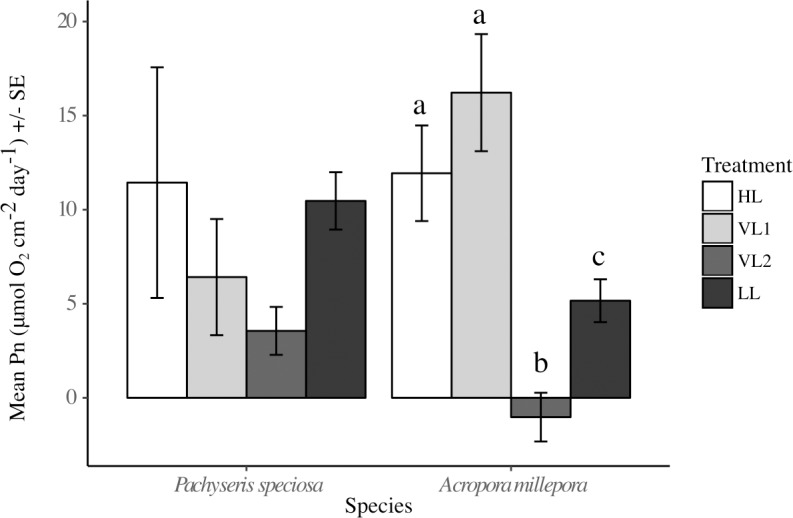
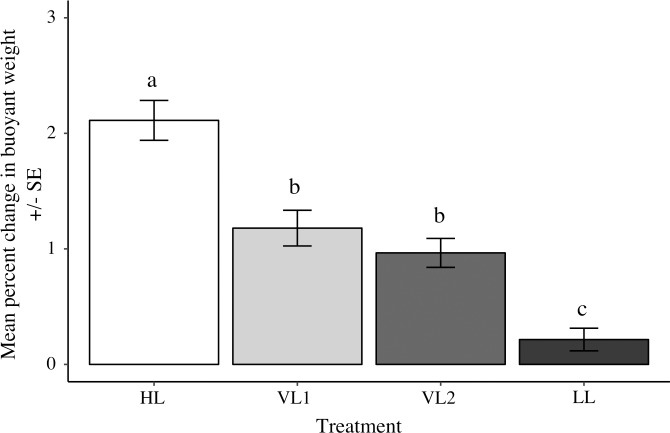
Phototrophic sessile organisms, such as reef corals, adjust their photosynthetic apparatus to optimize the balance of light capture versus protection in response to variable light availability (photoacclimation). In shallow marine environments, daily light integrals (DLI) can vary several-fold in response to water clarity and clouds. This laboratory study investigated the responses of two coral species to fluctuations in DLI. Corals were exposed to four contrasting DLI treatments: 'high-light' (potentially photoinhibiting conditions, 32 mol photons m-2 d-1), 'low-light' (potentially light-limiting conditions, 6 mol photons m-2 d-1), and two 'variable light' treatments that alternated between high and low conditions every 5 days. In the variable treatments, the shade-tolerant coral Pachyseris speciosa displayed cycles of rapid declines in maximum quantum yield during high-light and subsequent recoveries during low-light, showing photoacclimation at a time scale of 3-5 days. In contrast, the shallow-water coral Acropora millepora showed slow (>20 days) photoacclimation, and minimal changes in photosynthetic yields despite contrasting light exposure. However, growth (change in buoyant weight) in A. millepora was significantly slower under variable light, and even more so under low-light conditions, compared with high-light conditions. The responses of yields in P. speciosa match their preference for low-light environments, but suggest a vulnerability to even short periods of high-light exposure. In contrast, A. millepora had better tolerance of high-light conditions, however its slow photoacclimatory responses limit its growth under low and variable conditions. The study shows contrasting photoacclimatory responses in variable light environments, which is important to identify and understand as many coastal and midshelf reefs are becoming increasingly more turbid, and may experience higher variability in light availability.
Conflict of interest statement
The authors have declared that no competing interests exist.
Figures

References
-
- Schlichting CD. The Evolution of Phenotypic Plasticity in Plants. Annual Review of Ecology and Systematics. 1986;17(1):667–93. 10.1146/annurev.es.17.110186.003315 - DOI
-
- Kirk JTO. Light and photosynthesis in aquatic ecosystems / John T.O. Kirk. Cambridge [England]; Melbourne: Cambridge University Press; 1994.
-
- Anthony KRN, Ridd PV, Orpin AR, Larcombe P, Lough J. Temporal variation of light availability in coastal benthic habitats: Effects of clouds, turbidity, and tides. Limnology and Oceanography. 2004;49(6):2201–11. 10.4319/lo.2004.49.6.2201 - DOI
-
- Gattuso J-P, Gentili B., Duarte C. M., Kleypas J. A., Middelburg J. J., Antoine D. Light availability in the coastal ocean: impact on the distribution of benthic photosynthetic organisms and their contribution to primary production. Biogeosciences. 2006;3(4):24 10.5194/bg-3-489-2006 - DOI
Publication types
MeSH terms
LinkOut - more resources
Full Text Sources
Other Literature Sources
