


Mapping adolescent reward anticipation, receipt, and prediction error during the monetary incentive delay task
- PMID: 30240509
- PMCID: PMC6865381
- DOI: 10.1002/hbm.24370
Mapping adolescent reward anticipation, receipt, and prediction error during the monetary incentive delay task
Abstract
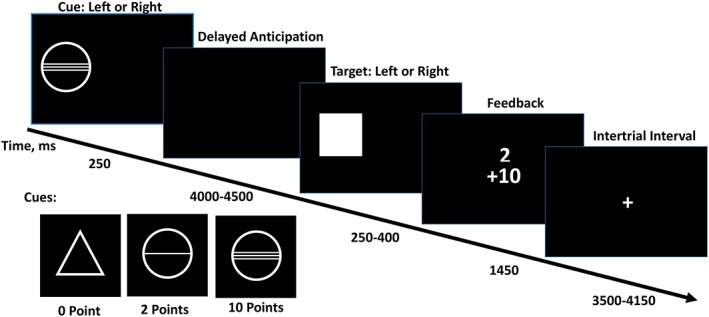
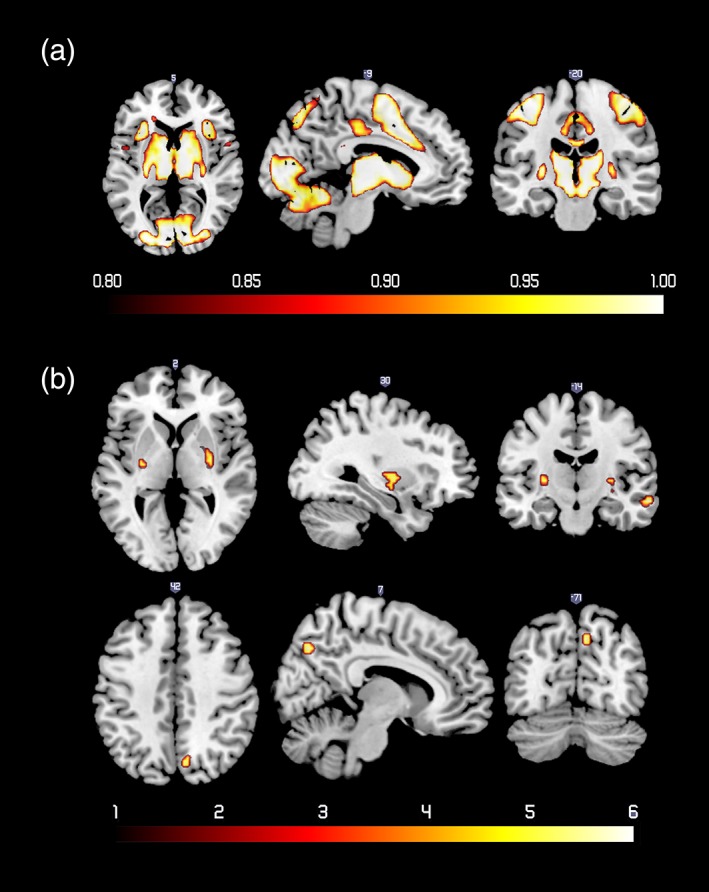
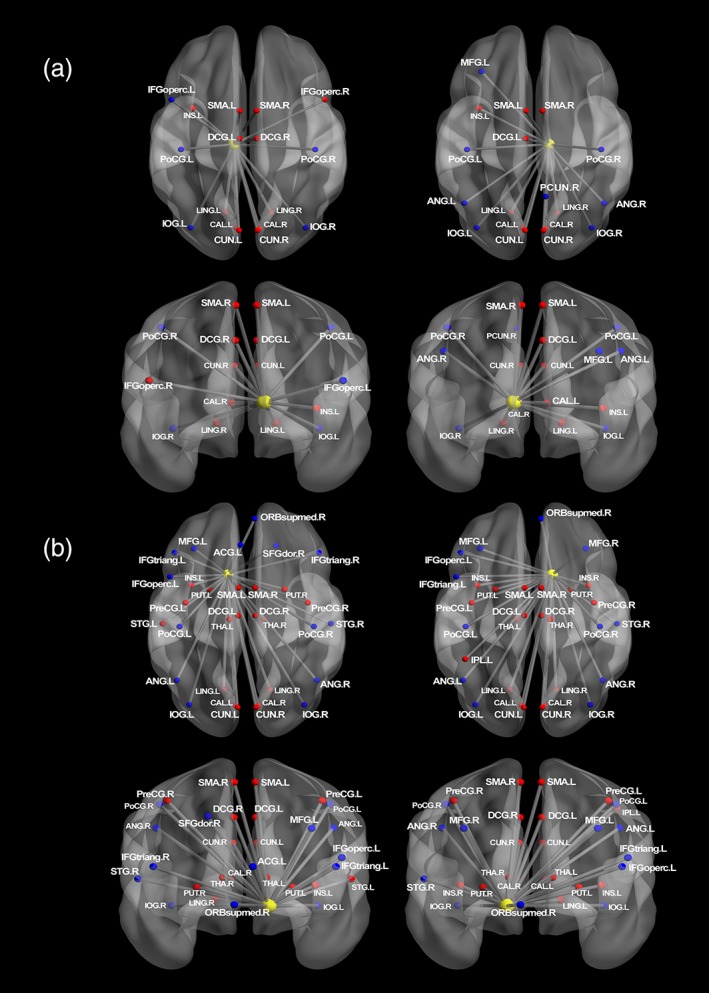
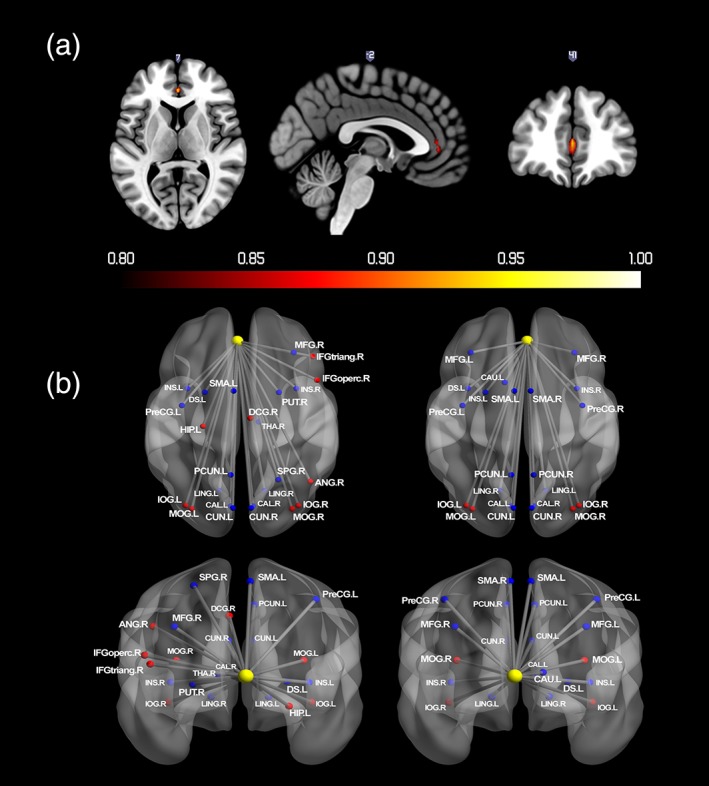
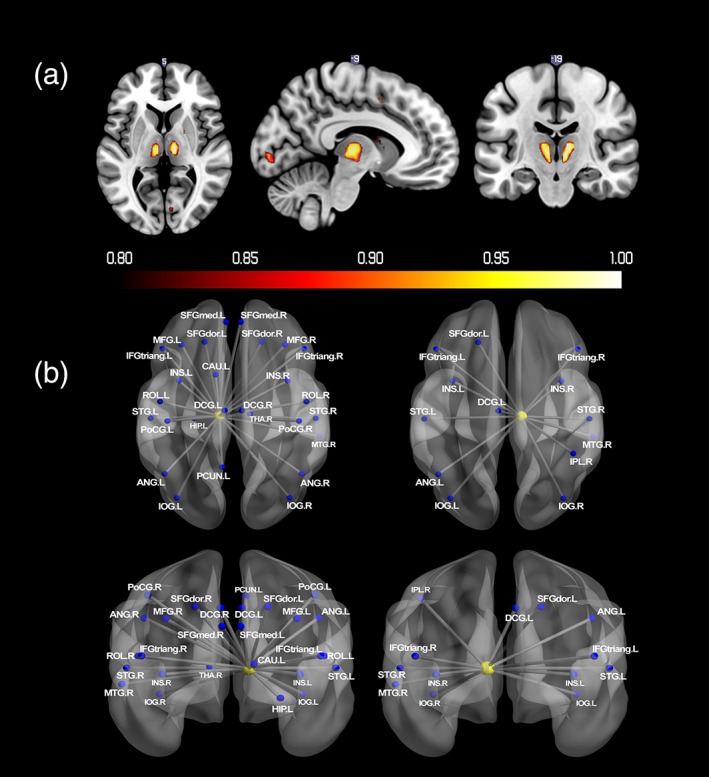
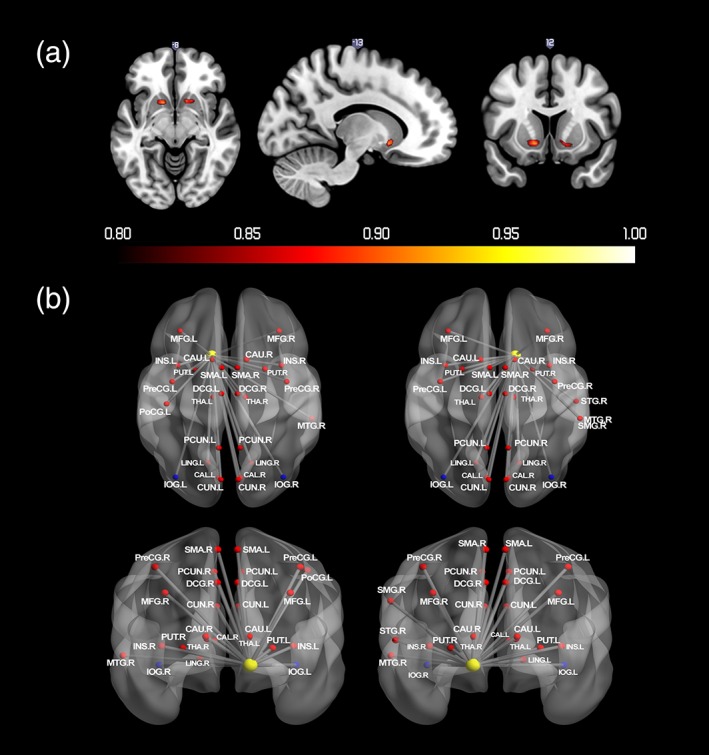
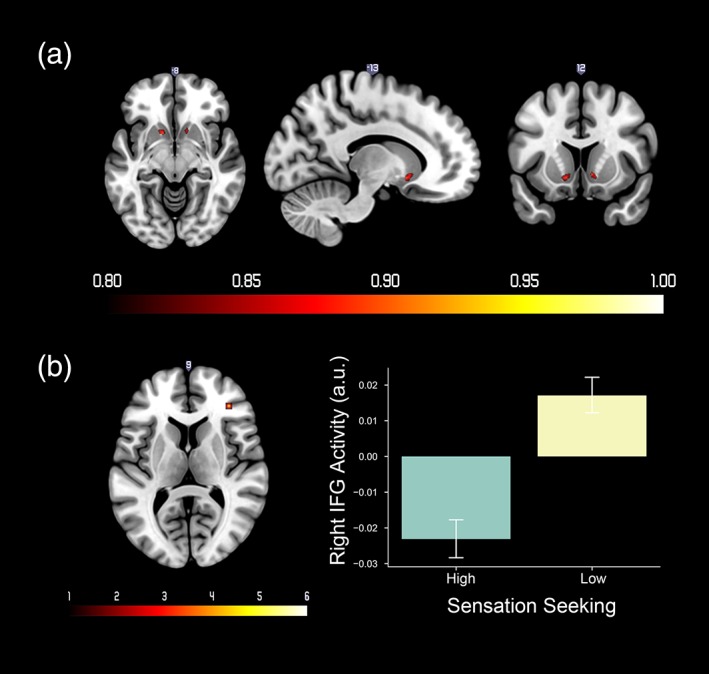
The functional neuroanatomy and connectivity of reward processing in adults are well documented, with relatively less research on adolescents, a notable gap given this developmental period's association with altered reward sensitivity. Here, a large sample (n = 1,510) of adolescents performed the monetary incentive delay (MID) task during functional magnetic resonance imaging. Probabilistic maps identified brain regions that were reliably responsive to reward anticipation and receipt, and to prediction errors derived from a computational model. Psychophysiological interactions analyses were used to examine functional connections throughout reward processing. Bilateral ventral striatum, pallidum, insula, thalamus, hippocampus, cingulate cortex, midbrain, motor area, and occipital areas were reliably activated during reward anticipation. Bilateral ventromedial prefrontal cortex and bilateral thalamus exhibited positive and negative activation, respectively, during reward receipt. Bilateral ventral striatum was reliably active following prediction errors. Previously, individual differences in the personality trait of sensation seeking were shown to be related to individual differences in sensitivity to reward outcome. Here, we found that sensation seeking scores were negatively correlated with right inferior frontal gyrus activity following reward prediction errors estimated using a computational model. Psychophysiological interactions demonstrated widespread cortical and subcortical connectivity during reward processing, including connectivity between reward-related regions with motor areas and the salience network. Males had more activation in left putamen, right precuneus, and middle temporal gyrus during reward anticipation. In summary, we found that, in adolescents, different reward processing stages during the MID task were robustly associated with distinctive patterns of activation and of connectivity.
Keywords: adolescence; functional connectivity; gender differences; reward processing; sensation seeking.
© 2018 Wiley Periodicals, Inc.
Conflict of interest statement
Dr. Banaschewski served in an advisory or consultancy role for Actelion, Hexal Pharma, Lilly,Lundbeck, Medice, Novartis, Shire. He received conference support or speaker's fee by Lilly, Medice Novartis and Shire. He has been involved in clinical trials conducted by Shire & Viforpharma. He received royalities from Hogrefe, Kohlhammer, CIP Medien, Oxford University Press. The present work is unrelated to the above grants and relationships. Dr Barker has received funding for a PhD student and honoraria for teaching on scanner programming courses from General Electric Healthcare; he acts as a consultant for IXICO. Dr Walter received a speaker honorarium from Servier (2014).The other authors report no biomedical financial interests or potential conflicts of interest.
Figures
References
-
- Anderson, B. A. (2016). The attention habit: How reward learning shapes attentional selection. Annals of the New York Academy of Sciences, 1369, 24–39. - PubMed
Publication types
MeSH terms
Grants and funding
- 602450603016/Seventh Framework Programme/International
- SFB 940/1SM 80/7-1SM 80/7-2/Deutsche Forschungsgemeinschaft/International
- AF12-NEUR0008-01 - WM2NAANR-12-SAMA-0004/Agence Nationale de la Recherche/International
- U54 EB020403/EB/NIBIB NIH HHS/United States
- MR/N027558/1/BRIDGET/International
- GOIPD/2016/617/Irish Research Council/International
- 695313/Horizon 2020/International
- 695313/Horizon 2020 Framework Programme/International
- National Institute for Health Research/International
- Fondation de France/International
- SFB 940/1/Deutsche Forschungsgemeinschaft/International
- 01EV071101GS08152Forschungsnetz AERIAL/Bundesministerium für Bildung und Forschung/International
- INSERM/International
- SM 80/7-1/Deutsche Forschungsgemeinschaft/International
- MC_U105579215/MRC_/Medical Research Council/United Kingdom
- PR-ST-0416-10004/ERANID/International
- R01 MH085772/MH/NIMH NIH HHS/United States
- eMED SysAlc01ZX1311A/Bundesministerium für Bildung und Forschung/International
- 16/ERCD/3797/SFI_/Science Foundation Ireland/Ireland
- LSHM-CT- 2007-037286/Sixth Framework Programme/International
- SM 80/7-2/Deutsche Forschungsgemeinschaft/International
- King's College London/International
- Fondation pour la Recherche Médicale/International
- China Scholarship Council/International
- South London and Maudsley NHS Foundation Trust/International
- 115300-2/EU-AIMS/International
- MR/N000390/1/Swedish Research Council FORMAS/International
- RO1 MH085772-01A1U54 EB020403/NH/NIH HHS/United States
LinkOut - more resources
Full Text Sources
Other Literature Sources
Medical
Miscellaneous
