


A conformational sensor based on genetic code expansion reveals an autocatalytic component in EGFR activation
- PMID: 30242154
- PMCID: PMC6155120
- DOI: 10.1038/s41467-018-06299-7
A conformational sensor based on genetic code expansion reveals an autocatalytic component in EGFR activation
Abstract
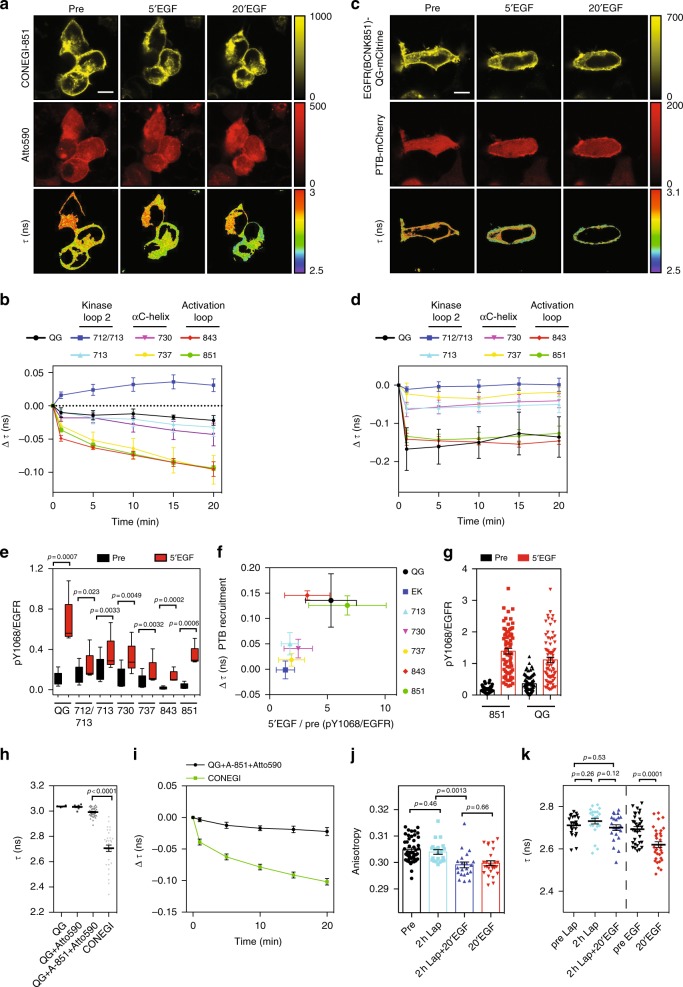
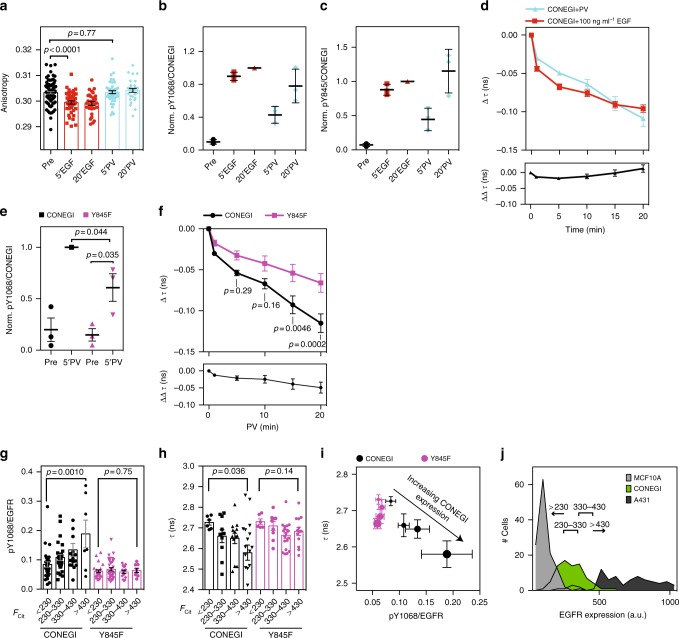
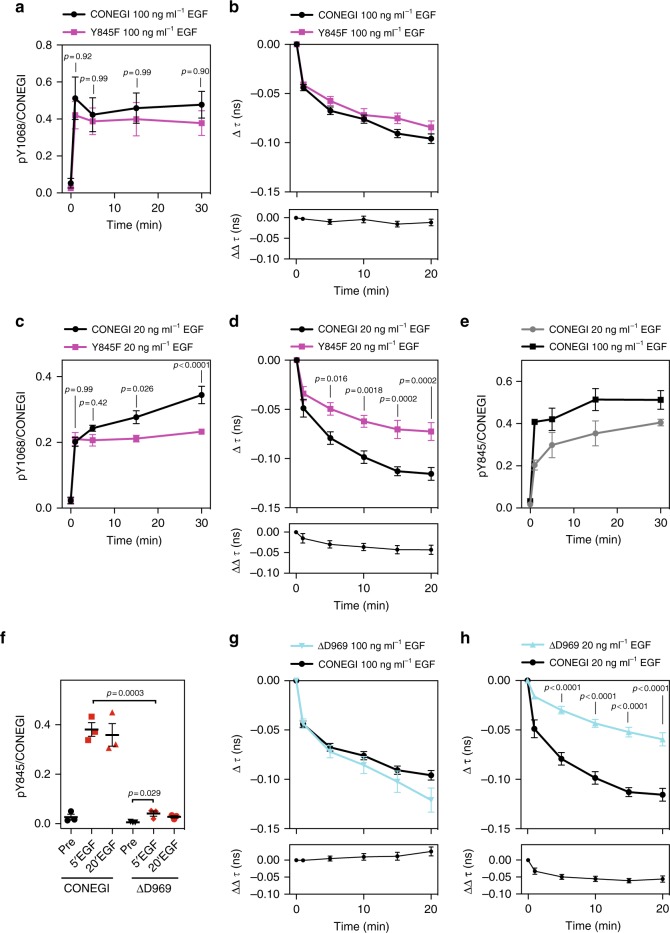
Epidermal growth factor receptor (EGFR) activation by growth factors (GFs) relies on dimerization and allosteric activation of its intrinsic kinase activity, resulting in trans-phosphorylation of tyrosines on its C-terminal tail. While structural and biochemical studies identified this EGF-induced allosteric activation, imaging collective EGFR activation in cells and molecular dynamics simulations pointed at additional catalytic EGFR activation mechanisms. To gain more insight into EGFR activation mechanisms in living cells, we develop a Förster resonance energy transfer (FRET)-based conformational EGFR indicator (CONEGI) using genetic code expansion that reports on conformational transitions in the EGFR activation loop. Comparing conformational transitions, self-association and auto-phosphorylation of CONEGI and its Y845F mutant reveals that Y845 phosphorylation induces a catalytically active conformation in EGFR monomers. This conformational transition depends on EGFR kinase activity and auto-phosphorylation on its C-terminal tail, generating a looped causality that leads to autocatalytic amplification of EGFR phosphorylation at low EGF dose.
Conflict of interest statement
The authors declare no competing interests.
Figures

References
Publication types
MeSH terms
Substances
Grants and funding
- MC_U105181009/MRC_/Medical Research Council/United Kingdom
- MC_UP_A024_1008/MRC_/Medical Research Council/United Kingdom
- MC_U105181009/Medical Research Council (MRC)/International
- ASTF No: 122-2015/European Molecular Biology Organization (EMBO)/International
- MC_UP_A024_1008/Medical Research Council (MRC)/International
LinkOut - more resources
Full Text Sources
Other Literature Sources
Research Materials
Miscellaneous
