


Effects of propofol/remifentanil-based total intravenous anesthesia versus sevoflurane-based inhalational anesthesia on the release of VEGF-C and TGF-β and prognosis after breast cancer surgery: a prospective, randomized and controlled study
- PMID: 30243294
- PMCID: PMC6151192
- DOI: 10.1186/s12871-018-0588-3
Effects of propofol/remifentanil-based total intravenous anesthesia versus sevoflurane-based inhalational anesthesia on the release of VEGF-C and TGF-β and prognosis after breast cancer surgery: a prospective, randomized and controlled study
Abstract
Background: Vascular endothelial growth factor (VEGF) and transforming growth factor-β (TGF-β) have been involved in tumor growth and metastasis. Sevoflurane may promote angiogenesis, whereas propofol can present an anti-angiogenic effect. In this study, we compared the effects of propofol/remifentanil-based total intravenous anesthesia (TIVA) and sevoflurane-based inhalational anesthesia on the release of VEGF-C and TGF-β, as well as recurrence- free survival (RFS) rates in the patients undergoing breast cancer surgery.
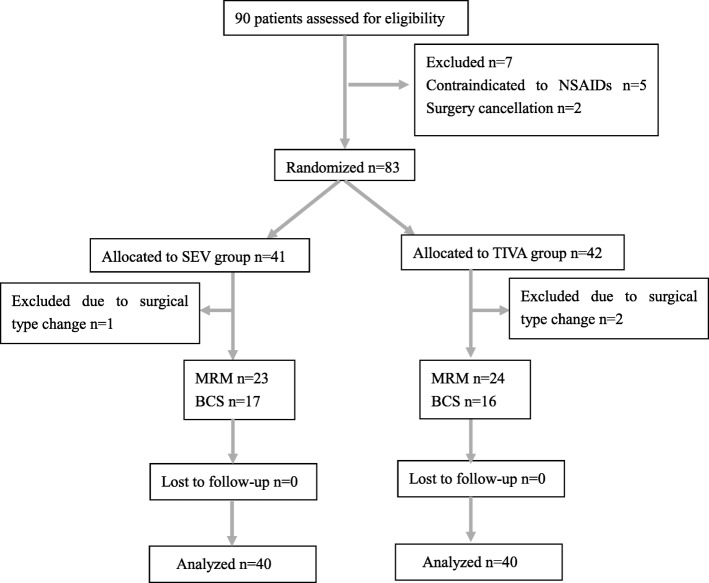
Methods: Eighty female patients undergoing breast cancer resection were enrolled and randomized to receive either sevoflurane-based inhalational anesthesia (SEV group) or propofol/remifentanil-based TIVA (TIVA group). The serum concentrations of VEGF-C and TGF-β before and 24 h after surgery were measured and RFS rates over a two-year follow-up were analyzed in both groups. The postoperative pain scores assessed using a visual analogue scale (VAS) and the use of perioperative opioids were also evaluated.
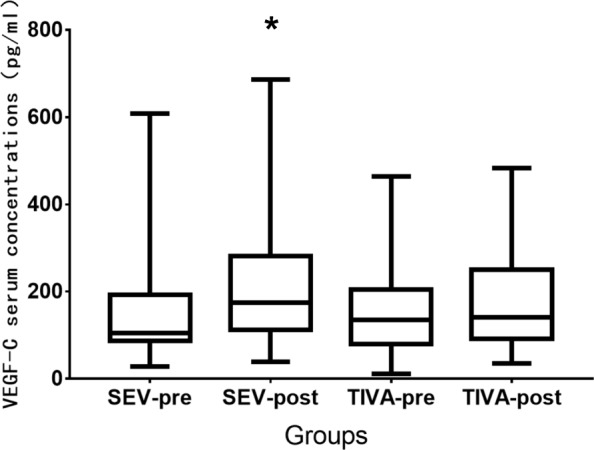
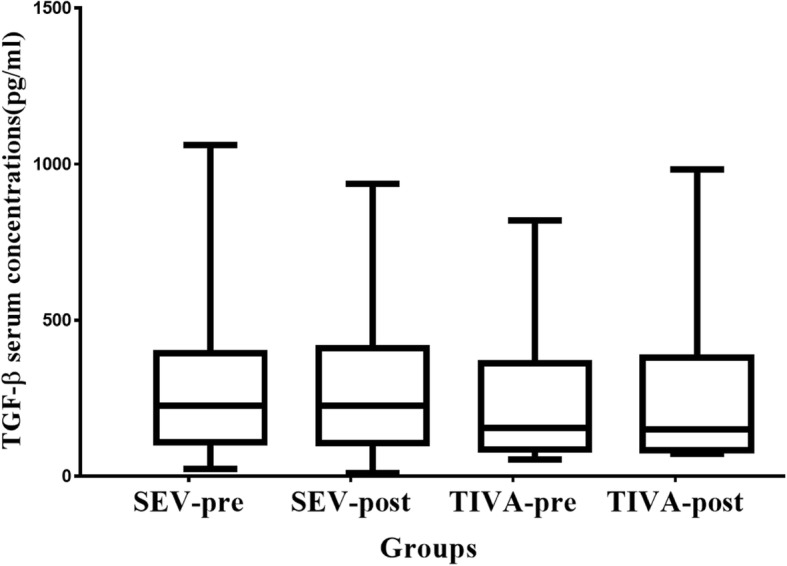
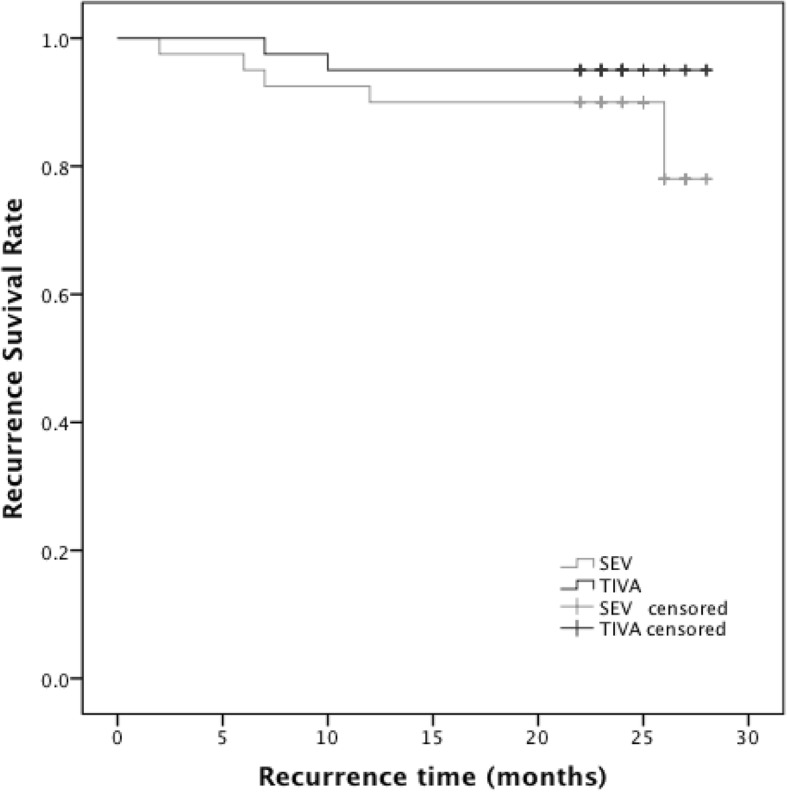
Results: Although VAS scores at 2 h and 24 h after surgery were comparable between the two groups, there were more patients receiving postoperative fentanyl in the TIVA group (16[40%]) compared with the SEV group (6[15%], p = 0.023). VEGF-C serum concentrations increased after surgery from 105 (87-193) pg/ml to174 (111-281) pg/ml in the SEV group (P = 0.009), but remained almost unchanged in the TIVA group with 134 (80-205) pg/ml vs.140(92-250) pg/ml(P = 0.402). The preoperative to postoperative change for VEGF-C of the SEV group (50 pg/ml) was significantly higher than that of the TIVA group (12 pg/ml) with a difference of 46 (- 11-113) pg/ml (P = 0.008). There were also no significant differences in the preoperative and postoperative TGF-β concentrations between the two groups. The two-year RFS rates were 78% and 95% in the SEV and TIVA groups (P = 0.221), respectively.
Conclusion: In comparison with sevoflurane-based inhalational anesthesia, propofol/remifentanil -based total intravenous anesthesia can effectively inhibit the release of VEGF-C induced by breast surgery, but didn't seem to be beneficial in the short-term recurrence rate of breast cancer.
Trial registration: Chictr.org.cn ChiCTR1800017910 . Retrospectively Registered (Date of registration: August 20, 2018).
Keywords: Angiogenesis; Breast cancer; Propofol; Sevoflurane; Total intravenous anesthesia.
Conflict of interest statement
Ethics approval and consent to participate
The study has been approved by the Ethics Committee of National Cancer Center/Cancer Hospital (Reference: NCC2013YZ-06). Written informed consent was obtained from each participant prior to data collection or study intervention.
Consent for publication
Not applicable.
Competing interests
The authors declare that they have no competing interests.
Publisher’s Note
Springer Nature remains neutral with regard to jurisdictional claims in published maps and institutional affiliations.
Figures
References
-
- Zhang T, Fan Y, Liu K, Wang Y. Effects of different general anesthetic techniques on immune responses in patients undergoing surgery for tongue cancer. Anaesth Intensive Care. 2014;42:220–227. - PubMed
Publication types
MeSH terms
Substances
Associated data
LinkOut - more resources
Full Text Sources
Other Literature Sources
Medical
