


Feasibility and acceptability of a motivational interviewing breastfeeding peer support intervention
- PMID: 30246923
- PMCID: PMC7198929
- DOI: 10.1111/mcn.12703
Feasibility and acceptability of a motivational interviewing breastfeeding peer support intervention
Abstract
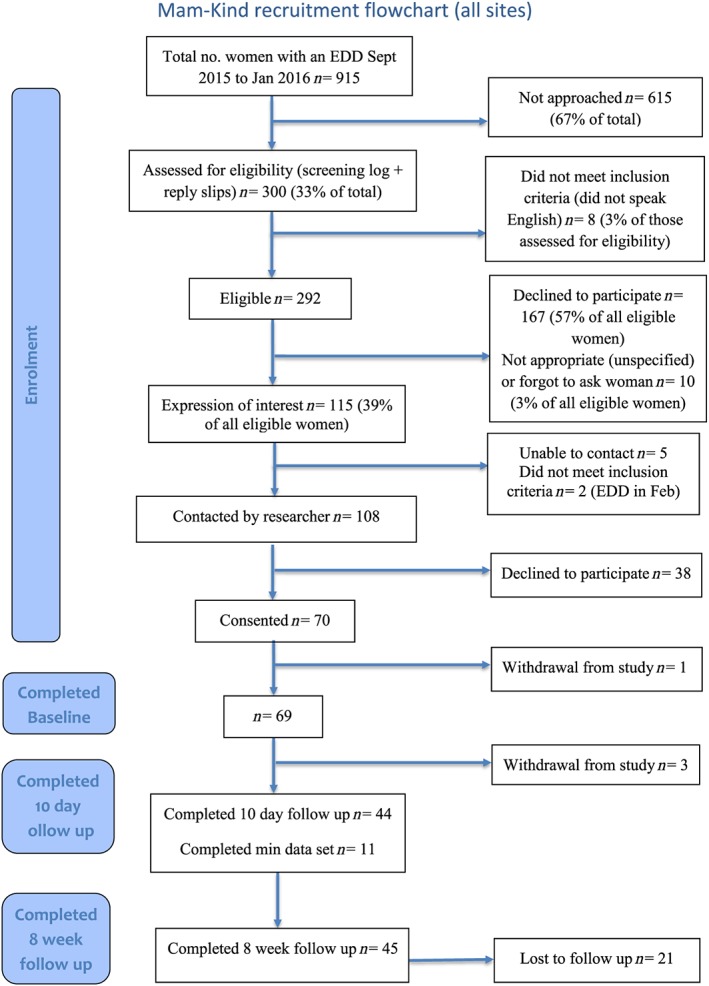
An uncontrolled study with process evaluation was conducted in three U.K. community maternity sites to establish the feasibility and acceptability of delivering a novel breastfeeding peer-support intervention informed by motivational interviewing (MI; Mam-Kind). Peer-supporters were trained to deliver the Mam-Kind intervention that provided intensive one-to-one peer-support, including (a) antenatal contact, (b) face-to-face contact within 48 hr of birth, (c) proactive (peer-supporter led) alternate day contact for 2 weeks after birth, and (d) mother-led contact for a further 6 weeks. Peer-supporters completed structured diaries and audio-recorded face-to-face sessions with mothers. Semistructured interviews were conducted with a purposive sample of mothers, health professionals, and all peer-supporters. Interview data were analysed thematically to assess intervention acceptability. Audio-recorded peer-support sessions were assessed for intervention fidelity and the use of MI techniques, using the MITI 4.2 tool. Eight peer-supporters delivered the Mam-Kind intervention to 70 mothers in three National Health Service maternity services. Qualitative interviews with mothers (n = 28), peer-supporters (n = 8), and health professionals (n = 12) indicated that the intervention was acceptable, and health professionals felt it could be integrated with existing services. There was high fidelity to intervention content; 93% of intervention objectives were met during sessions. However, peer-supporters reported difficulties in adapting from an expert-by-experience role to a collaborative role. We have established the feasibility and acceptability of providing breastfeeding peer-support using a MI-informed approach. Refinement of the intervention is needed to further develop peer-supporters' skills in providing mother-centred support. The refined intervention should be tested for effectiveness in a randomised controlled trial.
Keywords: breastfeeding; feasibility; infant feeding; motivational interviewing; peer-support; pregnancy.
© 2018 John Wiley & Sons Ltd.
Conflict of interest statement
Billie Hunter's post is part‐funded by the Royal College of Midwives.
References
-
- Abeypala, U. , Chalmers, L. , & Trute, M. (2014). OP47 CONNECT2: A motivitional peer support model for type 2 diabetes. Diabetes Research and Clinical Practice, 106, S24–S25. 10.1016/S0168-8227(14)70253-0 - DOI
-
- Berg‐Smith, S. M. (2014). The art of teaching motivational interviewing.
-
- Brown, A. , Phillips, R. , Copeland, L. , Grant, A. , Sanders, J. , Gobat, N. , … Paranjothy, S. (2018). Development of a novel motivational interviewing (MI) informed peer‐support intervention to support mothers to breastfeed for longer. BMC Pregnancy and Childbirth, 18(1). 10.1186/s12884-018-1725-1 - DOI - PMC - PubMed
Publication types
MeSH terms
Grants and funding
LinkOut - more resources
Full Text Sources
Other Literature Sources
Medical
Miscellaneous
