


Comparison of analgesic effect of oxycodone and morphine on patients with moderate and advanced cancer pain: a meta-analysis
- PMID: 30249205
- PMCID: PMC6154420
- DOI: 10.1186/s12871-018-0583-8
Comparison of analgesic effect of oxycodone and morphine on patients with moderate and advanced cancer pain: a meta-analysis
Erratum in
-
Correction to: Comparison of analgesic effect of oxycodone and morphine on patients with moderate and advanced cancer pain: a meta-analysis.BMC Anesthesiol. 2018 Nov 19;18(1):173. doi: 10.1186/s12871-018-0630-5. BMC Anesthesiol. 2018. PMID: 30453905 Free PMC article.
Abstract
Background: Morphine and oxycodone are considered as wide-spreadly used opioids for moderate/severe cancer pain. However, debate exists about the evidence regarding their relative tolerability and underlying results.
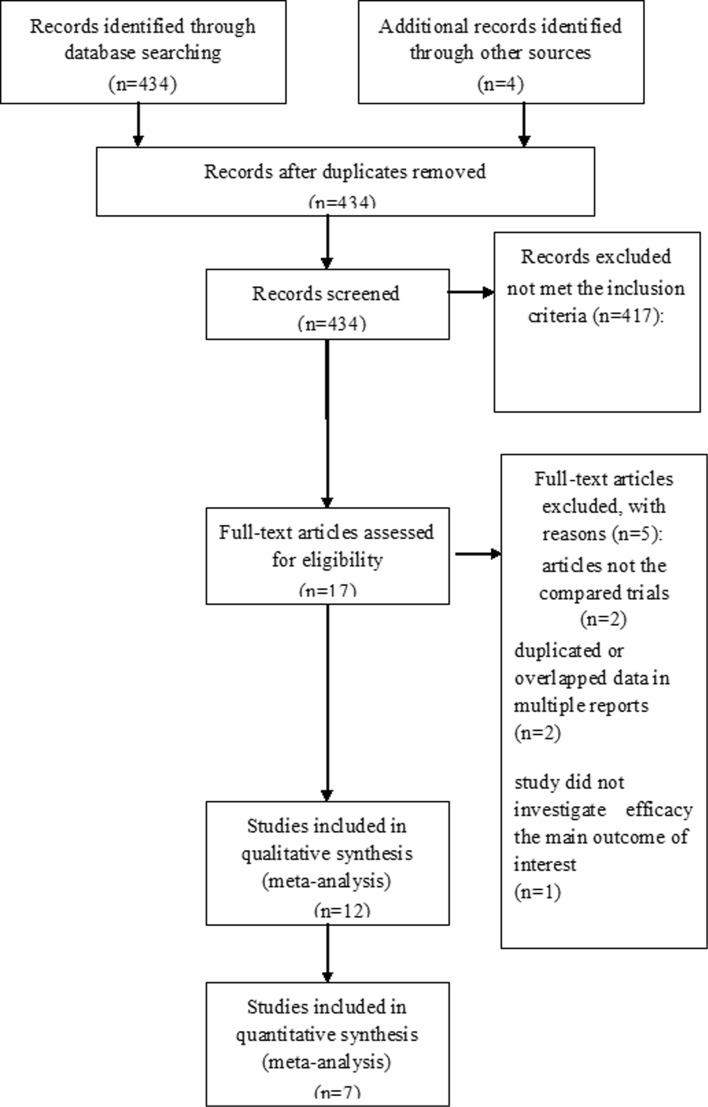
Methods: A systematic search of online electronic databases, including PubMed, Embase, Cochrane library updated on October 2017 were conducted. The meta-analysis was performed including the studies that were designed as randomized controlled trials.
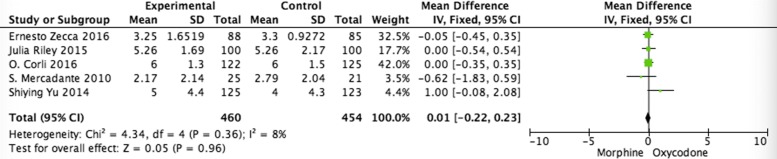
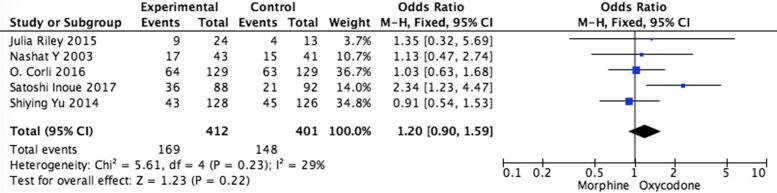
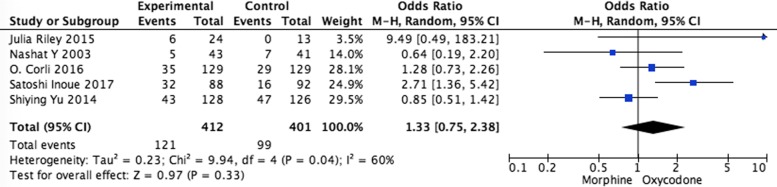
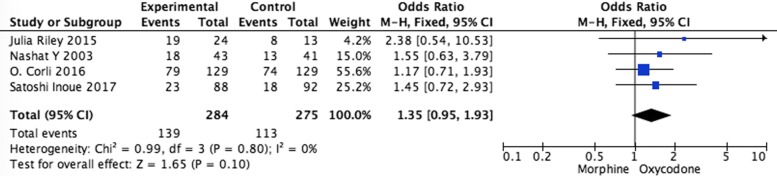
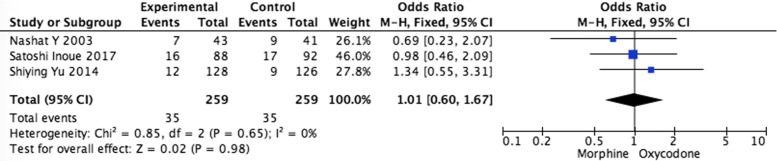
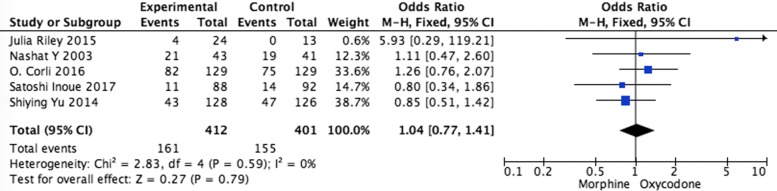
Results: In total, seven randomized clinical trials met our inclusion criteria. No statistical differences in analgesic effect between oxycodone and morphine were observed. Both the pooled analysis of API (MD =0.01, 95% CI -0.22 - 0.23; p = 0.96) and WPI (MD = - 0.05, 95% CI -0.21 - 0.30; p = 0.72) demonstrated clinical non-inferiority of the efficacy of morphine compared with oxycodone, respectively. Additionally, no significant difference in PRR response was observed in either oxycodone or morphine that were used in patients (MD =0.99, 95% CI -0.88 - 1.11; p = 0.87). With the pooled result of AEs indicating the comparable safety profiles between the 2 treatment groups, the meta-analysis on the nausea (OR = 1.20, 95% CI 0.90-1.59; p = 0.22), vomiting (OR = 1.33, 95% CI 0.75-2.38; p = 0.33), somnolence (OR = 1.35, 95% CI 0.95-1.93; p = 0.10), diarrhea (OR = 1.01, 95% CI 0.60-1,67; p = 0.98), and constipation (OR = 1.04, 95% CI 0.77-1.41; p = 0.79) was conducted, respectively.
Conclusions: In the current study, no remarkable difference was identified either in analgesic efficacy or in tolerability of oxycodone and morphine as the first-line therapy for patients with moderate to severe cancer pain. Thus, no sufficient clinical evidence on the superior effects of oxycodone to morphine was provided in this experimental hypothesis.
Keywords: Cancer pain; Meta-analysis; Morphine; Oxycodone.
Conflict of interest statement
Ethics approval and consent to participate
Not applicable.
Consent for publication
Not applicable.
Competing interests
The authors declare that they have no competing interests
Publisher’s Note
Springer Nature remains neutral with regard to jurisdictional claims in published maps and institutional affiliations.
Figures


References
-
- Portenoy RK. Managing cancer pain poorly responsive to systemic opioid therapy. Oncology (Williston Park) 1999;13(5 Suppl 2):25–29. - PubMed
-
- World Health Organization (WHO) Expert Committee. Cancer pain relief and palliative care. Geneva: World Health Organization; 1990. Technical report series, No. 804. - PubMed
-
- World Health Organization. Cancer pain relief, second edition, with a guide to opioid availability. Geneva: World Health Organization; 1996.
Publication types
MeSH terms
Substances
LinkOut - more resources
Full Text Sources
Other Literature Sources
Miscellaneous
