


Cancer Health Literacy and Willingness to Participate in Cancer Research and Donate Bio-Specimens
- PMID: 30249985
- PMCID: PMC6211072
- DOI: 10.3390/ijerph15102091
Cancer Health Literacy and Willingness to Participate in Cancer Research and Donate Bio-Specimens
Abstract
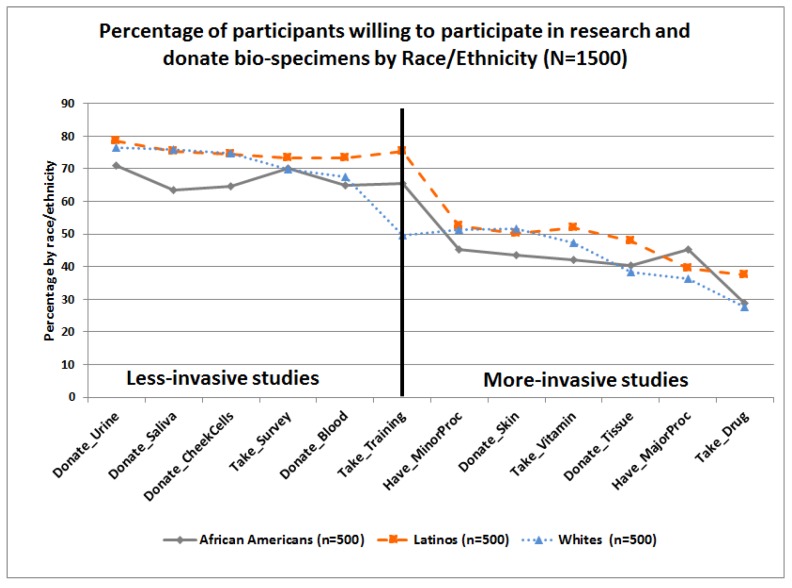
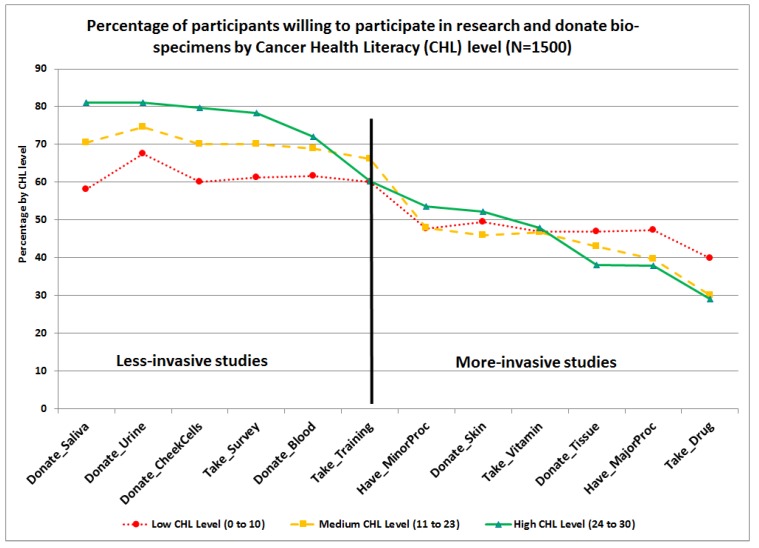
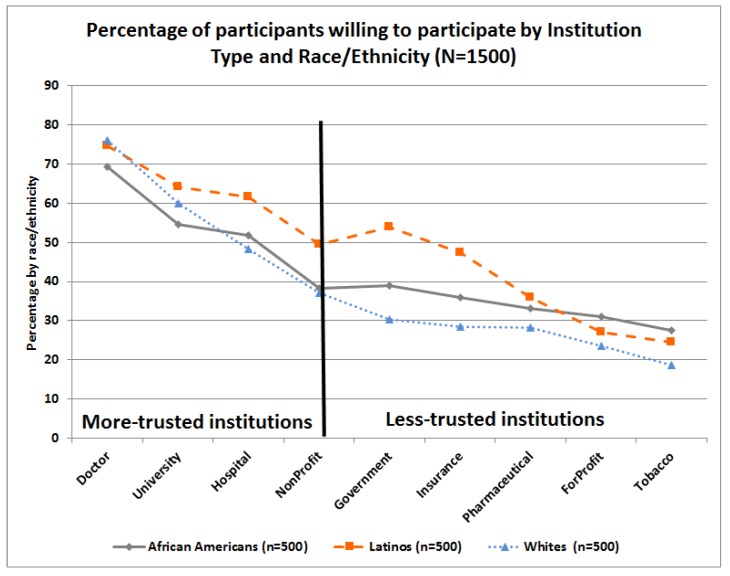
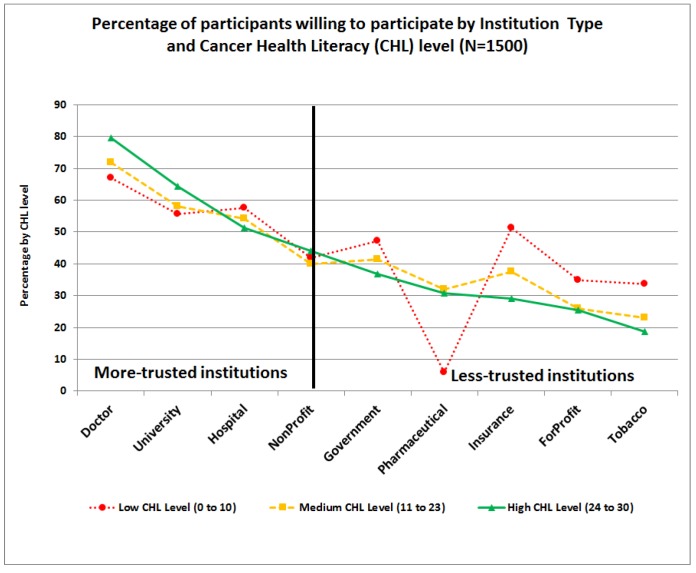
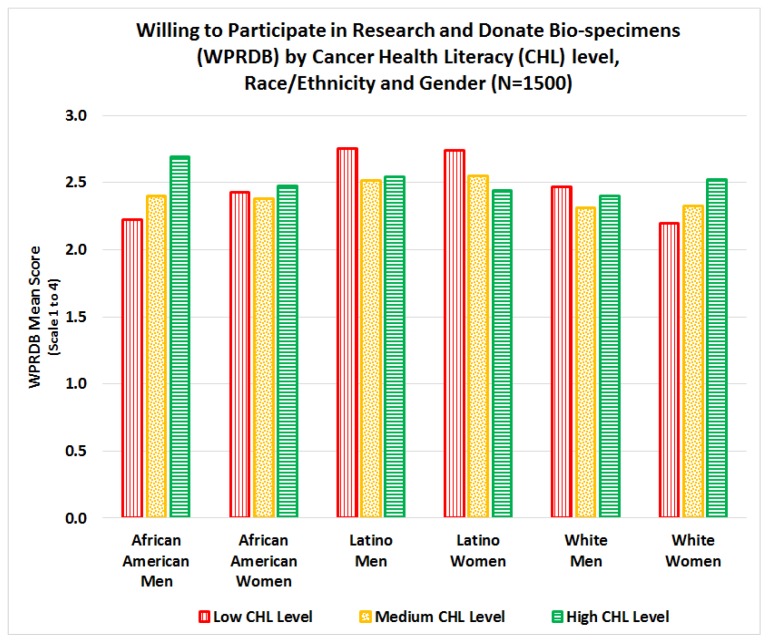
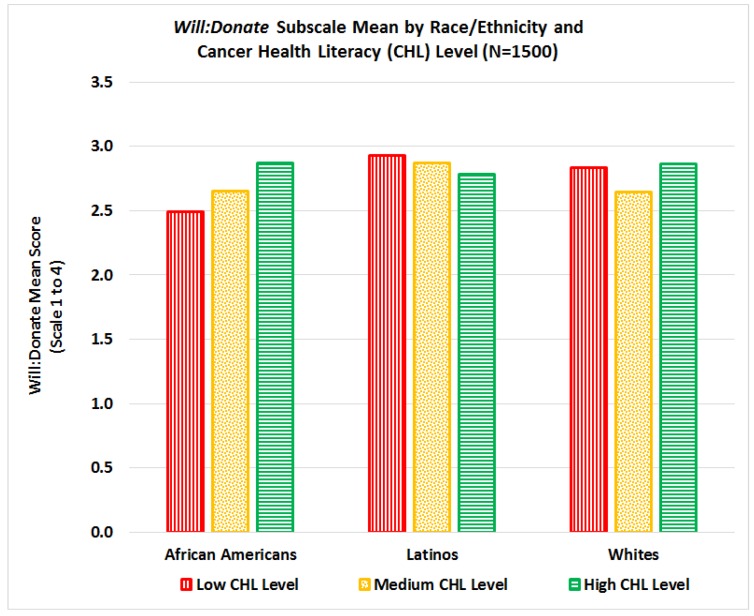
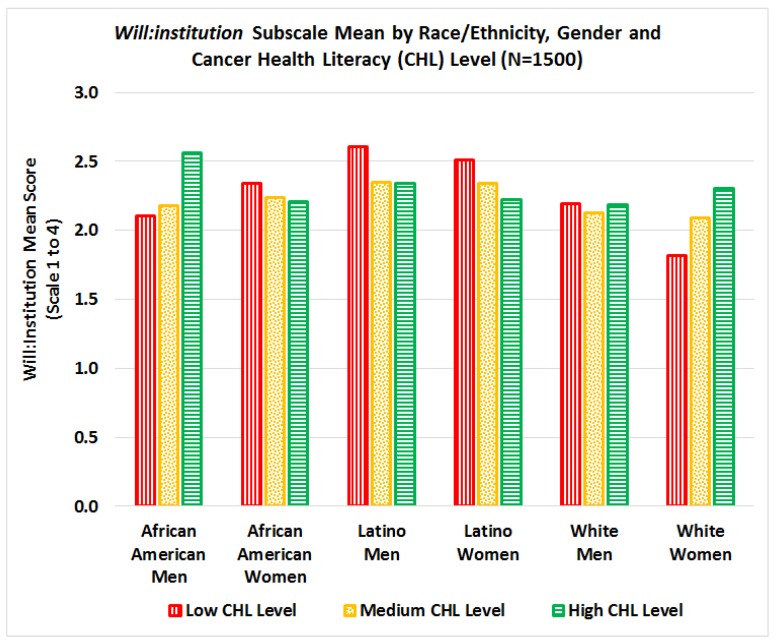
Although it has been well documented that poor health literacy is associated with limited participation in cancer clinical trials, studies assessing the relationships between cancer health literacy (CHL) and participation in research among diverse populations are lacking. In this study, we examined the relationship between CHL and willingness to participate in cancer research and/or donate bio-specimens (WPRDB) among African Americans, Latinos, and Whites. Participants completed the Cancer Health Literacy Test and the Multidimensional Cancer Literacy Questionnaire. Total-scale and subscale scores, frequencies, means, and distributions were computed. Analyses of variance, the Bonferroni procedure, and the Holm method were used to examine significant differences among groups. Cronbach's alphas estimated scales' internal consistency reliability. Significant interactions were found between race/ethnicity, gender, and CHL on WPRDB scales and subscale scores, even after education and age were taken into account. Our study confirms that CHL plays an important role that should be considered and researched further. The majority of participants were more willing to participate in non-invasive research studies (surveys, interviews, and training) or collection of bio-specimens (saliva, check cells, urine, and blood) and in studies led by their own healthcare providers, and local hospitals and universities. However, participants were less willing to participate in more-invasive studies requiring them to take medications, undergo medical procedures or donate skin/tissues. We conclude that addressing low levels of CHL and using community-based participatory approaches to address the lack of knowledge and trust about cancer research among diverse populations may increase not only their willingness to participate in research and donate bio-specimens, but may also have a positive effect on actual participation rates.
Keywords: African Americans; Blacks; Hispanics; Latinos; Whites; cancer health literacy; cancer research; community-based participatory research; minorities.
Conflict of interest statement
The authors declare no conflict of interest. The contents and views in this manuscript are those of the authors and should not be construed to represent the views of the National Institutes of Health. Preliminary data and some graphs in this manuscript were presented at the RCMI Translational Science 2017 Conference, Washington, DC.
Figures
References
-
- Colby S.L., Ortman J.M. Projections of the Size and Composition of the U.S. Population: 2014 to 2060. Current Population Reports, P25-1143. U.S. Census Bureau; Washington, DC, USA: 2014.
-
- American Cancer Society (ACS) American Cancer Society; Atlanta: 2016. [(accessed on 21 September 2018)]. Cancer Facts & Figures for African Americans 2016–2018. Available online: https://www.cancer.org/content/dam/cancer-org/research/cancer-facts-and-....
-
- American Cancer Society (ACS) American Cancer Society; Atlanta: 2015. [(accessed on 21 September 2018)]. Cancer Facts & Figures for Hispanics/Latinos 2015–2017. Available online: https://www.cancer.org/content/dam/cancer-org/research/cancer-facts-and-...
Publication types
MeSH terms
Grants and funding
LinkOut - more resources
Full Text Sources
Other Literature Sources
Medical
