


Spindle cell melanoma: Incidence and survival, 1973-2017
- PMID: 30250577
- PMCID: PMC6144801
- DOI: 10.3892/ol.2018.9247
Spindle cell melanoma: Incidence and survival, 1973-2017
Abstract
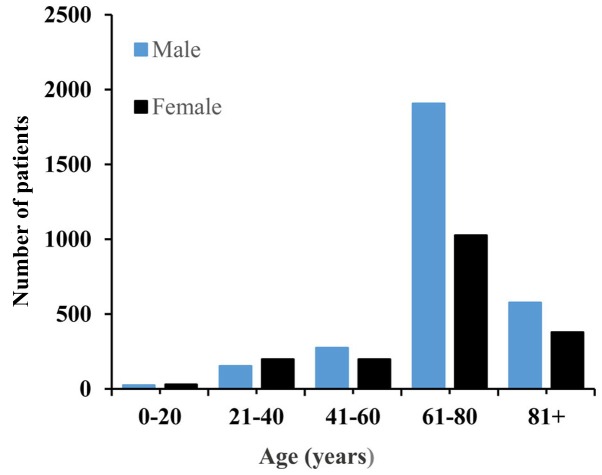
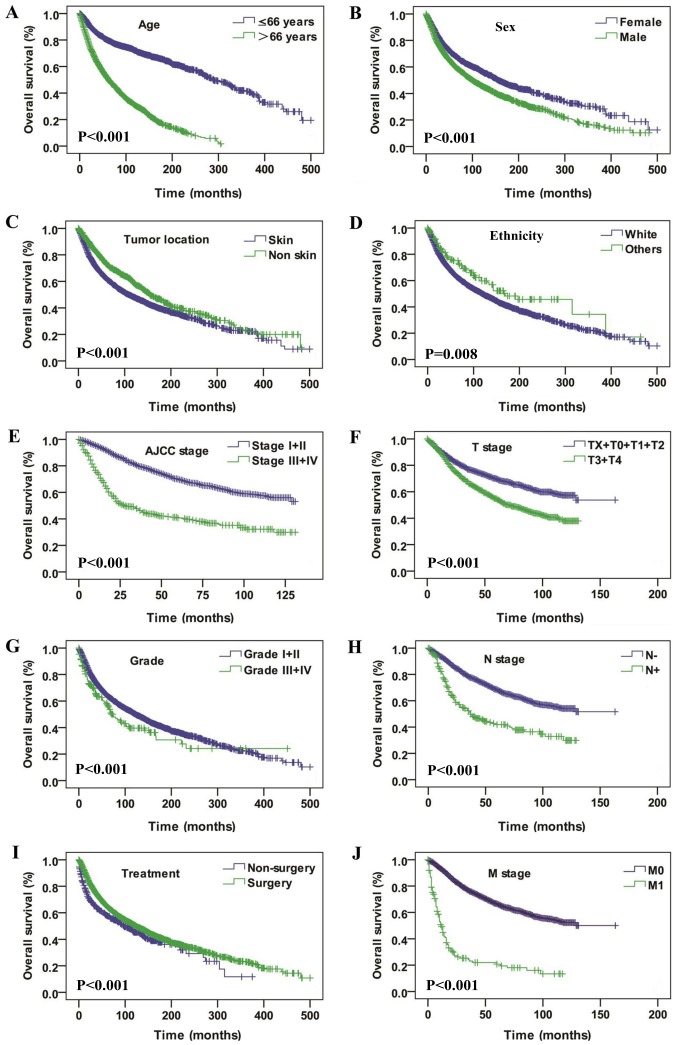
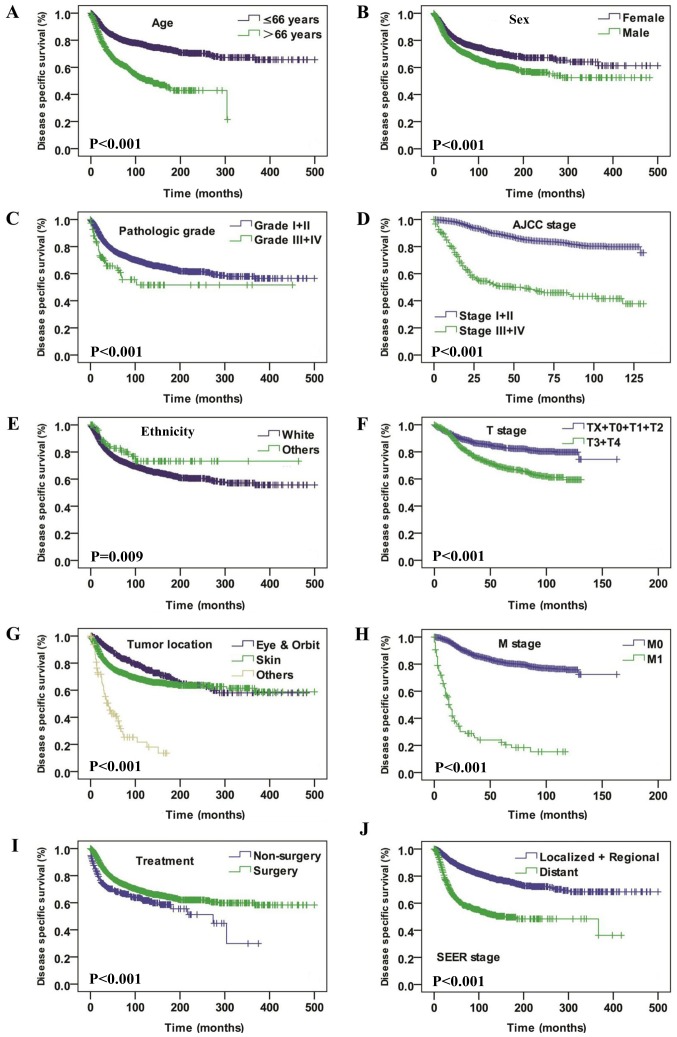
Spindle cell melanoma (SCM) is a rare morphological subtype of melanoma, which is relatively uncharacterized. The aim of the present study was to investigate the incidence of SCM, its general demographics, basic clinico-pathologic features, treatment outcomes and disease-specific prognostic factors. SCM cases were sampled from the Surveillance, Epidemiology and End Results (SEER) Program (1973-2017). A total of 4761 SCM cases were identified, with a median age of 66 years. The female:male ratio was 0.62:1. Statistically significant overall survival (OS) and disease-specific survival (DSS) rate differences were identified depending on age, sex, ethnicity, tumor location, T stage, N stage, M stage, pathological grade, AJCC stage, SEER stages and surgical treatment (P<0.05). Multivariate Cox regression analysis revealed that age >66 years, T3+T4 stage disease, positive N stage and SEER historic stage of regional and distant metastasis tumor were associated with poor DSS and OS rates. In summary, SCM was most common in Caucasian people of 60~80 years of age with a predominance in males. Patient's age, ethnicity, T stage, N stage, and SEER historic stage were identified as independent prognostic factors of SCM in terms of DSS and OS.
Keywords: epidemiology and end results; incidence; prognostic factor; spindle cell melanoma; the surveillance.
Figures
References
-
- Diaz A, Valera A, Carrera C, Hakim S, Aguilera P, García A, Palou J, Puig S, Malvehy J, Alos L. Pigmented spindle cell nevus: Clues for differentiating it from spindle cell malignant melanoma. A comprehensive survey including clinicopathologic, immunohistochemical, and FISH studies. Am J Surg Pathol. 2011;35:1733–1742. doi: 10.1097/PAS.0b013e318229cf66. - DOI - PubMed
LinkOut - more resources
Full Text Sources
Other Literature Sources