


The Impact of Vaccination and Prior Exposure on Stool Shedding of Salmonella Typhi and Salmonella Paratyphi in 6 Controlled Human Infection Studies
- PMID: 30252031
- PMCID: PMC6452003
- DOI: 10.1093/cid/ciy670
The Impact of Vaccination and Prior Exposure on Stool Shedding of Salmonella Typhi and Salmonella Paratyphi in 6 Controlled Human Infection Studies
Abstract
Background: Shedding of Salmonella Typhi or Paratyphi in the stool or urine leads to contamination of food or water, which is a prerequisite for transmission of enteric fever. Currently, there are limited data on the effect of vaccination or prior exposure on stool shedding.
Methods: Six Salmonella Typhi or Paratyphi human challenge studies were conducted between 2011 and 2017. Participants were either unvaccinated or vaccinated with 1 of 4 vaccines: Vi-polysaccharide (Vi-PS), Vi-tetanus-toxoid conjugate vaccine (Vi-TT), live oral Ty21a vaccine, or an experimental vaccine (M01ZH09). Daily stool cultures were collected for 14 days after challenge.
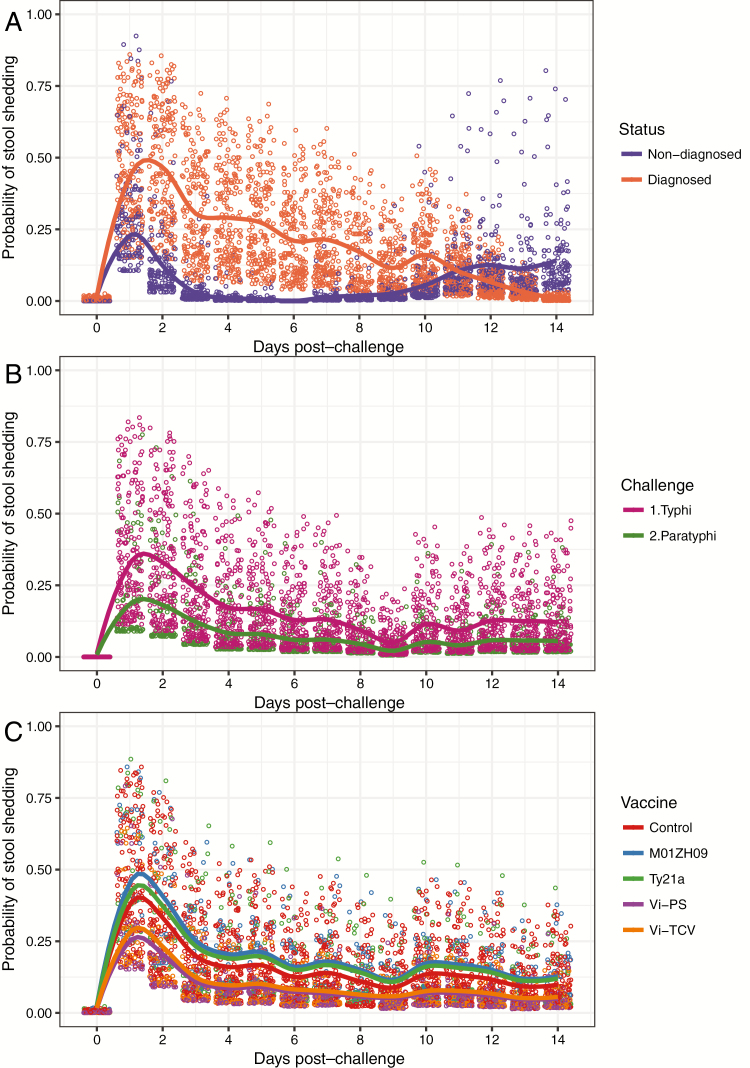
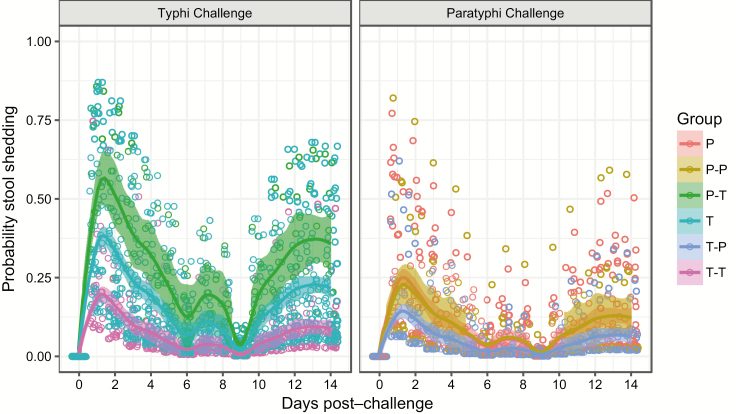
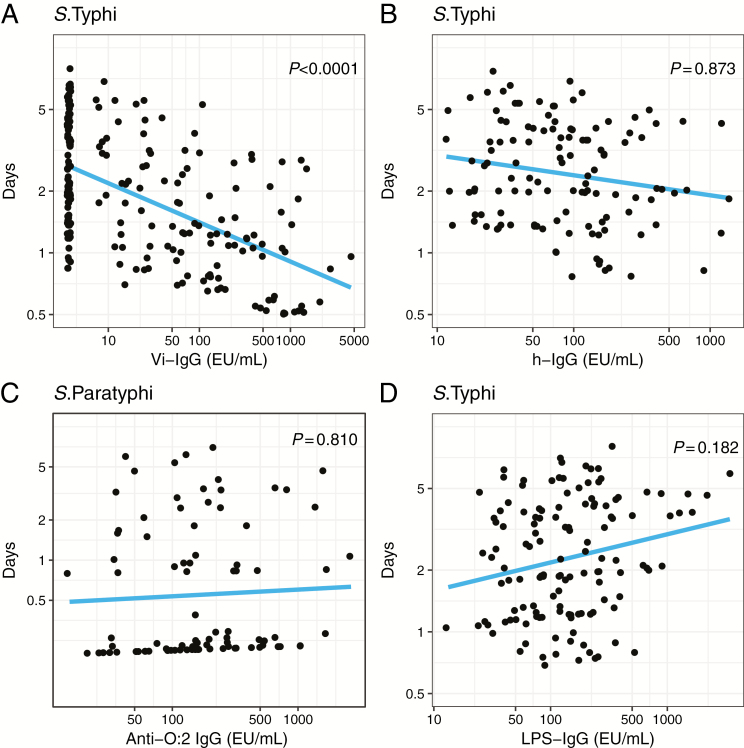
Results: There were 4934 stool samples collected from 430 volunteers. Participants who received Vi-PS or Vi-TT shed less than unvaccinated participants (odds ratio [OR], 0.34; 95% confidence interval [CI], 0.15-0.77; P = .010 and OR, 0.41; 95% CI, 0.19-0.91, P = .029 for Vi-PS and Vi-TT, respectively). Higher anti-Vi immunoglobulin G titers were associated with less shedding of S. Typhi (P < .0001). A nonsignificant reduction in shedding was associated with Ty21a vaccine (OR, 0.57; 95% CI, 0.27-1.20; P = .140). Individuals previously exposed to S. Typhi shed less than previously unexposed individuals (OR, 0.30; 95% CI, 0.1-0.8; P = .016). Shedding of S. Typhi was more common than S. Paratyphi.
Conclusions: Prior vaccination with Vi vaccines, or natural infection, reduces onward transmission of S. Typhi. Field trials of Vi-TT should be designed to detect indirect protection, reflecting the consequence of reduced stool shedding observed in the human challenge model.
Keywords: Salmonella Typhi; Vi-polysaccharide vaccine; indirect effects; stool shedding; typhoid conjugate vaccine.
© The Author(s) 2018. Published by Oxford University Press for the Infectious Diseases Society of America.
Figures
References
-
- Mogasale V, Maskery B, Ochiai RL, et al. . Burden of typhoid fever in low-income and middle-income countries: a systematic, literature-based update with risk-factor adjustment. Lancet Glob Health 2014; 2:e570–80. - PubMed
Publication types
MeSH terms
Substances
Grants and funding
LinkOut - more resources
Full Text Sources
Other Literature Sources
Medical
