


Heat wave-related mortality in Sweden: A case-crossover study investigating effect modification by neighbourhood deprivation
- PMID: 30253698
- PMCID: PMC6713612
- DOI: 10.1177/1403494818801615
Heat wave-related mortality in Sweden: A case-crossover study investigating effect modification by neighbourhood deprivation
Abstract
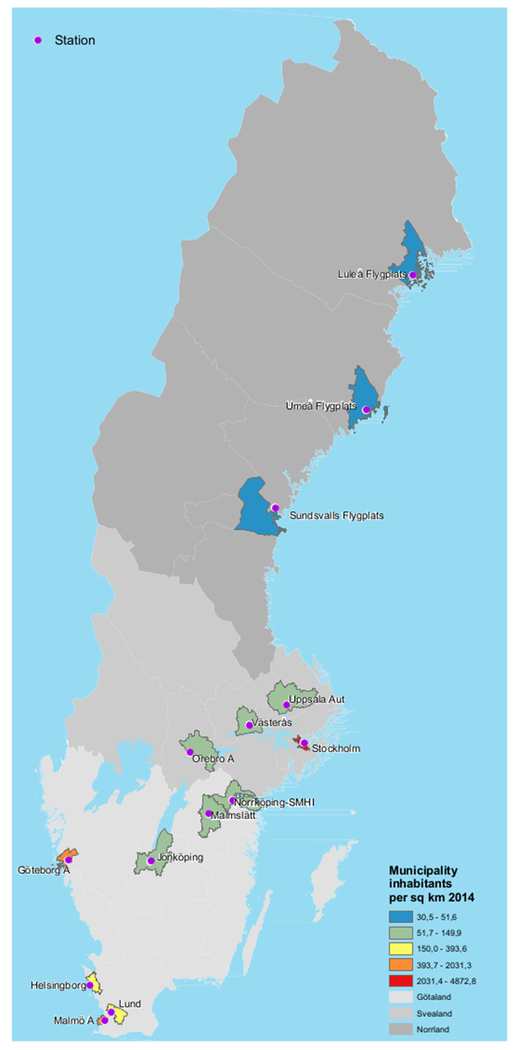
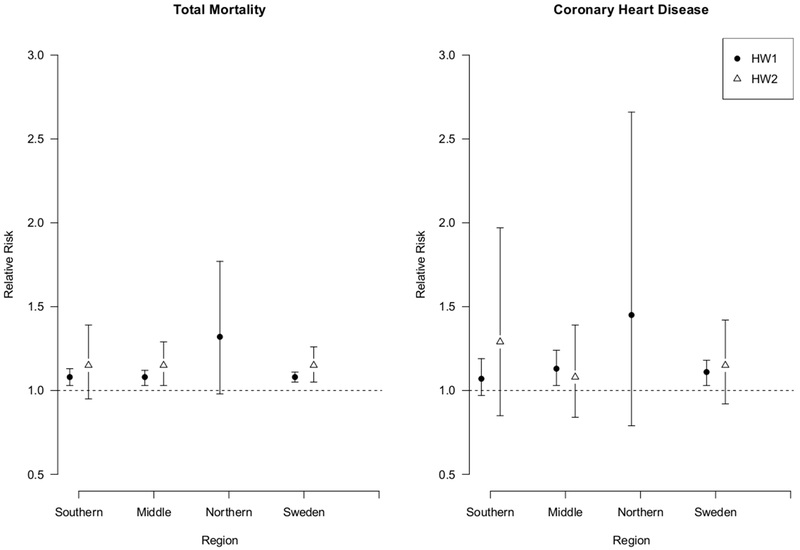
Aims: The present study aimed to investigate if set thresholds in the Swedish heat-wave warning system are valid for all parts of Sweden and if the heat-wave warning system captures a potential increase in all-cause mortality and coronary heart disease (CHD) mortality. An additional aim was to investigate whether neighbourhood deprivation modifies the relationship between heat waves and mortality. Methods: From 1990 until 2014, in 14 municipalities in Sweden, we collected data on daily maximum temperatures and mortality for the five warmest months. Heat waves were defined according to the categories used in the current Swedish heat-wave warning system. Using a case-crossover approach, we investigated the association between heat waves and mortality in Sweden, as well as a modifying effect of neighbourhood deprivation. Results: On a national as well as a regional level, heat waves significantly increased both all-cause mortality and CHD mortality by approximately 10% and 15%, respectively. While neighbourhood deprivation did not seem to modify heat wave-related all-cause mortality, CHD mortality did seem to modify the risk. Conclusions: It may not be appropriate to assume that heat waves in Sweden will have the same impact in a northern setting as in a southern, or that the impact of heat waves will be the same in affluent and deprived neighbourhoods. When designing and implementing heat-wave warning systems, neighbourhood, regional and national information should be incorporated.
Keywords: Heat wave; heat-wave warning system; mortality; neighbourhood deprivation.
Conflict of interest statement
Conflicts of interest.
The authors declare they have no actual or potential competing financial interests.
Figures
References
-
- Åström DO, et al. , Acute fatal effects of short-lasting extreme temperatures in Stockholm, Sweden: evidence across a century of change. Epidemiology, 2013. 24(6): p. 820–829. - PubMed
-
- Åström DO, et al. , Attributing mortality from extreme temperatures to climate change in Stockholm, Sweden. Nature Climate Change, 2013. 3(12): p. 1050–1054.
MeSH terms
Grants and funding
LinkOut - more resources
Full Text Sources
Other Literature Sources
