


Related but different: distinguishing postpartum depression and fatigue among women seeking help for unsettled infant behaviours
- PMID: 30253778
- PMCID: PMC6156854
- DOI: 10.1186/s12888-018-1892-7
Related but different: distinguishing postpartum depression and fatigue among women seeking help for unsettled infant behaviours
Abstract
Background: A growing body of evidence in relatively healthy populations suggests that postpartum depression and fatigue are likely distinct but related experiences. However, differentiating depression and fatigue in clinical settings remains a challenge. This study aimed to assess if depression and fatigue are distinct constructs in women with relatively high fatigue and psychological distress symptoms attending a residential program that assists with unsettled infant behaviour.
Methods: 167 women (age: M = 34.26, SD = 4.23) attending a private residential early parenting program completed the Depression Anxiety Stress Scale (DASS21-D), Fatigue Severity Scale (FSS) and self-report sleep variables before program commencement. Confirmatory Factor Analysis examined the associations between depression and fatigue latent factors.
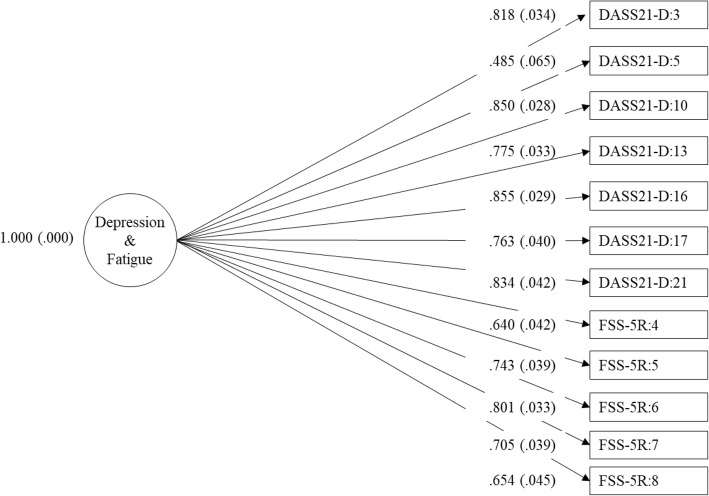
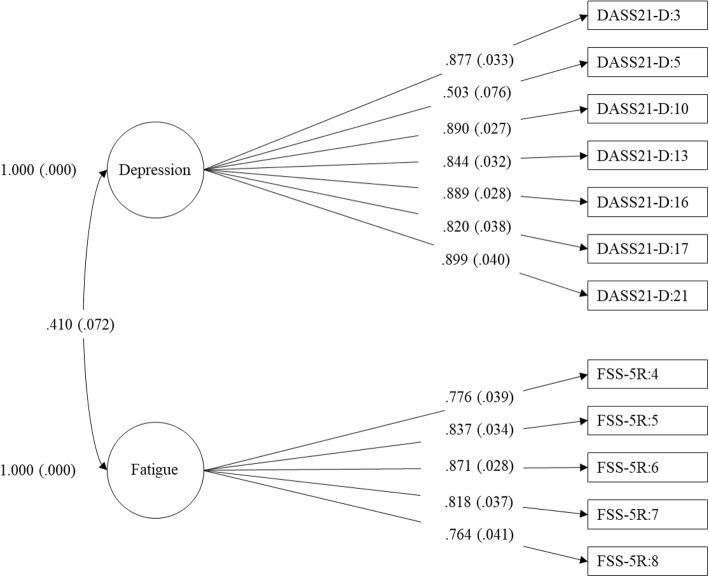
Results: A two-factor model of separate but related depression and fatigue constructs provided a significantly better fit to the data than a one-factor model of combined depression and fatigue (p < .001). In the two-factor model, the depression and fatigue latent factors were moderately correlated (.41). Further predictive utility of this two-factor model was demonstrated as both depression and fatigue factors were independently predicted by worse self-reported sleep efficiency.
Conclusions: This study provides empirical evidence that for women attending a clinical service with relatively high fatigue and psychological distress, postpartum depression and fatigue remain separate but related experiences. These findings suggest that in women seeking clinical support in the postpartum period, both depression and fatigue need to be carefully assessed to ensure accurate diagnoses, and (b) whilst depression intervention may improve fatigue, targeted fatigue intervention may also be warranted.
Keywords: Confirmatory factor analysis; Depression; Depressive; Fatigue; Postnatal; Postpartum.
Conflict of interest statement
Ethics approval and consent to participate
The Avenue Hospital Research Ethics Committee (Trial 182) and Monash University Human Research Ethics Committee (CF15/1233–201,500,575) provided ethical approval. Written informed consent was obtained from all participants.
Competing interests
NW has nothing to disclose. KW has nothing to disclose. JF reports personal fees from Masada Private Hospital, which is owned by Ramsay Healthcare, other from Global Public Health Unit, during the conduct of the study. BB has nothing to disclose.
Publisher’s Note
Springer Nature remains neutral with regard to jurisdictional claims in published maps and institutional affiliations.
Figures
References
-
- Putnam KT, Wilcox M, Robertson-Blackmore E, Sharkey K, Bergink V, Munk-Olsen T, Deligiannidis KM, Payne J, Altemus M, Newport J, et al. Clinical phenotypes of perinatal depression and time of symptom onset: analysis of data from an international consortium. Lancet Psychiatry. 2017;4(6):477–485. doi: 10.1016/S2215-0366(17)30136-0. - DOI - PMC - PubMed
-
- Fisher JRW, Feekery C, Rowe H. Psycho-educational Early Parenting Interventions to Promote Infant Mental Health. In: Fitzgerald HE, Puura K, Tomlinson M, Paul C, editors. International Perspectives on Children and Mental Health. edn ed. Santa Barbara: ABC-CLIO; 2011. p. 205–36.
-
- American Psychiatric A: Diagnostic and statistical manual of mental disorders (DSM-5®): American psychiatric pub; 2013. - PubMed
Publication types
MeSH terms
LinkOut - more resources
Full Text Sources
Other Literature Sources
Medical
Molecular Biology Databases
