


A prospective validation study in South-West Nigeria on caregiver report of childhood pneumonia and antibiotic treatment using Demographic and Health Survey (DHS) and Multiple Indicator Cluster Survey (MICS) questions
- PMID: 30254744
- PMCID: PMC6150611
- DOI: 10.7189/jogh.08.020806
A prospective validation study in South-West Nigeria on caregiver report of childhood pneumonia and antibiotic treatment using Demographic and Health Survey (DHS) and Multiple Indicator Cluster Survey (MICS) questions
Abstract
Background: Childhood pneumonia is the single largest infectious cause of death in children under five worldwide. Demographic and Health Surveys (DHS) and Multiple Indicator Cluster Surveys (MICS) provide health information on care sought for sick children in resource poor settings. Despite not being primarily designed to identify childhood pneumonia, there are concerns that reported episodes of "symptoms of acute respiratory infection" in DHS and MICS are often interpreted by other groups as a "proxy" for childhood pneumonia. Using DHS5 and MICS5 survey tools, this study aimed to assess how accurately caregivers report of "symptoms of acute respiratory infection" reflect pneumonia episodes and antibiotic use in children under five.
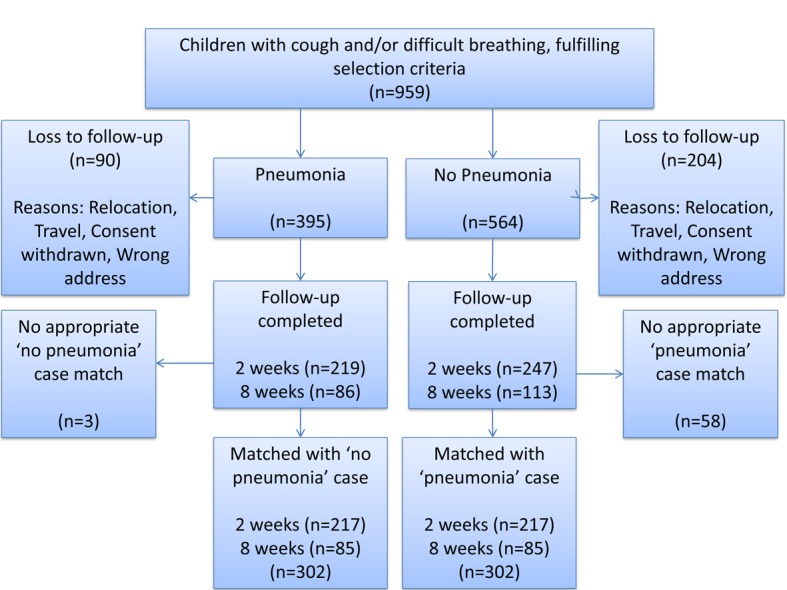
Methods: Children aged 0 to 59 months presenting with cough and/or difficult breathing were recruited from four study hospitals in Ibadan, Nigeria from August 2015 to March 2017. Children were assessed using World Health Organization (WHO) standard criteria by study physicians to identify whether they had pneumonia. Three hundred and two matched children in each category of 'pneumonia' and "no pneumonia" were followed up at home, either two or eight weeks later, using questions from DHS5 and MICS5 surveys to assess the accuracy of caregiver recall of pneumonia.
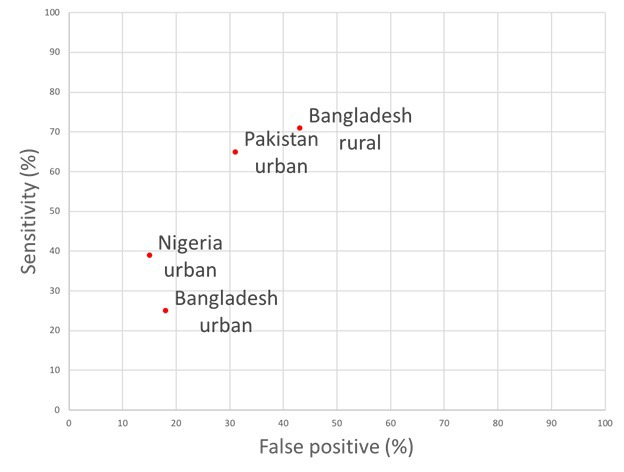
Results: The specificity of DHS5 and MICS5 questions for identifying childhood pneumonia were 87.4 (95% confidence interval (CI) = 83.1-91.0) and 86.1 (95% CI = 81.7-89.8) respectively and the sensitivity of questions were 37.1 (95% CI = 31.6-42.8) and 37.1 (95% CI = 31.6-42.8). Correct recall of antibiotic treatment was poor (kappa statistic = 0.064) but improved with the use of medicine pill boards (kappa statistic = 0.235).
Conclusions: DHS5 and MICS5 survey questions are not designed to identify childhood pneumonia and this study confirms that they do not accurately discern episodes of childhood pneumonia from cough/cold in children under five. The proportion of pneumonia episodes appropriately treated with antibiotics cannot be accurately assessed using current DHS and MICS surveys. If these results are used to guide programmatic decisions, it is likely to encourage overuse and inappropriate prescribing of antibiotics for episodes of cough/cold. International agencies who continue to use these household data to monitor the proportion of children with pneumonia who receive antibiotic treatment should be discouraged from doing this as these data are likely to mislead national and global programmes. Medicine pill boards are used in a number of DHS surveys and should be promoted for wider use in national population surveys to improve the accuracy of antibiotic recall.
Conflict of interest statement
Competing interests: Harry Campbell is a co-Editor-in-Chief of the Journal of Global Health. To ensure that any possible conflict of interest relevant to the journal has been addressed, this article was reviewed according to best practice guidelines of international editorial organisations. Harish Nair reports grants and personal fees from the Bill and Melinda Gates Foundation during the during the conduct of the study; grants and personal fees from the World Health Organization, grants and personal fees from Sanofi, grants from the Innovative Medicines Initiative (Horizon 2020), grants from the National Institute of Health Research, outside the submitted work. The authors completed the Unified Competing Interest form at www.icmje.org/coi_disclosure.pdf (available on request from the corresponding author), and declare no other competing interests.
Figures
References
-
- International Vaccine Access Center (IVAC). Pneumonia and diarrhea progress report: Driving progress through equitable investment and action. Baltimore, MD: Johns Hopkins Bloomberg School of Public Health; 2017.
-
- UN Inter-agency Group for Child Mortality Estimation. Levels and trends in child mortality. Report 2017. Geneva: UNICEF; 2017.
-
- World Health Organisation, The United Nations Children’s Fund (UNICEF). Ending preventable child deaths from pneumonia and diarrhoea by 2025: The integrated Global Action Plan for Pneumonia and Diarrhoea (GAPPD). Geneva and New York: WHO/UNICEF; 2013.
-
- The DHS Program. Demographic and Health Surveys. Available: https://dhsprogram.com/. Accessed: 15 January 2018.
Publication types
MeSH terms
Substances
Grants and funding
LinkOut - more resources
Full Text Sources
Medical
Molecular Biology Databases