


Seroprevalence and molecular characterization of Leishmania in dogs from an endemic area of zoonotic visceral leishmaniasis in Brazil
- PMID: 30255052
- PMCID: PMC6137843
- DOI: 10.1016/j.ijvsm.2017.02.002
Seroprevalence and molecular characterization of Leishmania in dogs from an endemic area of zoonotic visceral leishmaniasis in Brazil
Abstract
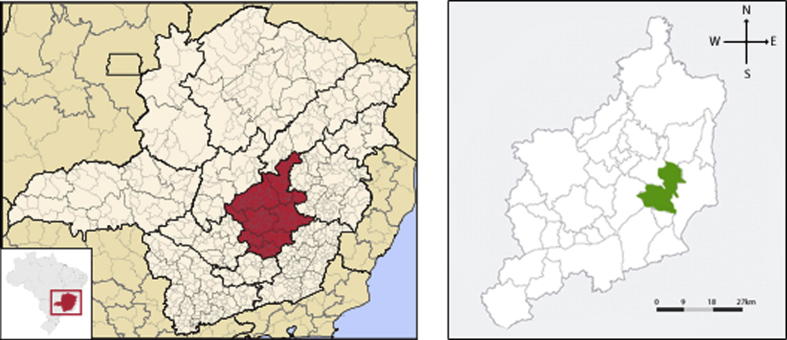
Visceral leishmaniasis (VL) can cause large-scale and tenacious epidemics with high fatality rates. Current seroprevalence and circulating Leishmania species were evaluated in dogs domiciled in the municipality of Sabará, a small historic and touristic city in the Brazilian state of Minas Gerais. A total of 3926 dogs domiciled in seven different districts of Sabará were serologically tested for canine visceral leishmaniasis (CVL) by indirect enzyme-linked immunosorbent (ELISA) and immunofluorescence (IFA) assays, in a two-years census survey (2011-2012). The average positivity rate of canine infection was 3.4%. Three additional diagnostic tests - imprint/smear direct parasitological, molecular (LnPCR) and myeloculture - were performed in a random sample of fifty seropositive dogs composed of symptomatic (39) and asymptomatic (eleven) animals. LnPCR showed 100% of positivity for Leishmania DNA in, at least, one among four tissue samples tested (mesenteric lymph node, skin, spleen and bone marrow), independently of the clinical canine group. Higher and statistically equivalent positivity rates (98% and 96%) for Leishmania DNA were found in canine lymph node and spleen. Asymptomatic dogs showed expressive positivity rates in all three additional diagnostic techniques. Leishmania infantum was confirmed as the etiological agent of CVL in Sabará.
Keywords: Brazil; Canine visceral leishmaniasis; Dogs; Leishmania infantum; LnPCR; Myeloculture.
Figures


References
-
- WHO, http://www.who.int/leishmaniasis/epidemic/response_more/en/index.html (accessed on12/26/2016).
-
- Moreno E.C., Melo M.N., Genaro O., Lambertucci J.R., Serufo J.C., Andrade A.S.R. Risk factors for Leishmania chagasi infection in an urban area of Minas Gerais State. Rev Soc Bras Med Trop. 2005;38:456–463. - PubMed
-
- Marzochi M.C.A., Fagundes A., Andrade M.V., Souza M.B., Madeira M.F., Mouta-Confort E. Visceral leishmaniasis in Rio de Janeiro, Brazil: eco-epidemiological aspects and control. Rev Soc Bras Med Trop. 2009;42:570–580. - PubMed
-
- Deane L.M., Deane M.P. Observações preliminares sobre a importância comparativa do homem, do cão e da raposa (Lycalopex vetulus) como reservatórios da Leishmania donovani, em área endêmica de calazar no Ceará. Hospital. 1955;48:61–76.
LinkOut - more resources
Full Text Sources
Other Literature Sources
