


Epilepsy-predictive magnetic resonance imaging changes following experimental febrile status epilepticus: Are they translatable to the clinic?
- PMID: 30256385
- PMCID: PMC6217797
- DOI: 10.1111/epi.14561
Epilepsy-predictive magnetic resonance imaging changes following experimental febrile status epilepticus: Are they translatable to the clinic?
Abstract
Objective: A subset of children with febrile status epilepticus (FSE) are at risk for development of temporal lobe epilepsy later in life. We sought a noninvasive predictive marker of those at risk that can be identified soon after FSE, within a clinically realistic timeframe.
Methods: Longitudinal T2 -weighted magnetic resonance imaging (T2 WI MRI) of rat pups at several time points after experimental FSE (eFSE) was performed on a high-field scanner followed by long-term continuous electroencephalography. In parallel, T2 WI MRI scans were performed on a 3.0-T clinical scanner. Finally, chronic T2 WI MRI signal changes were examined in rats that experienced eFSE and were imaged months later in adulthood.
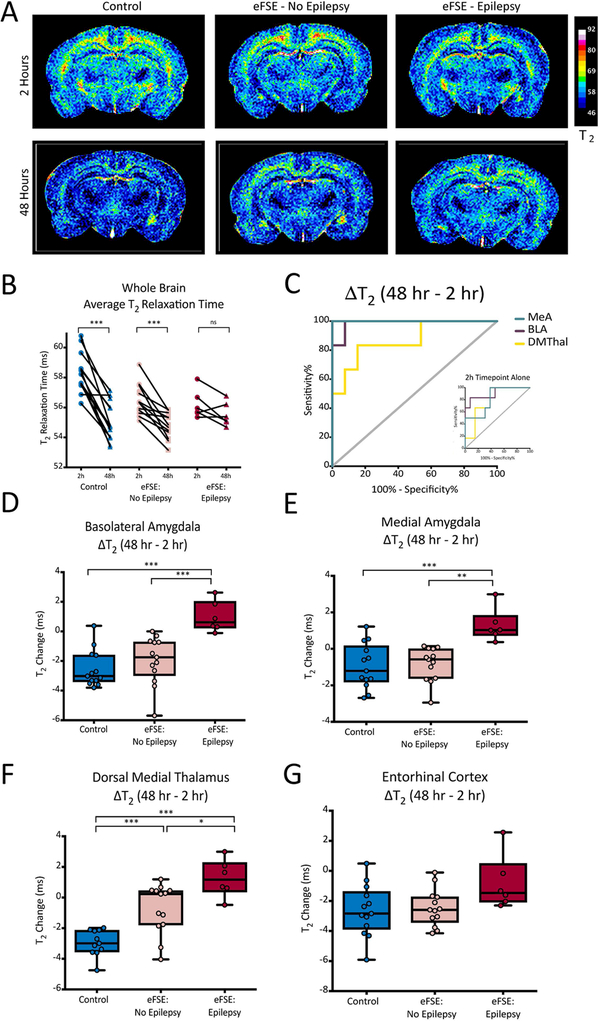
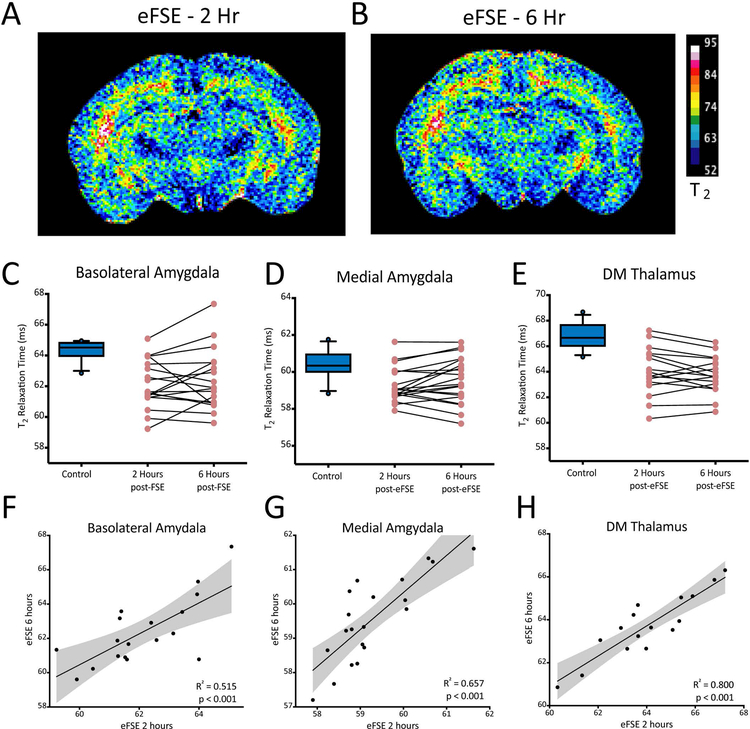
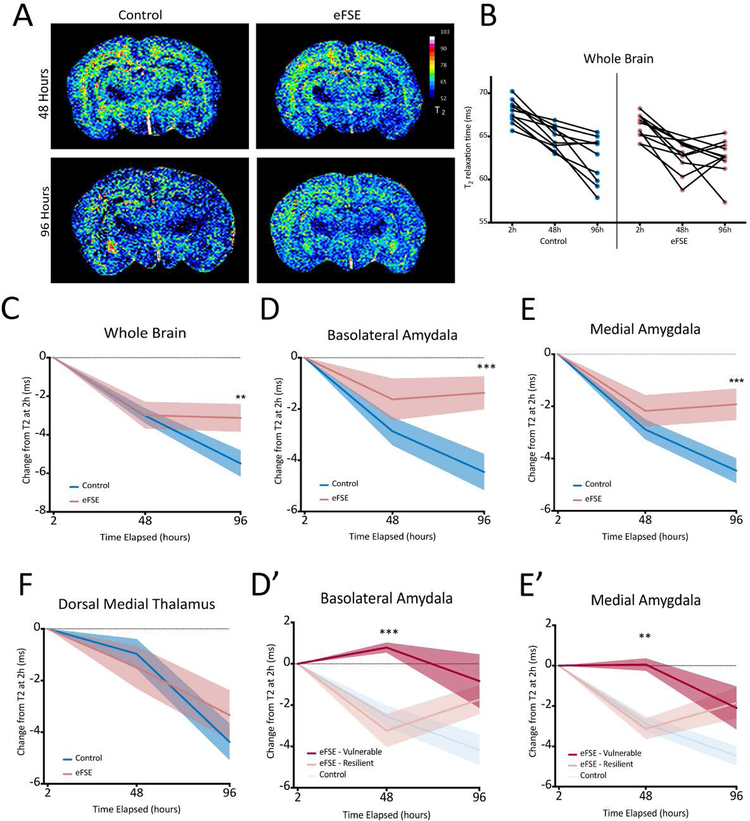
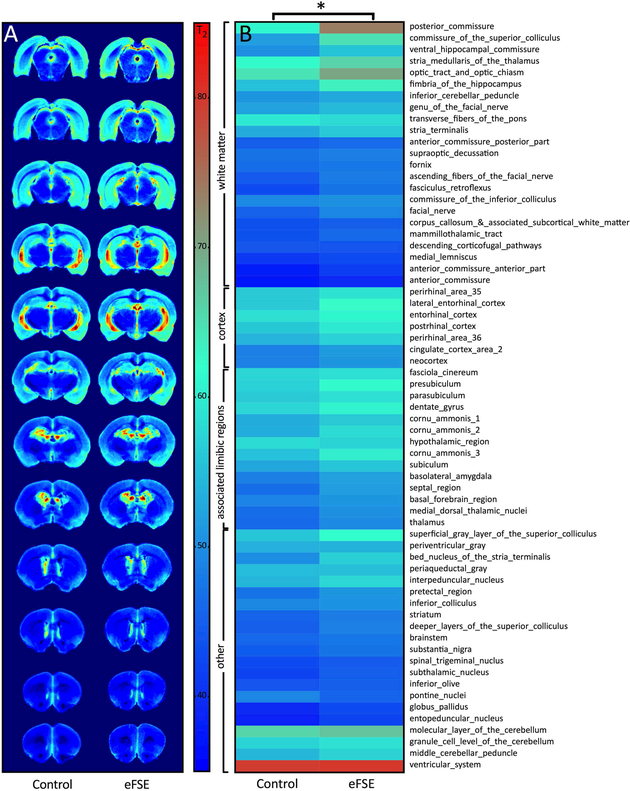
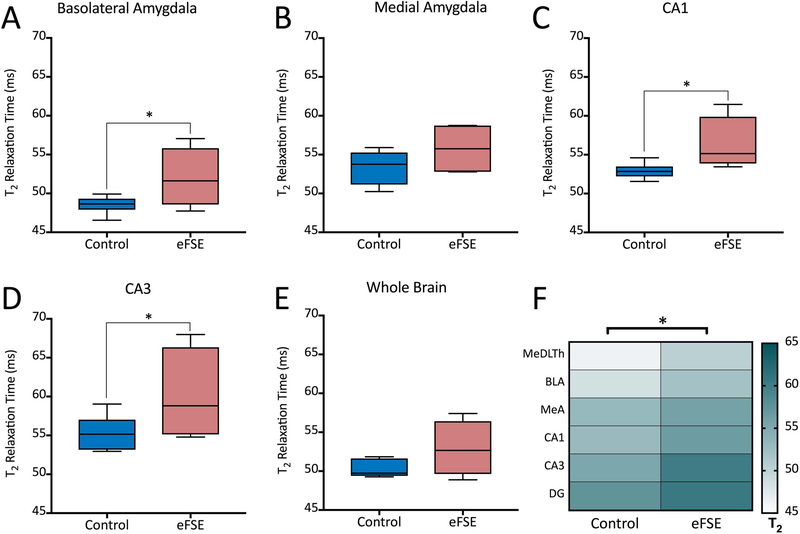
Results: Epilepsy-predicting T2 changes, previously observed at 2 hours after eFSE, persisted for at least 6 hours, enabling translation to the clinic. Repeated scans, creating MRI trajectories of T2 relaxation times following eFSE, provided improved prediction of epileptogenesis compared with a single MRI scan. Predictive signal changes centered on limbic structures, such as the basolateral and medial amygdala. T2 WI MRI changes, originally described on high-field scanners, can also be measured on clinical MRI scanners. Chronically elevated T2 relaxation times in hippocampus were observed months after eFSE in rats, as noted for post-FSE changes in children.
Significance: Early T2 WI MRI changes after eFSE provide a strong predictive measure of epileptogenesis following eFSE, on both high-field and clinical MRI scanners. Importantly, the extension of the acute signal changes to at least 6 hours after the FSE enables its inclusion in clinical studies. Chronic elevations of T2 relaxation times within the hippocampal formation and related structures are common to human and rodent FSE, suggesting that similar processes are involved across species.
Keywords: epileptogenesis; febrile seizures; febrile status epilepticus; magnetic resonance imaging; temporal lobe epilepsy.
Wiley Periodicals, Inc. © 2018 International League Against Epilepsy.
Conflict of interest statement
Conflict of Interest: None of the authors has any conflict of interest to disclose.
Figures
References
-
- Baram TZ, Shinnar S. Febrile Seizures. San Diego, CA: Academic press; 2002.
-
- Annegers JF, Hauser WA, Shirts SB, et al. Factors prognostic of unprovoked seizures after febrile convulsions. N Engl J Med. 1987;316:493–8. - PubMed
-
- Cendes F, Andermann F, Dubeau F, et al. Early childhood prolonged febrile convulsions, atrophy and sclerosis of mesial structures, and temporal lobe epilepsy: an MRI volumetric study. Neurology. 1993;43:1083–7. - PubMed
-
- Berg AT, Shinnar S. Complex febrile seizures. Epilepsia. 1996; 37:126–33. - PubMed
Publication types
MeSH terms
Grants and funding
LinkOut - more resources
Full Text Sources
Other Literature Sources
Medical
