


Self-citation is the hallmark of productive authors, of any gender
- PMID: 30256792
- PMCID: PMC6157831
- DOI: 10.1371/journal.pone.0195773
Self-citation is the hallmark of productive authors, of any gender
Abstract
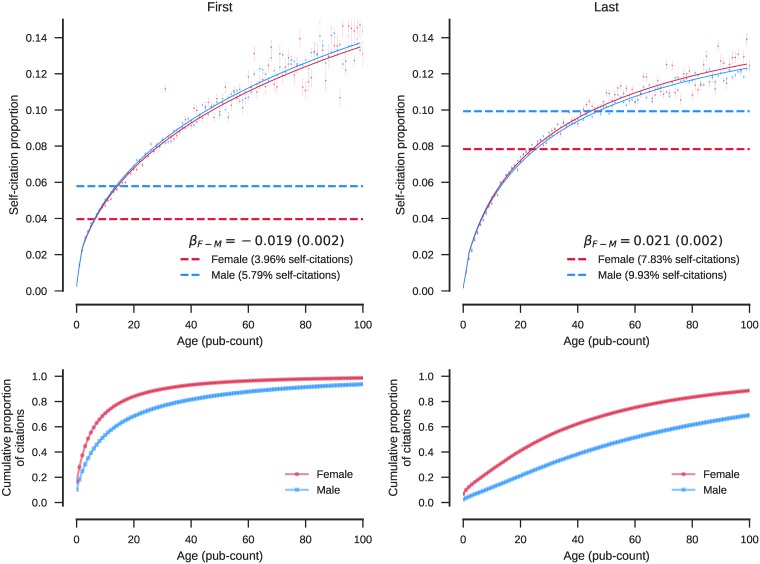
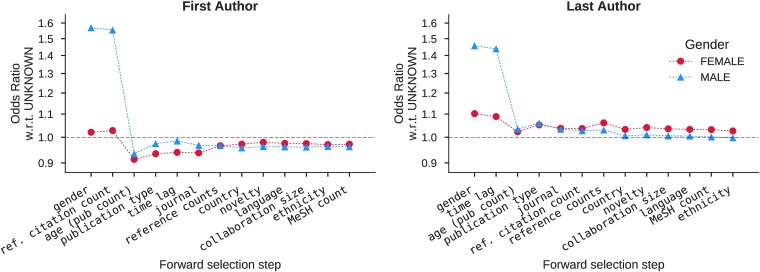
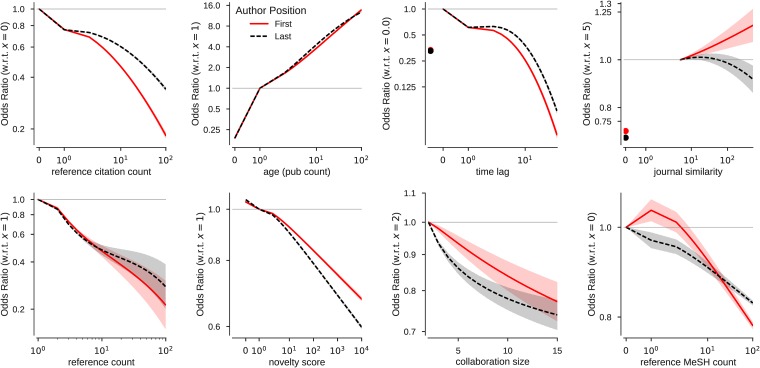
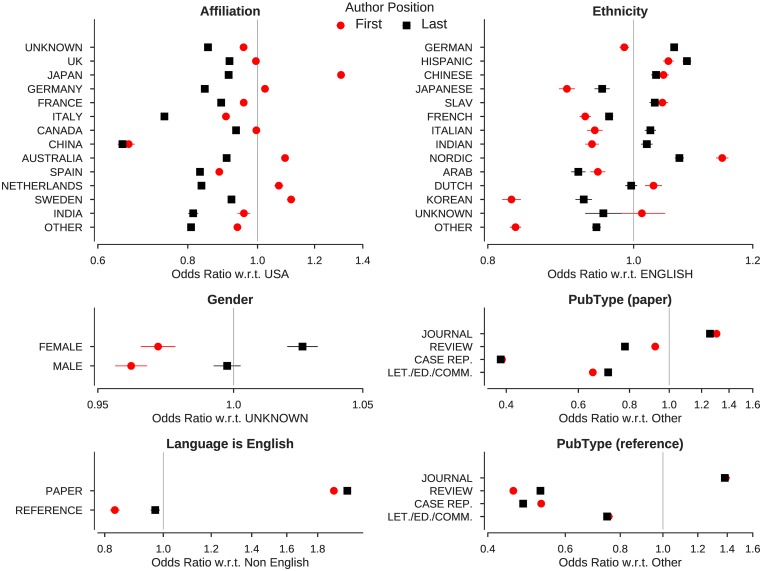
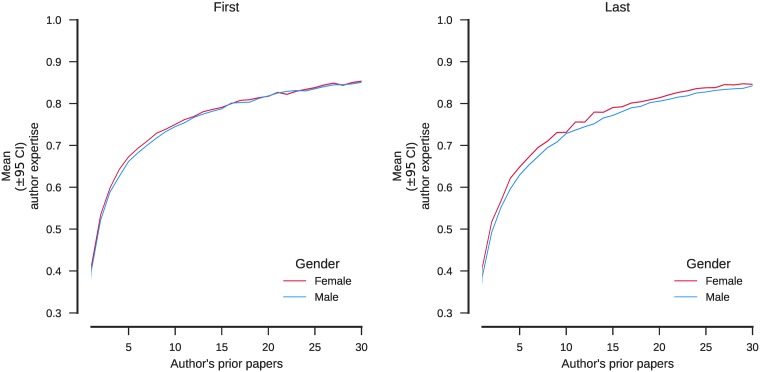
It was recently reported that men self-cite >50% more often than women across a wide variety of disciplines in the bibliographic database JSTOR. Here, we replicate this finding in a sample of 1.6 million papers from Author-ity, a version of PubMed with computationally disambiguated author names. More importantly, we show that the gender effect largely disappears when accounting for prior publication count in a multidimensional statistical model. Gender has the weakest effect on the probability of self-citation among an extensive set of features tested, including byline position, affiliation, ethnicity, collaboration size, time lag, subject-matter novelty, reference/citation counts, publication type, language, and venue. We find that self-citation is the hallmark of productive authors, of any gender, who cite their novel journal publications early and in similar venues, and more often cross citation-barriers such as language and indexing. As a result, papers by authors with short, disrupted, or diverse careers miss out on the initial boost in visibility gained from self-citations. Our data further suggest that this disproportionately affects women because of attrition and not because of disciplinary under-specialization.
Conflict of interest statement
I have read the journal’s policy and the authors of this manuscript have the following competing interests: Vetle Torvik is a co-inventor of the Author-ity dataset, which is subject to licensing to third-parties (for non-academic or for-profit use) by the University of Illinois, which owns this intellectual property. However, the Author-ity dataset is provided free-of-charge for non-profit academic research. This does not alter the authors’ adherence to all the PLOS ONE policies on sharing data and materials.
Figures
References
-
- Wolfgang G, Bart T, Balázs S. A bibliometric approach to the role of author self-citations in scientific communication. Scientometrics. 2004;59(1):63–77. 10.1023/B:SCIE.0000013299.38210.74 - DOI
-
- Aksnes DW. A macro study of self-citation. Scientometrics. 2003;56(2):235–246. 10.1023/A:1021919228368 - DOI
Publication types
MeSH terms
Grants and funding
LinkOut - more resources
Full Text Sources
Other Literature Sources
Research Materials
