


Drug-susceptible tuberculosis treatment success and associated factors in Ethiopia from 2005 to 2017: a systematic review and meta-analysis
- PMID: 30257846
- PMCID: PMC6169771
- DOI: 10.1136/bmjopen-2018-022111
Drug-susceptible tuberculosis treatment success and associated factors in Ethiopia from 2005 to 2017: a systematic review and meta-analysis
Abstract
Objectives: The main aim of this study was to assess the overall tuberculosis (TB) treatment success in Ethiopia and to identify potential factors for poor TB treatment outcome.
Design: A systematic review and meta-analysis of published literature was conducted. Original studies were identified through a computerised systematic search using PubMed, Google Scholar and Science Direct databases. Heterogeneity across studies was assessed using Cochran's Q test and I2 statistic. Pooled estimates of treatment success were computed using the random-effects model with 95% CI using Stata V.14 software.
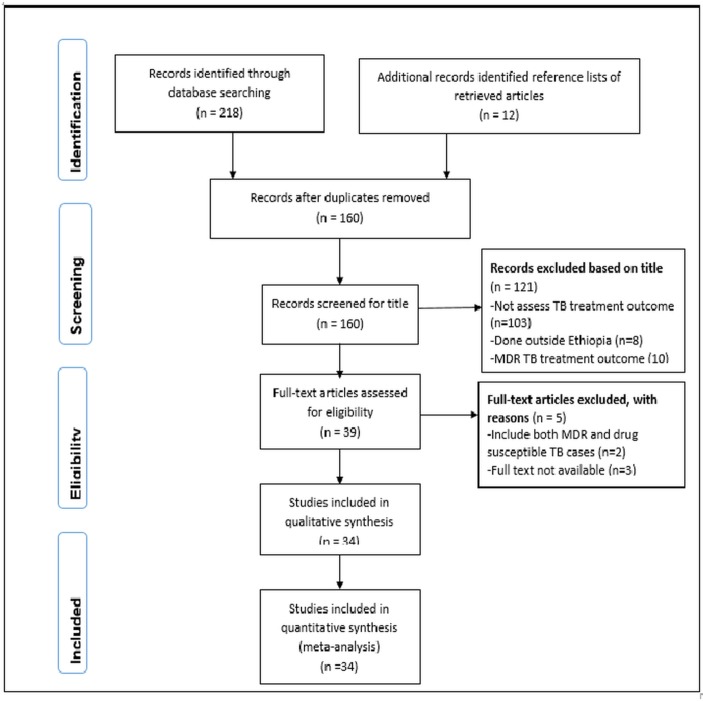
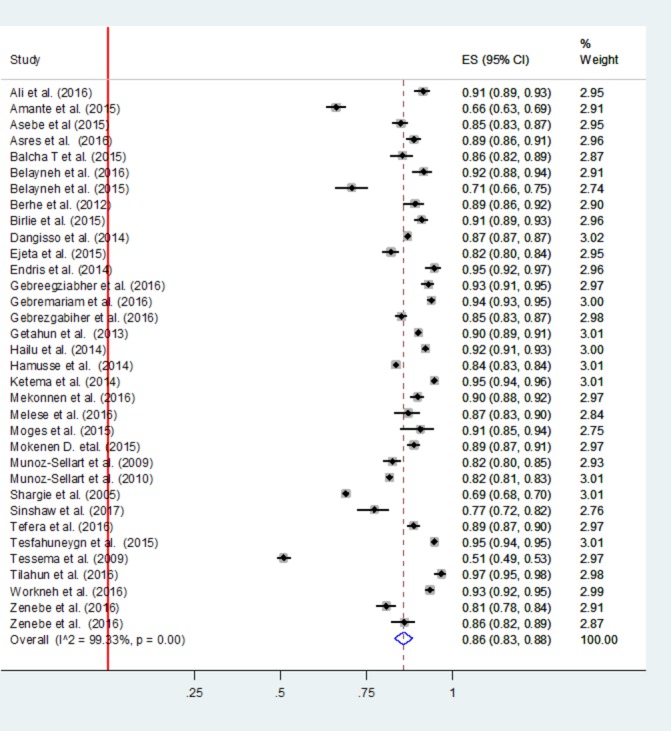
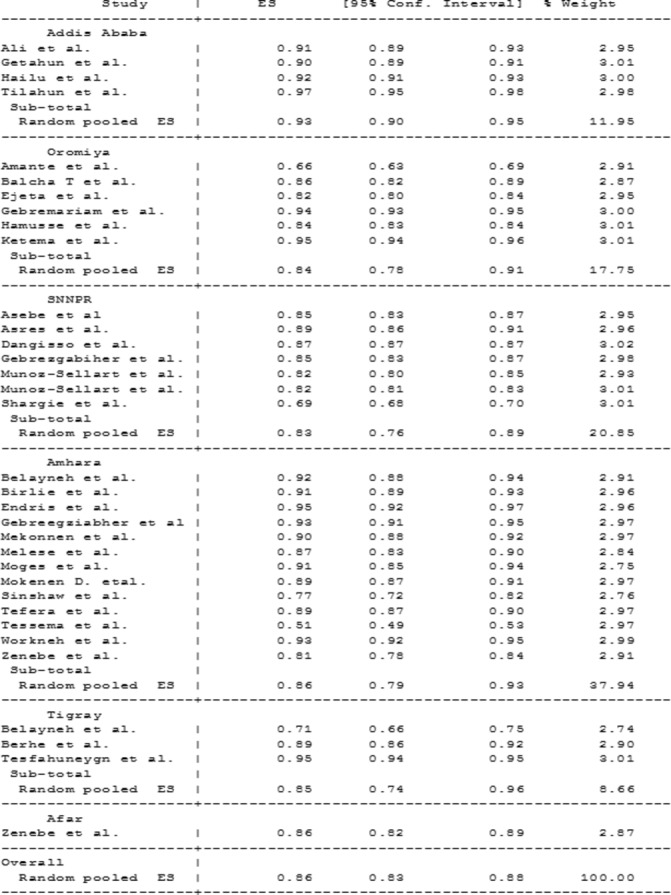
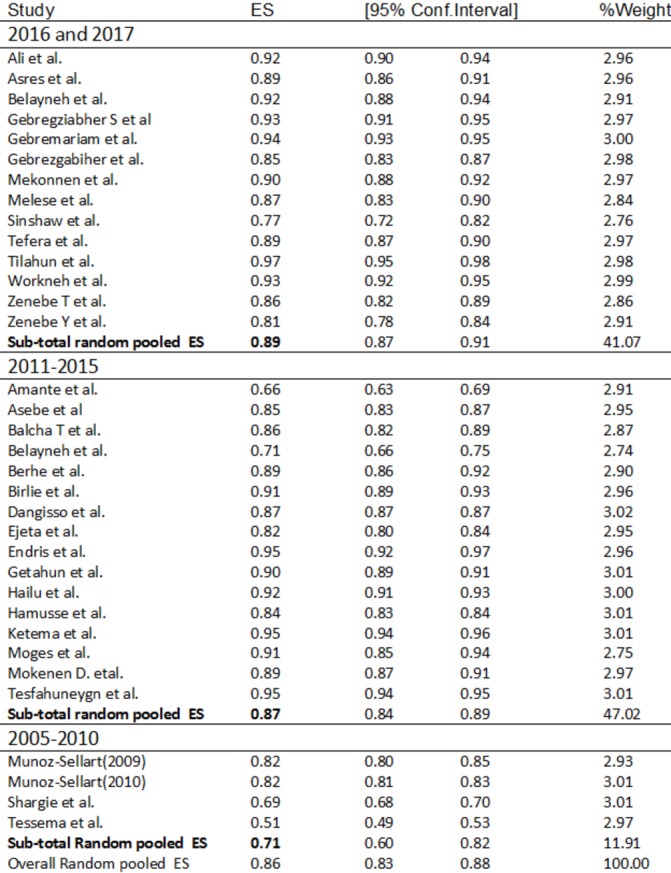
Results: A total of 230 articles were identified in the systematic search. Of these 34 observational studies were eligible for systematic review and meta-analysis. It was found that 117 750 patients reported treatment outcomes. Treatment outcomes were assessed by World Health Organization (WHO) standard definitions of TB treatment outcome. The overall pooled TB treatment success rate in Ethiopia was 86% (with 95% CI 83%_88%). TB treatment success rate for each region showed that, Addis Ababa (93%), Oromia (84%), Amhara (86%), Southern Nations (83%), Tigray (85%) and Afar (86%). Mainly old age, HIV co-infection, retreatment cases and rural residence were the most frequently identified factors associated with poor TB treatment outcome.
Conclusion: The result of this study revealed that the overall TB treatment success rate in Ethiopia was below the threshold suggested by WHO (90%). There was also a discrepancy in TB treatment success rate among different regions of Ethiopia. In addition to these, HIV co-infection, older age, retreatment cases and rural residence were associated with poor treatment outcome. In order to further improve the treatment success rate, it is strategic to give special consideration for regions which had low TB treatment success and patients with TB with HIV co-infection, older age, rural residence and retreatment cases.
Keywords: drug-susceptible; ethiopia; meta-analysis; systematic review; treatment outcome; tuberclosis.
© Author(s) (or their employer(s)) 2018. Re-use permitted under CC BY-NC. No commercial re-use. See rights and permissions. Published by BMJ.
Conflict of interest statement
Competing interests: None declared.
Figures
References
-
- World Health Organization, 2017. Tuberculosis, fact sheet http://www.who.int/mediacentre/factsheets/fs104/en/ (updated Oct 2017).
-
- World Health Organization. Global tuberculosis report 2017. Geneva: World Health Organization, 2017.
Publication types
MeSH terms
Substances
LinkOut - more resources
Full Text Sources
Other Literature Sources
Medical
