


Pif1 helicase unfolding of G-quadruplex DNA is highly dependent on sequence and reaction conditions
- PMID: 30257865
- PMCID: PMC6240867
- DOI: 10.1074/jbc.RA118.004499
Pif1 helicase unfolding of G-quadruplex DNA is highly dependent on sequence and reaction conditions
Abstract
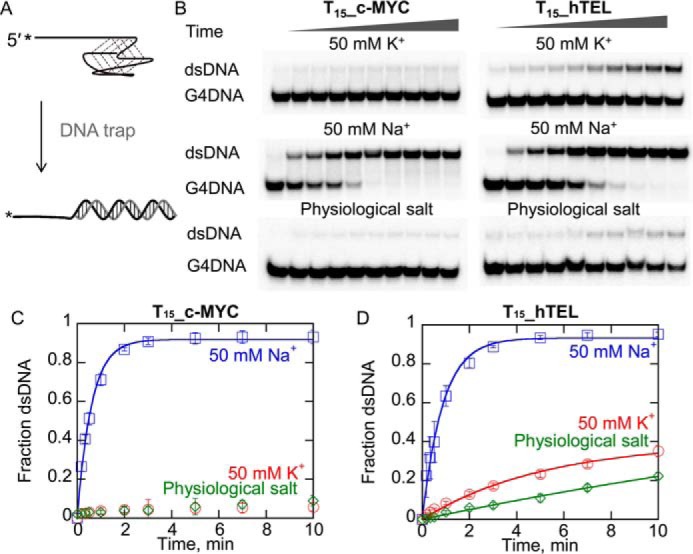
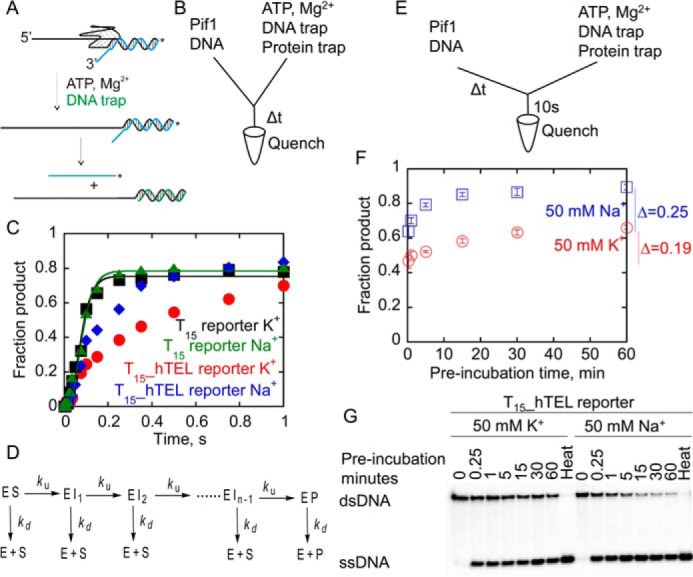
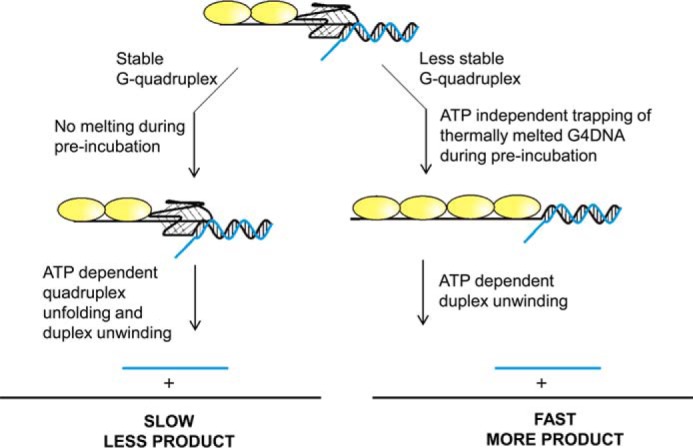
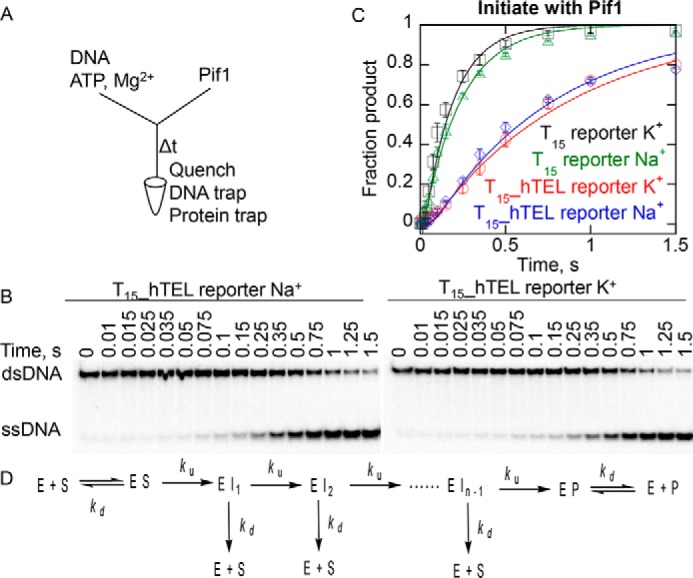
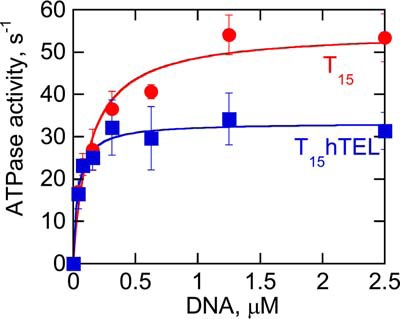
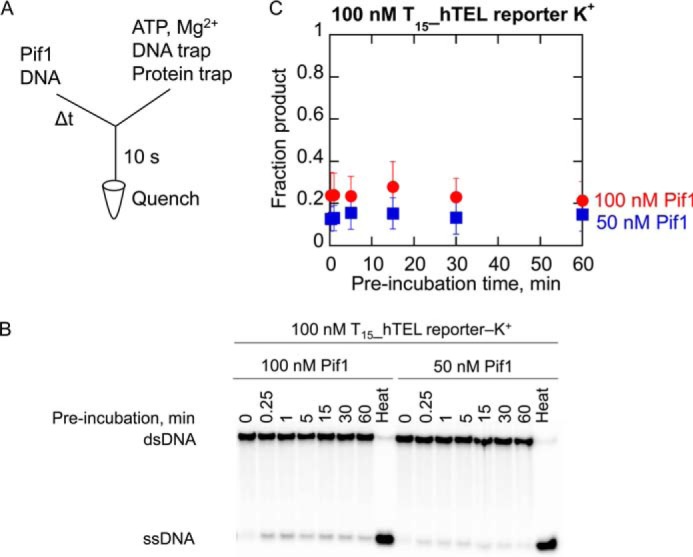
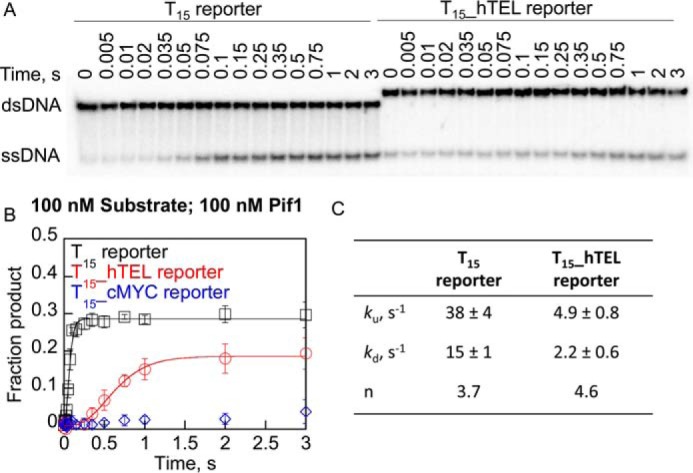
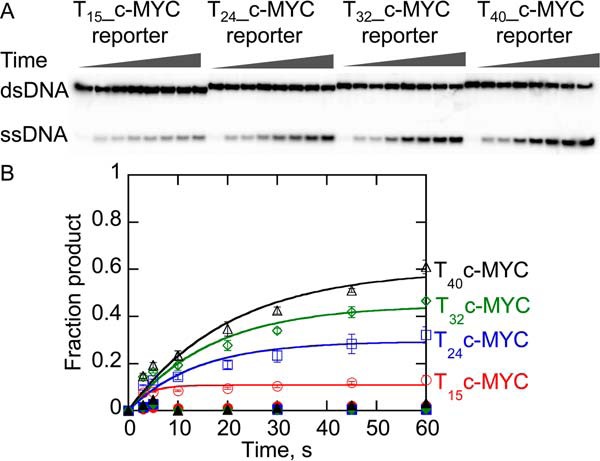
In addition to unwinding double-stranded nucleic acids, helicase activity can also unfold noncanonical structures such as G-quadruplexes. We previously characterized Pif1 helicase catalyzed unfolding of parallel G-quadruplex DNA. Here we characterized unfolding of the telomeric G-quadruplex, which can fold into antiparallel and mixed hybrid structures and found significant differences. Telomeric DNA sequences are unfolded more readily than the parallel quadruplex formed by the c-MYC promoter in K+ Furthermore, we found that under conditions in which the telomeric quadruplex is less stable, such as in Na+, Pif1 traps thermally melted quadruplexes in the absence of ATP, leading to the appearance of increased product formation under conditions in which the enzyme is preincubated with the substrate. Stable telomeric G-quadruplex structures were unfolded in a stepwise manner at a rate slower than that of duplex DNA unwinding; however, the slower dissociation from G-quadruplexes compared with duplexes allowed the helicase to traverse more nucleotides than on duplexes. Consistent with this, the rate of ATP hydrolysis on the telomeric quadruplex DNA was reduced relative to that on single-stranded DNA (ssDNA), but less quadruplex DNA was needed to saturate ATPase activity. Under single-cycle conditions, telomeric quadruplex was unfolded by Pif1, but for the c-MYC quadruplex, unfolding required multiple helicase molecules loaded onto the adjacent ssDNA. Our findings illustrate that Pif1-catalyzed unfolding of G-quadruplex DNA is highly dependent on the specific sequence and the conditions of the reaction, including both the monovalent cation and the order of addition.
Keywords: DNA helicase; DNA unwinding; DNA-protein interaction; G-quadruplex; Pif1; enzyme kinetics; enzyme mechanism; pre-steady-state kinetics; secondary structure.
© 2018 Byrd et al.
Conflict of interest statement
The authors declare that they have no conflicts of interest with the contents of this article
Figures
References
Publication types
MeSH terms
Substances
Grants and funding
LinkOut - more resources
Full Text Sources
Other Literature Sources
