


Effects of Conception Using Assisted Reproductive Technologies on Infant Health and Development: An Evolutionary Perspective and Analysis Using UK Millennium Cohort Data
- PMID: 30258309
- PMCID: PMC6153626
Effects of Conception Using Assisted Reproductive Technologies on Infant Health and Development: An Evolutionary Perspective and Analysis Using UK Millennium Cohort Data
Abstract
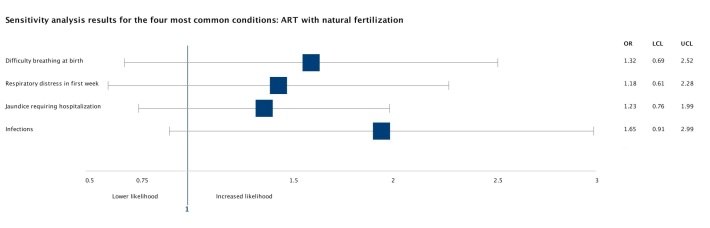
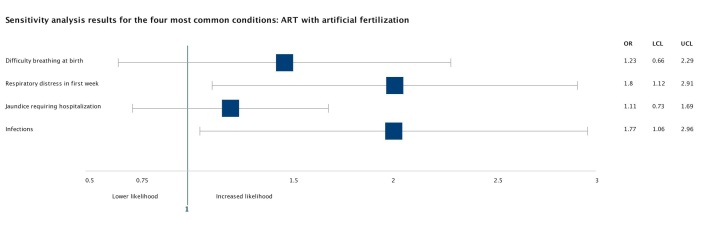
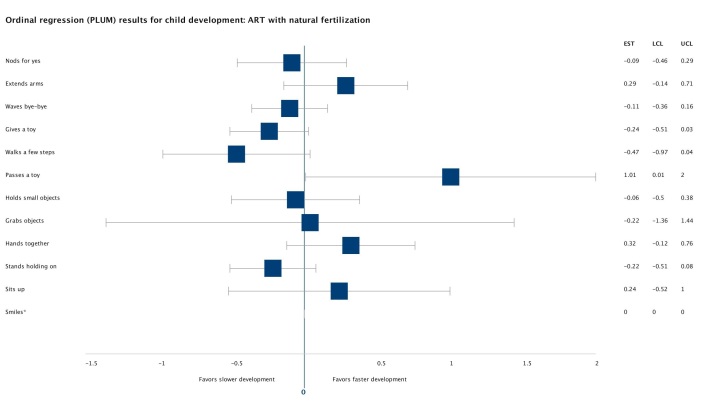
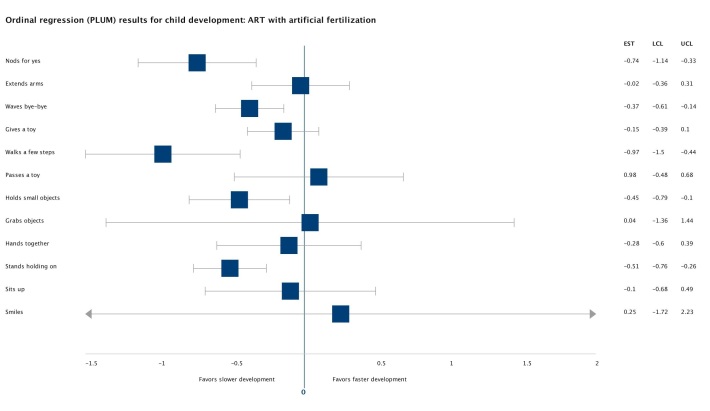
Millions of infants around the world have been born as a result of assisted reproductive technologies (ART), and in the past three decades ART has become increasingly effective and technologically sophisticated. At the same time, advances have been made in understanding the evolutionary biology of mate choice and post-copulatory processes. These advances have relevance for ART as ART methods to a greater or lesser extent circumvent potentially important natural processes determining which fertilized embryo is successfully implanted. Here, using UK Millennium cohort data, the hypothesis that ART methods which circumvent both natural in vivo selection of ova and sperm (for example in vitro fertilization) lead to poorer child health and developmental outcomes than ART methods in which fertilization occurs naturally after fertility treatment using drugs or diathermy. The results showed that both groups of ART were associated with the number of infant health problems from birth through the first week of life when compared with naturally conceived infants. Methods with artificial fertilization were associated with two of the four most common health conditions: respiratory distress (OR 1.80; 95% CI 1.12-2.91) and infections (OR 1.77; 95% CI 1.96-2.06). ART methods with artificial fertilization were associated with delayed achievement of developmental milestones at nine months, and when contrasted with ART using fertility drugs or diathermy only, were significantly more likely to be associated with slower child development. This suggests that evolved processes that determine which egg and sperm lead to successful pregnancy may be important for offspring quality as indicated by infant development. Clinically, the results suggest that women should avoid ART with artificial gamete selection if they can conceive using other ART methods.
Keywords: IVF; In vitro fertilization; developmental milestones; infections; mate choice; natural selection; reproduction; respiratory distress.
Figures
References
-
- Pandey S, Shetty A, Hamilton M, Bhattacharya S, Maheshwari A. Obstetric and perinatal outcomes in singleton pregnancies resulting from IVF/ICSI: a systematic review and meta-analysis. Hum Reprod Update. 2012;18(5):485–503. - PubMed
-
- Maheshwari A, Raja EA, Bhattacharya S. Obstetric and perinatal outcomes after either fresh or thawed frozen embryo transfer: an analysis of 112,432 singleton pregnancies recorded in the Human Fertilisation and Embryology Authority anonymized dataset. Fertil Steril. 2016;106(7):1703–8. - PubMed
-
- Maheshwari A, Kalampokas T, Davidson J, Bhattacharya S. Obstetric and perinatal outcomes in singleton pregnancies resulting from the transfer of blastocyst-stage versus cleavage-stage embryos generated through in vitro fertilization treatment: a systematic review and meta-analysis. Fertil Steril. 2013;100(6):1615–44. - PubMed
-
- Zeh A, Zeh DW. The evolution of polyandry II: post-copulatory defences against genetic incompatibility. Proc Biol Sci. 1997;264:69–75.
MeSH terms
LinkOut - more resources
Full Text Sources
Medical
Miscellaneous