


Temozolomide resistance in glioblastoma multiforme
- PMID: 30258889
- PMCID: PMC6150109
- DOI: 10.1016/j.gendis.2016.04.007
Temozolomide resistance in glioblastoma multiforme
Abstract
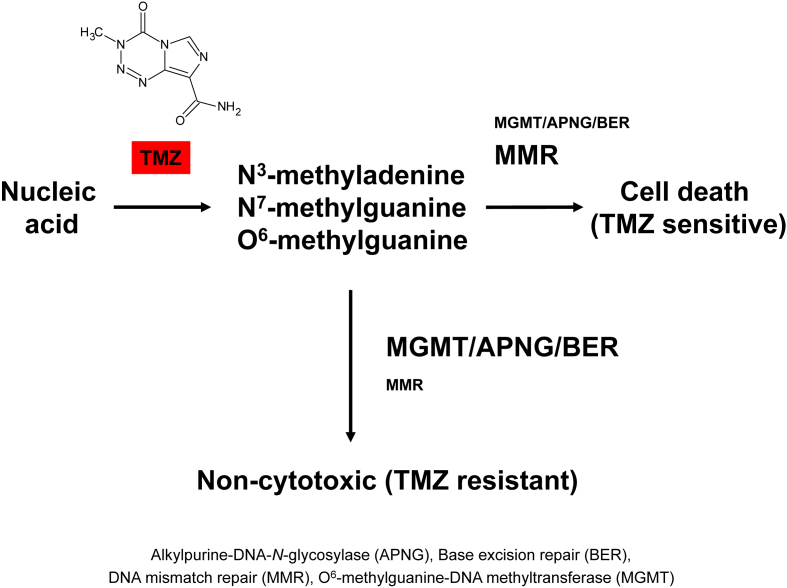
Temozolomide (TMZ) is an oral alkylating agent used to treat glioblastoma multiforme (GBM) and astrocytomas. However, at least 50% of TMZ treated patients do not respond to TMZ. This is due primarily to the over-expression of O6-methylguanine methyltransferase (MGMT) and/or lack of a DNA repair pathway in GBM cells. Multiple GBM cell lines are known to contain TMZ resistant cells and several acquired TMZ resistant GBM cell lines have been developed for use in experiments designed to define the mechanism of TMZ resistance and the testing of potential therapeutics. However, the characteristics of intrinsic and adaptive TMZ resistant GBM cells have not been systemically compared. This article reviews the characteristics and mechanisms of TMZ resistance in natural and adapted TMZ resistant GBM cell lines. It also summarizes potential treatment options for TMZ resistant GBMs.
Keywords: AGT (also known as MGMT), O6-methylguanine-DNA alkyltransferase; AP-1, activator protein 1; APE1, apurinic/apyrimidine endonuclease/redox factor-1; APNG, Alkylpurine-DNA-N-glycosylase; Adaptive; BBB, blood-brain-barrier; BCRP1, breast cancer resistance protein 1; BER, base excision repair; BG, benzylguanine; C8orf4, Chromosome 8 open reading frame 4; EGFR, epidermal growth factor receptor; ERK1/2, Extracellular Signal Regulated Kinases 1 and 2; FDA, Food and Drug Administration; GBM, glioblastoma multiforme or glioblastoma; Glioblastoma; HDAC, histone deacetylase; IFN-β, Interferon-β; Intrinsic; JNK, Jun N-terminal kinase; KDM, Histone lysine demethylase; LC50, 50% cell death concentration; LIF, Leukemia inhibitory factor; MGMT, O6-methylguanine methyltransferase; MMR, DNA mismatch repair; MSH6, mutS homolog 6; MTIC, 5-(3-methyltriazen-1-yl) imidazole-4-carboxamide; NAMPT, nicotinamide phosphoribosyl transferase; NF-κB, nuclear factor-Kappa B; NHA, normal human astrocytes; PARP, poly ADP ribose polymerase; Resistance; SAHA, N-hydroxy-N′-phenyl-octanediamide; STAT3, Signal Transducer and Activator of Transcription 3; TMZ, Temozolomide; TNFAIP3, Tumor necrosis factor-α-induced protein 3; Temodar; Temozolomide; VPA, Valproic acid; mTOR, mammalian target of rapamycin.
Figures
References
-
- Reid J.M., Stevens D.C., Rubin J., Ames M.M. Pharmacokinetics of 3-methyl-(triazen-1-yl)imidazole-4-carboximide following administration of temozolomide to patients with advanced cancer. Clin Cancer Res. 1997;3:2393–2398. - PubMed
-
- Middleton M.R., Grob J.J., Aaronson N. Randomized phase III study of temozolomide versus dacarbazine in the treatment of patients with advanced metastatic malignant melanoma. J Clin Oncol. 2000;18:158–166. - PubMed
-
- Quirt I., Verma S., Petrella T., Bak K., Charette M. Temozolomide for the treatment of metastatic melanoma: a systematic review. Oncologist. 2007;12:1114–1123. - PubMed
-
- Yung W.K., Prados M.D., Yaya-Tur R. Multicenter phase II trial of temozolomide in patients with anaplastic astrocytoma or anaplastic oligoastrocytoma at first relapse. Temodal Brain Tumor Group. J Clin Oncol. 1999;17:2762–2771. - PubMed
Publication types
LinkOut - more resources
Full Text Sources
Other Literature Sources
Research Materials
Miscellaneous
