


Blood, sweat, and tears: Red Blood Cell-Omics study objectives, design, and recruitment activities
- PMID: 30267427
- PMCID: PMC6361628
- DOI: 10.1111/trf.14971
Blood, sweat, and tears: Red Blood Cell-Omics study objectives, design, and recruitment activities
Abstract
Background: The Red Blood Cell (RBC)-Omics study was initiated to build a large data set containing behavioral, genetic, and biochemical characteristics of blood donors with linkage to outcomes of the patients transfused with their donated RBCs.
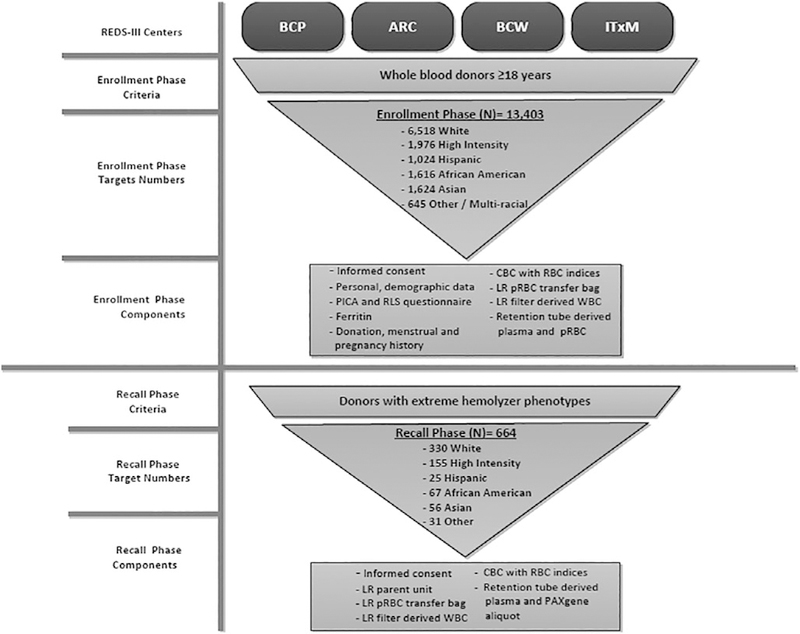
Study design and methods: The cohort was recruited from four US blood centers. Demographic and donation data were obtained from center records. A questionnaire to assess pica, restless leg syndrome, iron supplementation, hormone use, and menstrual and pregnancy history was completed at enrollment. Blood was obtained for a complete blood count, DNA, and ferritin testing. A leukocyte-reduced RBC sample was transferred to a custom storage bag for hemolysis testing at Storage Days 39 to 42. A subset was recalled to evaluate the kinetics and stability of hemolysis measures.
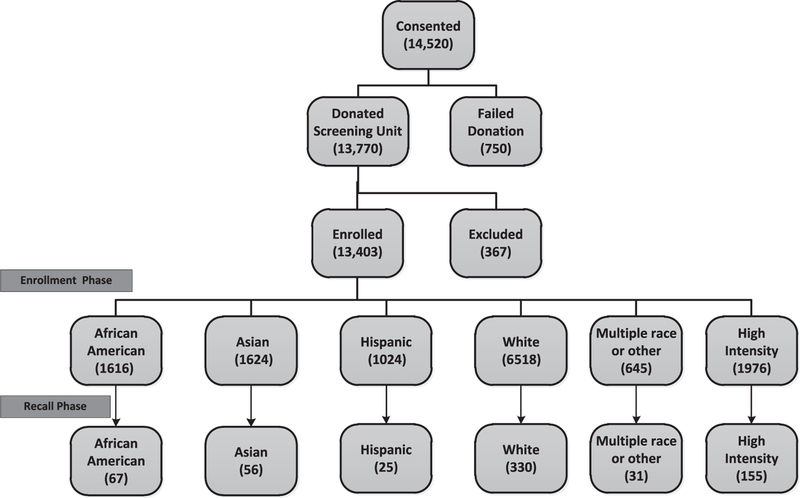
Results: A total of 13,403 racially/ethnically diverse (12% African American, 12% Asian, 8% Hispanic, 64% white, and 5% multiracial/other) donors of both sexes were enrolled and ranged from 18 to 90 years of age; 15% were high-intensity donors (nine or more donations in the prior 24 mo without low hemoglobin deferral). Data elements are available for 97% to 99% of the cohort.
Conclusions: The cohort provides demographic, behavioral, biochemical, and genetic data for a broad range of blood donor studies related to iron metabolism, adverse consequences of iron deficiency, and differential hemolysis (including oxidative and osmotic stress perturbations) during RBC storage. Linkage to recipient outcomes may permit analysis of how donor characteristics affect transfusion efficacy. Repository DNA, plasma, and RBC samples should expand the usefulness of the current data set.
© 2018 AABB.
Conflict of interest statement
CONFLICT OF INTEREST
AEM receives research grant funding from Novo Nordisk. The remaining authors have declared no conflicts of interest for this article.
Figures

Comment in
-
Translating red cell "omics" into new perspectives in transfusion medicine: mining the gems in the data mountains.Transfusion. 2019 Jan;59(1):2-5. doi: 10.1111/trf.15066. Transfusion. 2019. PMID: 30615814 No abstract available.
References
Publication types
MeSH terms
Grants and funding
LinkOut - more resources
Full Text Sources
Other Literature Sources
Medical
Molecular Biology Databases
