


Low-frequency direct cortical stimulation of left superior frontal gyrus enhances working memory performance
- PMID: 30268847
- PMCID: PMC6240347
- DOI: 10.1016/j.neuroimage.2018.09.064
Low-frequency direct cortical stimulation of left superior frontal gyrus enhances working memory performance
Abstract
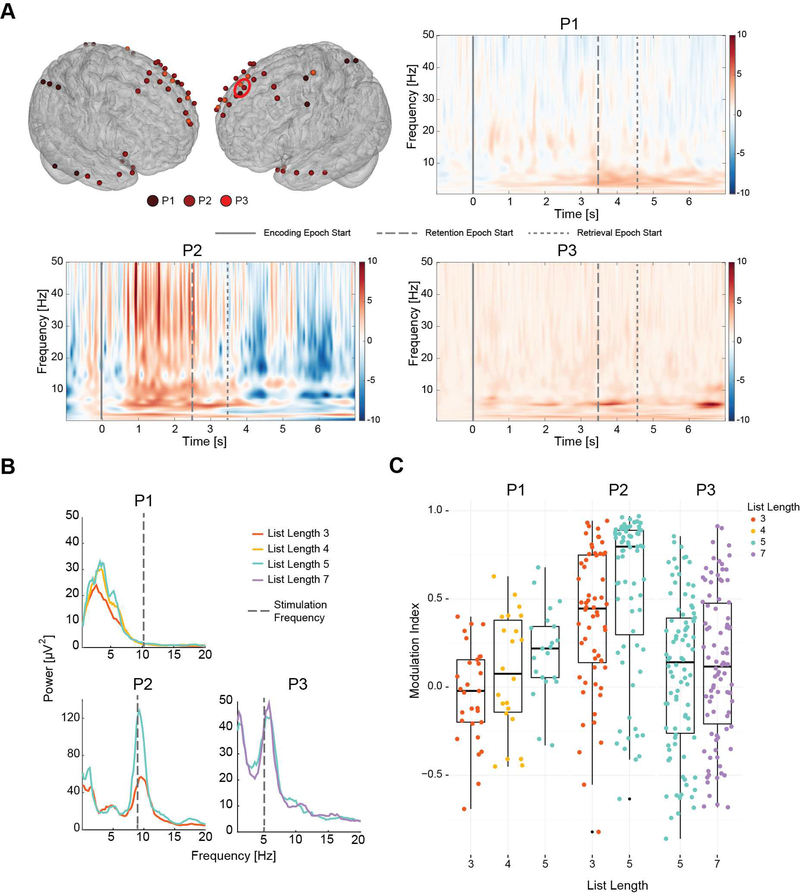
The neural substrates of working memory are spread across prefrontal, parietal and cingulate cortices and are thought to be coordinated through low frequency cortical oscillations in the theta (3-8 Hz) and alpha (8-12 Hz) frequency bands. While the functional role of many subregions have been elucidated using neuroimaging studies, the role of superior frontal gyrus (SFG) is not yet clear. Here, we combined electrocorticography and direct cortical stimulation in three patients implanted with subdural electrodes to assess if superior frontal gyrus is indeed involved in working memory. We found left SFG exhibited task-related modulation of oscillations in the theta and alpha frequency bands specifically during the encoding epoch. Stimulation at the frequency matched to the endogenous oscillations resulted in reduced reaction times in all three participants. Our results provide evidence for SFG playing a functional role in working memory and suggest that SFG may coordinate working memory through low-frequency oscillations thus bolstering the feasibility of using intracranial electric stimulation for restoring cognitive function.
Copyright © 2018 Elsevier Inc. All rights reserved.
Conflict of interest statement
Conflict of interest: FF is the lead inventor of IP filed on the topics of noninvasive brain stimulation by UNC. FF is the founder, CSO and majority owner of Pulvinar Neuro LLC. The other authors declare no competing interests
Figures


References
-
- Ackerman PL, Beier ME, Boyle MO, 2005. Working memory and intelligence: the same or different constructs? Psychol Bull 131, 30–60. - PubMed
-
- Albouy P, Weiss A, Baillet S, Zatorre RJ, 2017. Selective Entrainment of Theta Oscillations in the Dorsal Stream Causally Enhances Auditory Working Memory Performance. Neuron. - PubMed
-
- Awh E, Smith EE, Jonides J, 1995. Human rehearsal processes and the frontal lobes: PET evidence. Structure and Functions of the Human Prefrontal Cortex 769, 97–117. - PubMed
Publication types
MeSH terms
Grants and funding
LinkOut - more resources
Full Text Sources
Medical
