


Accuracy of a fecal immunochemical test according to outside temperature and travel time
- PMID: 30271216
- PMCID: PMC6147538
- DOI: 10.2147/CLEP.S170169
Accuracy of a fecal immunochemical test according to outside temperature and travel time
Abstract
Background: Fecal immunochemical tests (FITs) are widely used and recommended for colorectal cancer (CRC) screening. Fecal hemoglobin (Hb) may degrade with long transport durations and high ambient temperatures, potentially reducing sensitivity to detect CRC and its precursors. This study aimed at investigating the impact of temperatures and sample travel times on diagnostic performance of a quantitative FIT for detection of advanced neoplasms (AN, CRC, or advanced adenoma).
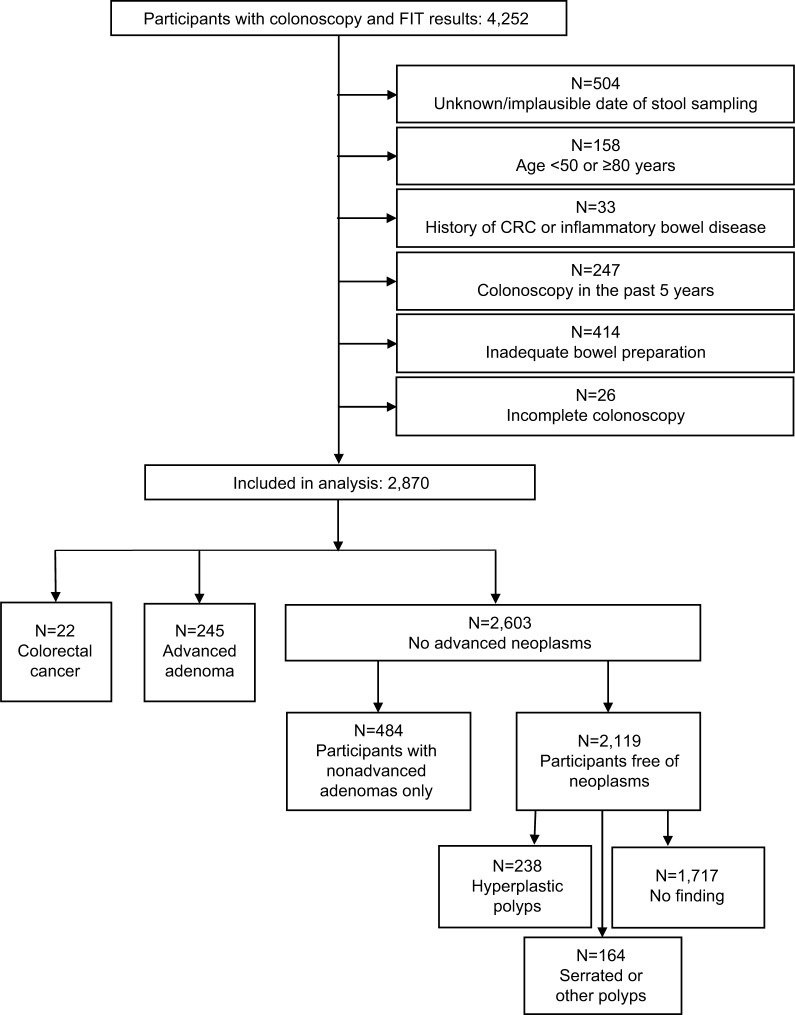
Methods: Participants of screening colonoscopy in south-western Germany conducted a quantitative FIT prior to bowel preparation between February 2012 and June 2016. From available locations and dates of stool sampling and transport, maximum ambient temperatures were linked to 2,870 participants aged 50-79 years and sample return durations were recorded. The impact of ambient temperatures and return duration on FIT sensitivity and specificity was assessed for five different cutoffs between 10 and 25 µg Hb/g feces.
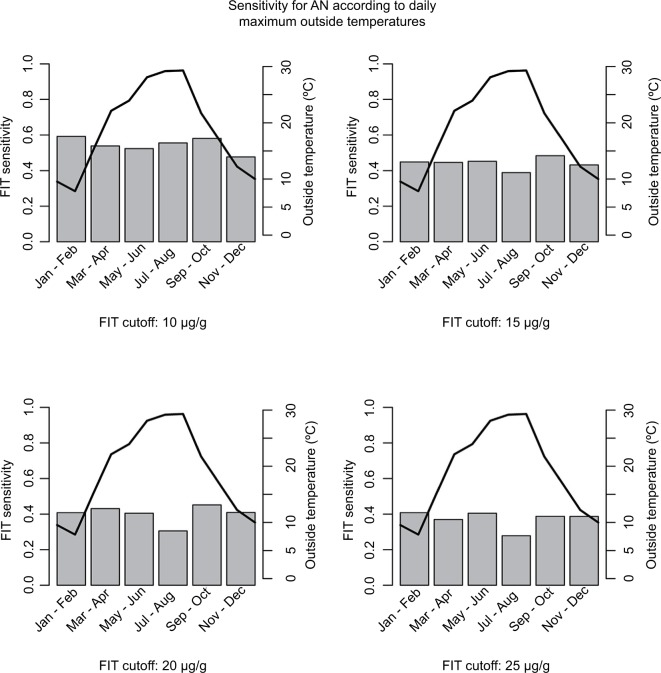
Results: At a positivity threshold of 20 µg Hb/g feces, overall sensitivity and specificity for detecting any AN were 40% (95% CI, 35-47%) and 95% (95% CI, 94-96%), respectively. Inverse associations between maximum ambient temperature (median 18.1°C, inter-quartile range [IQR] =11.4-24.9°C) and sensitivity of FIT were observed which were stronger at higher cutoffs. Sample return durations (median 6 days, IQR =4-8 days) were not associated with variable sensitivities or specificities.
Conclusion: Hb degredation during fecal sample transportation in summer months may be of some concern for diagnostic performance of the FIT evaluated under routine conditions in a middle-European climate.
Keywords: advanced colorectal neoplasm; ambient temperature; fecal immunochemical test; hemoglobin degradation; sample travel time; sensitivity.
Conflict of interest statement
Disclosure The authors declare that they received no support from any organization for the submitted work; no financial relationships with any organizations that might have an interest in the submitted work in the previous three years; and no other relationships or activities that could appear to have influenced the submitted work.
Figures
References
-
- Robertson DJ, Lee JK, Boland CR, et al. Recommendations on fecal immunochemical testing to screen for colorectal neoplasia: a consensus statement by the US Multi-Society Task Force on colorectal cancer. Am J Gastroenterol. 2017;112(1):37–53. - PubMed
-
- Rex DK, Boland CR, Dominitz JA, et al. Colorectal cancer screening: recommendations for physicians and patients from the U.S. multi-society task force on colorectal cancer. Am J Gastroenterol. 2017;112(7):1016–1030. - PubMed
-
- Park DI, Ryu S, Kim YH, et al. Comparison of guaiac-based and quantitative immunochemical fecal occult blood testing in a population at average risk undergoing colorectal cancer screening. Am J Gastroenterol. 2010;105(9):2017–2025. - PubMed
-
- Brenner H, Tao S. Superior diagnostic performance of faecal immunochemical tests for haemoglobin in a head-to-head comparison with guaiac based faecal occult blood test among 2235 participants of screening colonoscopy. Eur J Cancer. 2013;49(14):3049–3054. - PubMed
LinkOut - more resources
Full Text Sources
