


Glycation Damage: A Possible Hub for Major Pathophysiological Disorders and Aging
- PMID: 30271665
- PMCID: PMC6147582
- DOI: 10.14336/AD.2017.1121
Glycation Damage: A Possible Hub for Major Pathophysiological Disorders and Aging
Abstract
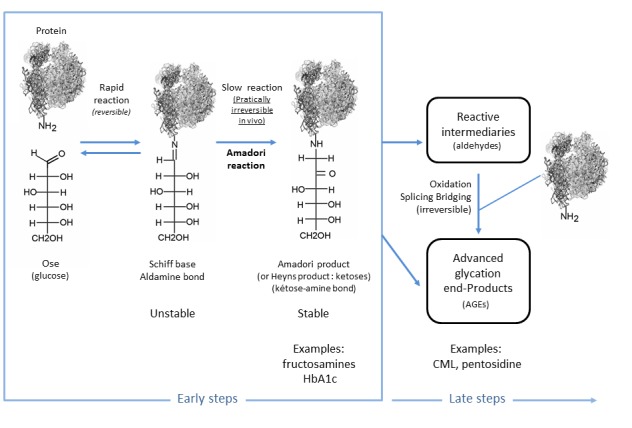
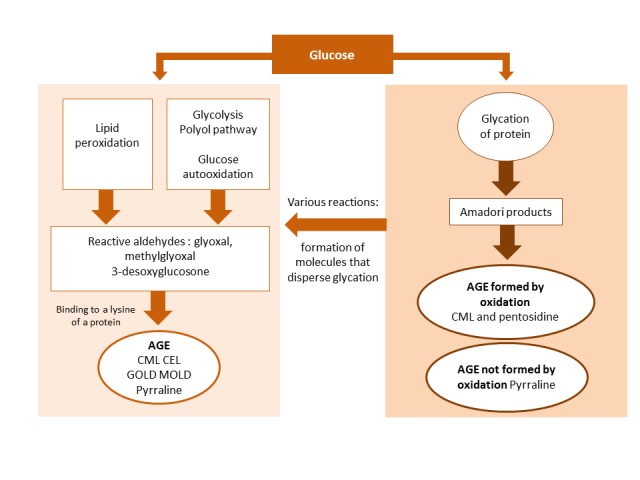
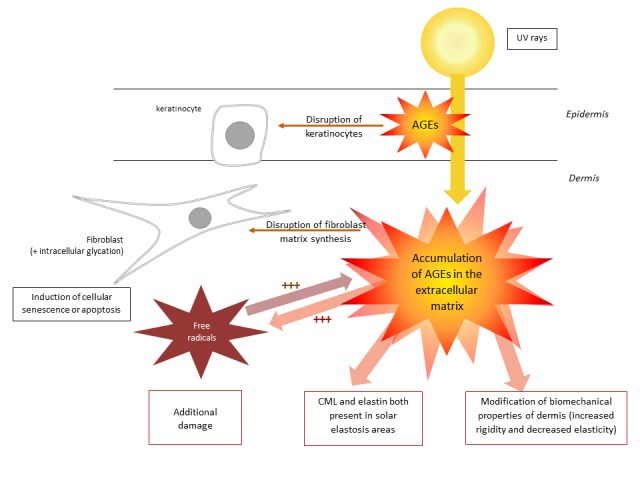
Glycation is both a physiological and pathological process which mainly affects proteins, nucleic acids and lipids. Exogenous and endogenous glycation produces deleterious reactions that take place principally in the extracellular matrix environment or within the cell cytosol and organelles. Advanced glycation end product (AGE) formation begins by the non-enzymatic glycation of free amino groups by sugars and aldehydes which leads to a succession of rearrangements of intermediate compounds and ultimately to irreversibly bound products known as AGEs. Epigenetic factors, oxidative stress, UV and nutrition are important causes of the accumulation of chemically and structurally different AGEs with various biological reactivities. Cross-linked proteins, deriving from the glycation process, present both an altered structure and function. Nucleotides and lipids are particularly vulnerable targets which can in turn favor DNA mutation or a decrease in cell membrane integrity and associated biological pathways respectively. In mitochondria, the consequences of glycation can alter bioenergy production. Under physiological conditions, anti-glycation defenses are sufficient, with proteasomes preventing accumulation of glycated proteins, while lipid turnover clears glycated products and nucleotide excision repair removes glycated nucleotides. If this does not occur, glycation damage accumulates, and pathologies may develop. Glycation-induced biological products are known to be mainly associated with aging, neurodegenerative disorders, diabetes and its complications, atherosclerosis, renal failure, immunological changes, retinopathy, skin photoaging, osteoporosis, and progression of some tumors.
Keywords: advanced glycation end product; aging; diabetes; endogenous glycation; exogenous glycation; neurodegenerative disorders.
Figures
References
-
- Birlouez-Aragon I, Saavedra G, Tessier FJ, Galinier A, Ait-Ameur L, Lacoste F, et al. (2010). A diet based on high-heat-treated foods promotes risk factors for diabetes mellitus and cardiovascular diseases. Am J Clin Nutr, 91:1220-6. - PubMed
-
- Kanauchi M, Tsujimoto N, Hashimoto T (2001). Advanced glycation end products in nondiabetic patients with coronary artery disease. Diabetes Care, 24:1620-3. - PubMed
-
- Gul A, Rahman MA, Salim A, Simjee SU (2009). Advanced glycation end products in senile diabetic and nondiabetic patients with cataract. J Diabetes Complicat, 23:343-8. - PubMed
Publication types
LinkOut - more resources
Full Text Sources
Other Literature Sources