


Aqueous Synthesis, Degradation, and Encapsulation of Copper Nanowires for Transparent Electrodes
- PMID: 30274162
- PMCID: PMC6215155
- DOI: 10.3390/nano8100767
Aqueous Synthesis, Degradation, and Encapsulation of Copper Nanowires for Transparent Electrodes
Abstract
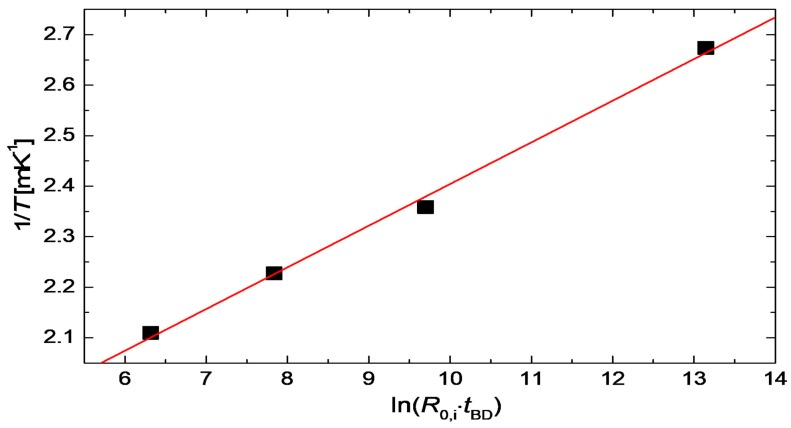
Copper nanowires (CuNWs) have increasingly become subjected to academic and industrial research, which is attributed to their good performance as a transparent electrode (TE) material that competes with the one of indium tin oxide (ITO). Recently, an environmentally friendly and aqueous synthesis of CuNWs was demonstrated, without the use of hydrazine that is known for its unfavorable properties. In this work, we extend the current knowledge for the aqueous synthesis of CuNWs by studying their up-scaling potential. This potential is an important aspect for the commercialization and further development of CuNW-based devices. Due to the scalability and homogeneity of the deposition process, spray coating was selected to produce films with a low sheet resistance of 7.6 Ω/sq. and an optical transmittance of 77%, at a wavelength of 550 nm. Further, we present a comprehensive investigation of the degradation of CuNWs when subjected to different environmental stresses such as the exposure to ambient air, elevated temperatures, high electrical currents, moisture or ultraviolet (UV) light. For the oxidation process, a model is derived to describe the dependence of the breakdown time with the temperature and the initial resistance. Finally, polymer coatings made of polydimethylsiloxane (PDMS) and polymethylmethacrylate (PMMA), as well as oxide coatings composed of electron beam evaporated silicon dioxide (SiO₂) and aluminum oxide (Al₂O₃) are tested to hinder the oxidation of the CuNW films under current flow.
Keywords: CuNWs; PDMS; PMMA; copper nanowires; degradation; encapsulation; solution-based; transparent electrode.
Conflict of interest statement
The authors declare no conflict of interest.
Figures



References
-
- Vosgueritchian M., Lipomi D.J., Bao Z. Highly conductive and transparent PEDOT:PSS films with a fluorosurfactant for stretchable and flexible transparent electrodes. Adv. Funct. Mater. 2012;22:421–428. doi: 10.1002/adfm.201101775. - DOI
-
- Meng L., dos Santos M. Properties of indium tin oxide films prepared by rf reactive magnetron sputtering at different substrate temperature. Thin Solid Films. 1998;322:56–62. doi: 10.1016/S0040-6090(97)00939-5. - DOI
Grants and funding
LinkOut - more resources
Full Text Sources
Other Literature Sources
