


Rethinking Lethality in Youth Suicide Attempts: First Suicide Attempt Outcomes in Youth Ages 10 to 24
- PMID: 30274653
- PMCID: PMC6375682
- DOI: 10.1016/j.jaac.2018.04.021
Rethinking Lethality in Youth Suicide Attempts: First Suicide Attempt Outcomes in Youth Ages 10 to 24
Abstract
Objective: Although suicide is the second most frequent cause of death in American youth, suicide research has heretofore been confined to convenience samples that represent neither psychiatric nor general populations and that fail to include individuals dying at their first attempts. These limitations were addressed by assembling a youth cohort followed from the first medically recorded attempt (index attempt [IA]). It was hypothesized this approach would more accurately represent the prevalence of completed suicide after an attempt and underscore lethality based on method.
Method: This study draws from a previously reported retrospective-prospective all-age cohort identified through the Rochester Epidemiology Project. The original 1,490-subject sample included 813 Olmsted County youth 10 to 24 years old (n = 258 male, n = 555 female; 54.6% of total cohort) with IAs from January 1, 1986 through December 31, 2007 and followed until December 31, 2010.
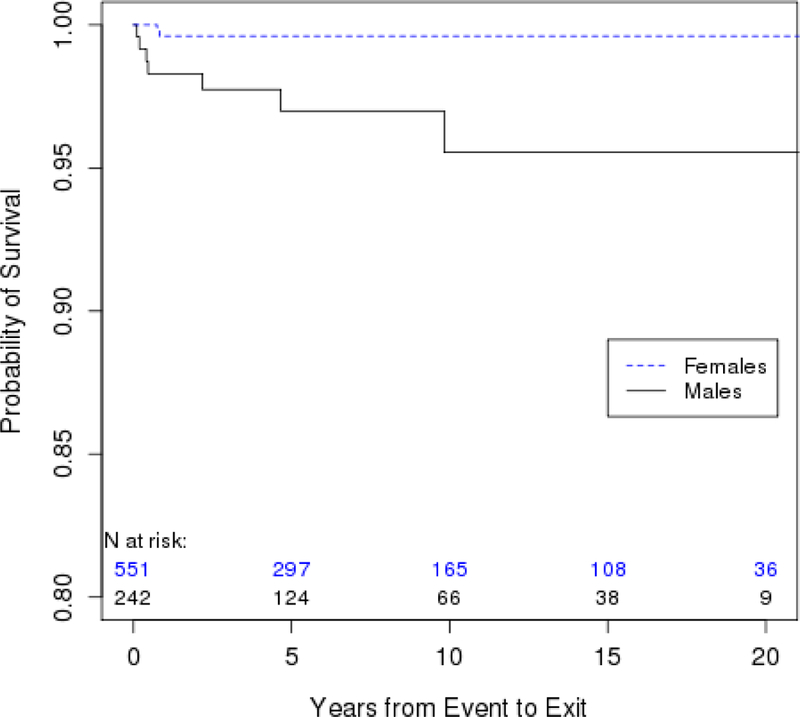
Results: Twenty-nine of 813 subjects (3.6%) killed themselves during the study period, with 28 of 29 dying before their 25th birthday and 20 of 28 (71.4%) dying at their first attempt. Despite composing only 31.7% of the cohort (258 of 813), male subjects composed most suicides: 23 of 29 (79.3% of suicides; 8.9% of male subjects) versus 6 of 29 female subjects (20.7% of suicides; 1.1% of female subjects). Eighty-five percent of all IA deaths involved firearms. More than a third of youth-41.2%-lacked a psychiatric history prior to IA.
Conclusion: These data show that more than half the IAs occurred in youth, with approximately three-fourths of completed youth suicides occurring at the IAs. In parsing cause of IA death in the all-age cohort, the contribution of firearms figured even more prominently in the subsample of youth (85.0%) than in those at least 25 years old (64.3%). The high IA lethality suggests that prevention efforts commencing after the IA are too late for most victims.
Keywords: completed suicide; epidemiology; suicide attempt.
Copyright © 2018 American Academy of Child and Adolescent Psychiatry. Published by Elsevier Inc. All rights reserved.
Conflict of interest statement
Disclosures:
Dr. Bostwick has received funding from the National Institute on Aging (grant U01AG-45390; PI: Boeve) and has delivered non-industry-sponsored CME lectures.
Drs. McKean and Pabbati and Ms. Geske report no biomedical financial interests or potential conflicts of interest.
Figures
References
-
- Centers for Disease Control and Prevention. 10 Leading Causes of Death by Age Group, United States −2010. 2010; https://www.cdc.gov/injury/wisqars/pdf/10lcid_all_deaths_by_age_group_20.... Accessed August 9, 2018.
-
- Bolger N, Downey G, Walker E, Steininger P. The onset of suicidal ideation in childhood and adolescence. J Youth Adolesc. 1989;18(2):175–190. - PubMed
-
- Kessler RC, Borges G, Walters EE. Prevalence of and risk factors for lifetime suicide attempts in the National Comorbidity Survey. Arch Gen Psychiatry. 1999;56(7):617–626. - PubMed
-
- Lewinsohn PM, Rohde P, Seeley JR, Baldwin CL. Gender differences in suicide attempts from adolescence to young adulthood. J Am Acad Child Adolesc Psychiatry. 2001;40(4):427–434. - PubMed
-
- Shaffer D, Gould MS, Fisher P, et al. Psychiatric diagnosis in child and adolescent suicide. Arch Gen Psychiatry. 1996;53(4):339–348. - PubMed
Publication types
MeSH terms
Grants and funding
LinkOut - more resources
Full Text Sources
