


Treatment of Occipital Neuralgia by Thermal Radiofrequency Ablation
- PMID: 30275783
- PMCID: PMC6162129
- DOI: 10.31486/toj.17.0104
Treatment of Occipital Neuralgia by Thermal Radiofrequency Ablation
Abstract
Background: Occipital neuralgia is an uncommon disorder characterized by severe pain involving the posterior scalp in the distribution of the greater and lesser occipital nerves. In cases refractory to pharmacotherapy, invasive treatment options may be warranted. The aim of the present study was to examine the effects of thermal radiofrequency ablation (TRF) on occipital neuralgia. We hypothesized that this procedure would result in long-term pain relief.
Methods: All patients who underwent TRF of the greater and lesser occipital nerves between January 1, 2013 and March 23, 2016 were identified. Medical records were reviewed for preprocedure pain score, 1-month postprocedure pain score, patient-defined percent pain relief according to the visual analog scale (on which zero equals no pain and 10 represents the worst pain imaginable), and length of pain relief. The primary outcomes were the differences between preprocedure and 1-month postprocedure pain scores (mean change from baseline), percent pain relief, and patient-reported length of relief.
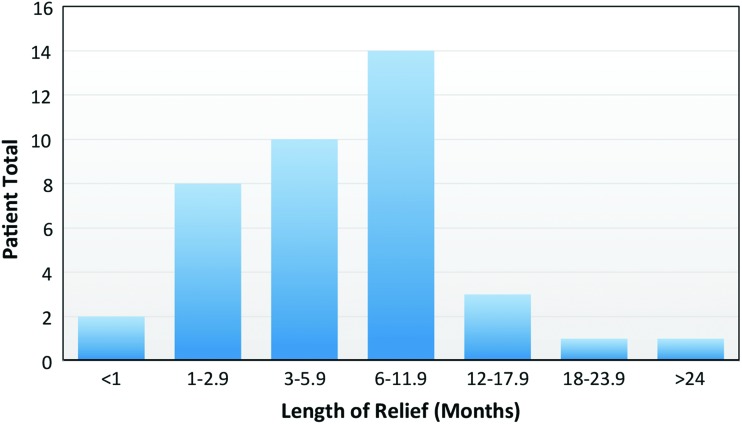
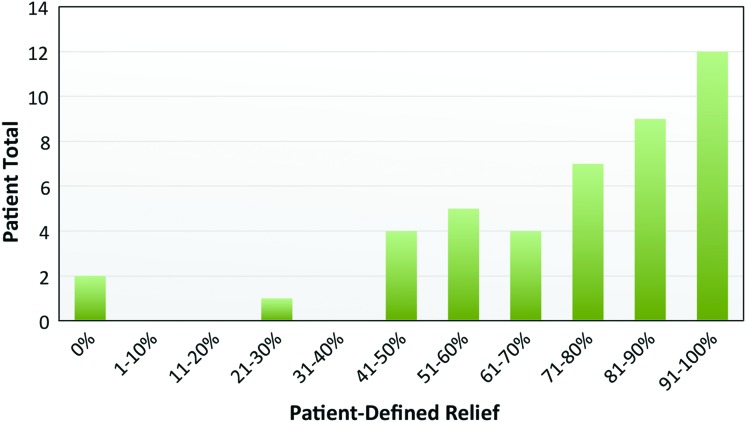
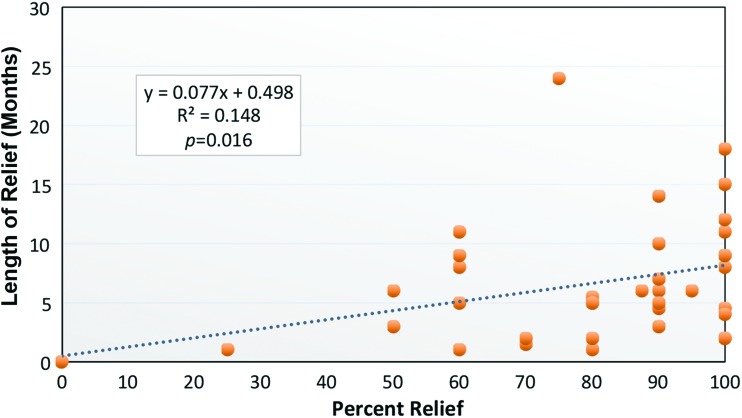
Results: A total of 50 patients were identified; 4 patients were excluded because of insufficient data as a result of loss to follow-up. A significant difference was found between preprocedure and postprocedure patient-reported pain scores (6.7 vs 2.7, respectively; P < 0.001), equating to a mean reduction in pain scores 1-month postprocedure of 4.0 ± 3.3. The mean patient-defined percent pain relief was 76.3% ± 25.0%. The mean patient-reported length of relief was 6.5 ± 5.1 months.
Conclusion: This study suggests that TRF may reduce pain scores for approximately 6 months.
Keywords: Denervation; facial neuralgia; facial pain; pulsed radiofrequency treatment.
Figures

References
-
- Afridi SK, Shields KG, Bhola R, Goadsby PJ. Greater occipital nerve injection in primary headache syndromes–prolonged effects from a single injection. Pain. 2006. May;122(1-2):126-129. - PubMed
LinkOut - more resources
Full Text Sources