


Impact of climate on the population dynamics of an alpine ungulate: a long-term study of the Tatra chamois Rupicapra rupicapra tatrica
- PMID: 30276475
- PMCID: PMC6244863
- DOI: 10.1007/s00484-018-1619-y
Impact of climate on the population dynamics of an alpine ungulate: a long-term study of the Tatra chamois Rupicapra rupicapra tatrica
Abstract
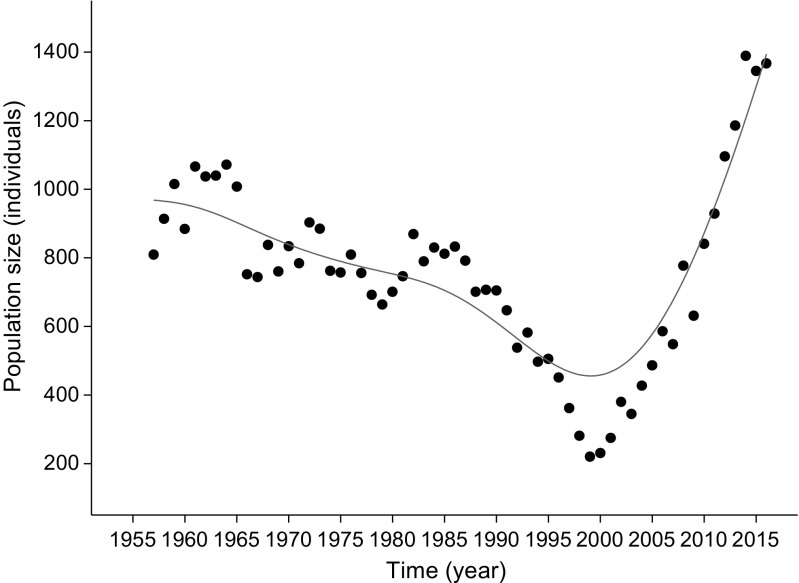
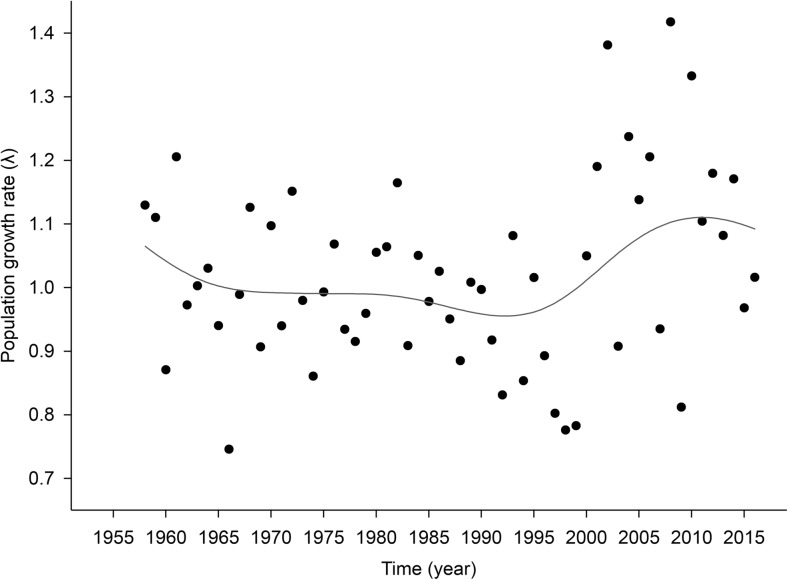
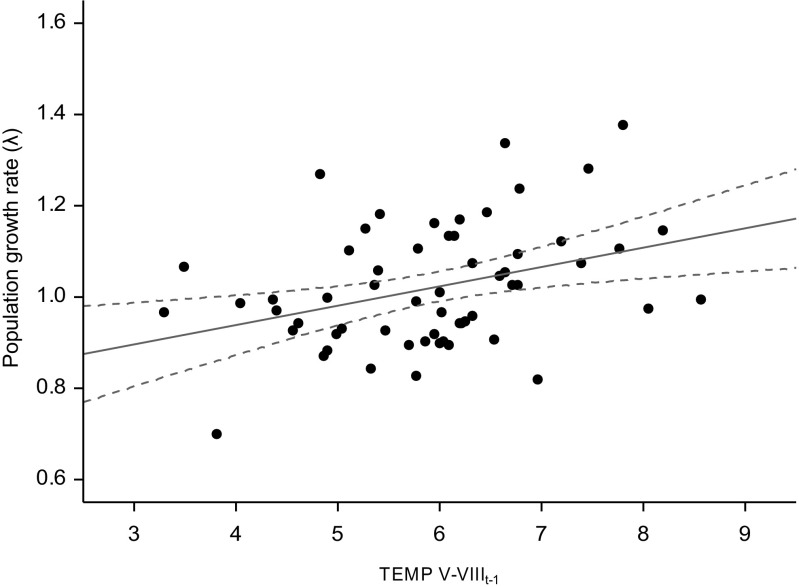
Global warming is considered as a phenomenon having a negative effect on animals living in cold climate. However, herbivorous species inhabiting cold zones may potentially benefit from increase of temperature as this influence duration of vegetation period and increase food resources. In this study, we analyze the impact of climate factors on the long-term dynamics of an isolated and unhunted population of the Tatra chamois Rupicapra rupicapra tatrica. The population growth rate, based on autumnal chamois counting carried out from 1957 to 2016, were correlated with a set of climatic variables. We tested the hypothesis that high temperatures in summer could have a positive impact on the population, since they influence vegetation growth, which ensure food resources. On the other hand, heavy falls of snow and long-lasting and deep snow cover could adversely affect the population by reducing population survival during the winter. The results of this study indicate that climatic variables best explaining the autoregressed population growth rate (from the autumn of year t-1 to the autumn of year t) were the mean summer temperature of year t-1: the population increase was greater following a warmer summer in year t-1 and, in lower extent, the total precipitation during winter: the population decrease was greater following a winter with heavy snowfall. Duration and thickness of snow cover have no negative effect on population growth rate. The results indicate that the population dynamic of the Tatra chamois is determined in the long term by weather conditions, mainly by temperature, when kids are birthing and growing. The results of this work highlight that climatic changes may be responsible for the population dynamic of high-mountain species. Climate warming may lead to increase in duration of vegetation period in cold climatic zones, what may in turn have positive effect on herbivorous species, which relay upon food resources limited by low temperatures within vegetation period.
Keywords: Climate change; Herbivory; Mammal; Mountain; Protected area; Ruminant.
Conflict of interest statement
Conflict of interest
The authors declare that they have no competing interests.
Ethical statement
The study was performed in accordance with the law regulations in Poland.
Figures
References
-
- Beniston M, Diaz HF, Bradley RS. Climatic change at high elevation sites: an overview. Clim Chang. 1997;36:233–251. doi: 10.1023/A:1005380714349. - DOI
-
- Burnham KP, Anderson DR. Model selection and multi-model inference: a practical information-theoretic approach. New York: Springer Verlag; 2002.
-
- Chovancová B, Gömöry D. Influence of some climatic factors and predators on the population size of Tatra chamois in the Tatra National Park. J Mt Ecol. 2000;5:173–183.
MeSH terms
LinkOut - more resources
Full Text Sources
Medical
Molecular Biology Databases
