


Impact of sarcopenia on outcomes of patients undergoing pancreatectomy: A retrospective analysis of 107 patients
- PMID: 30278487
- PMCID: PMC6181530
- DOI: 10.1097/MD.0000000000012076
Impact of sarcopenia on outcomes of patients undergoing pancreatectomy: A retrospective analysis of 107 patients
Abstract
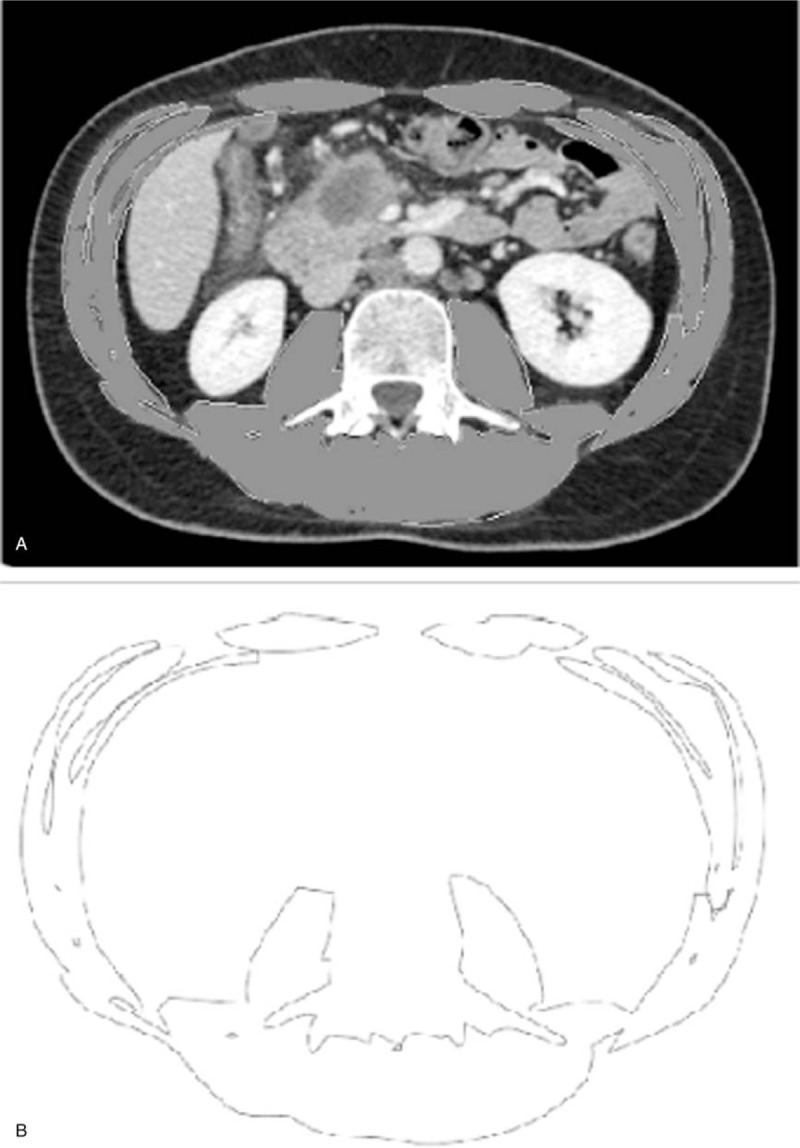
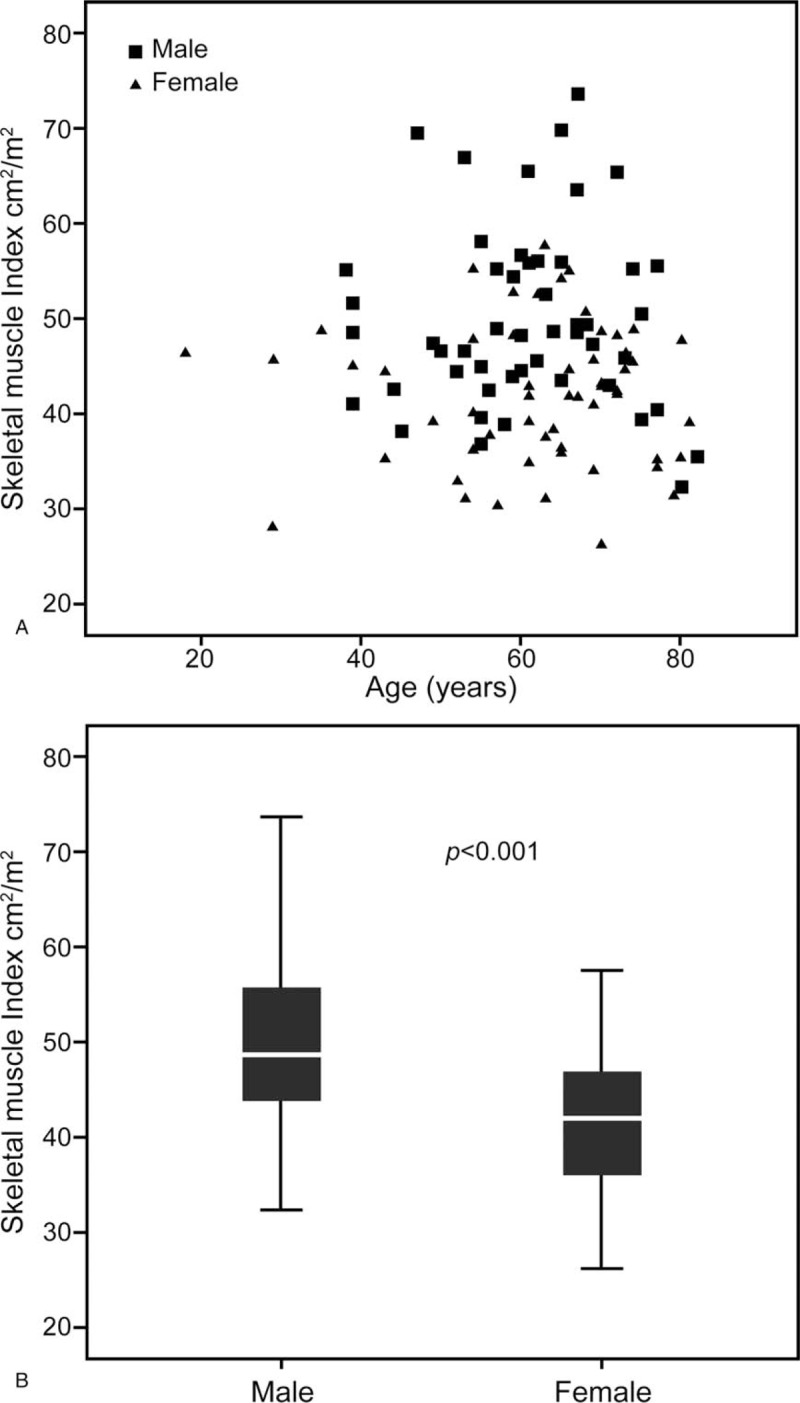
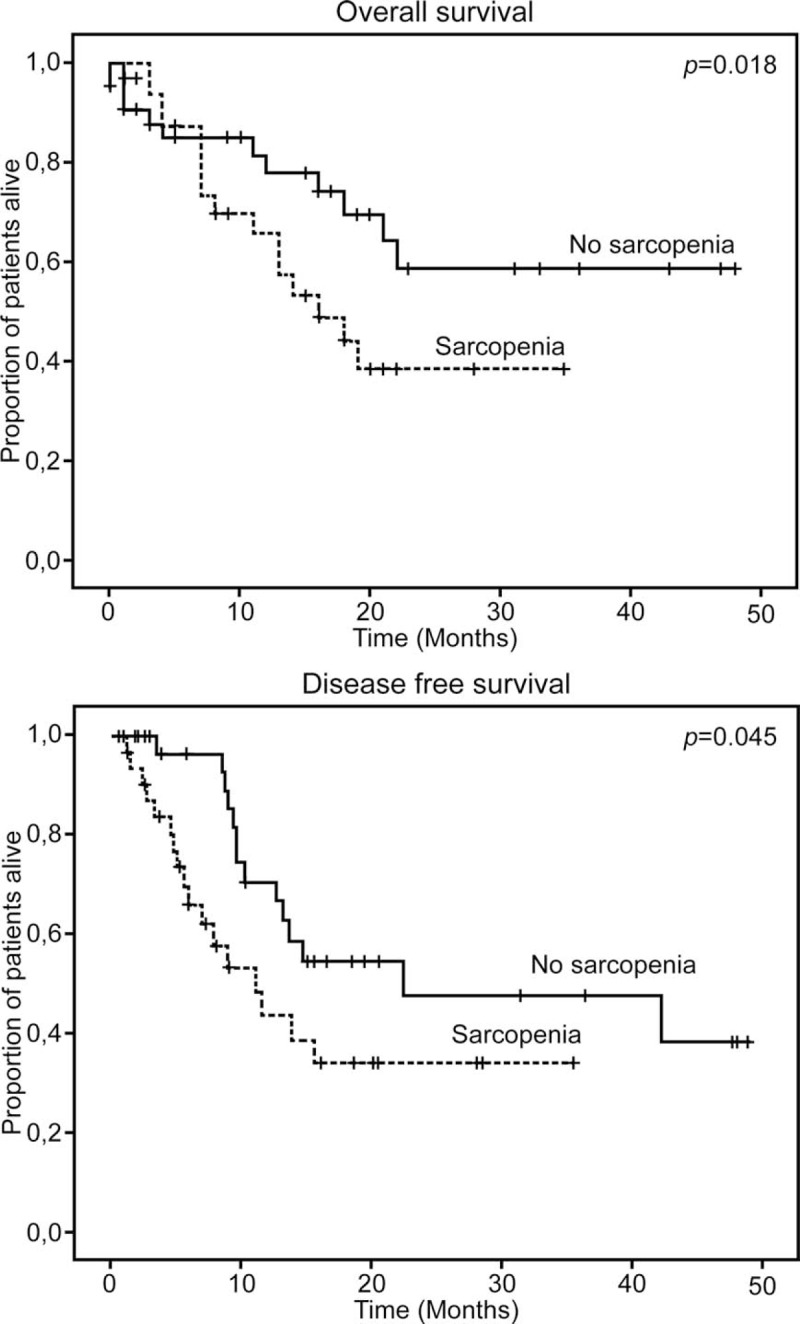
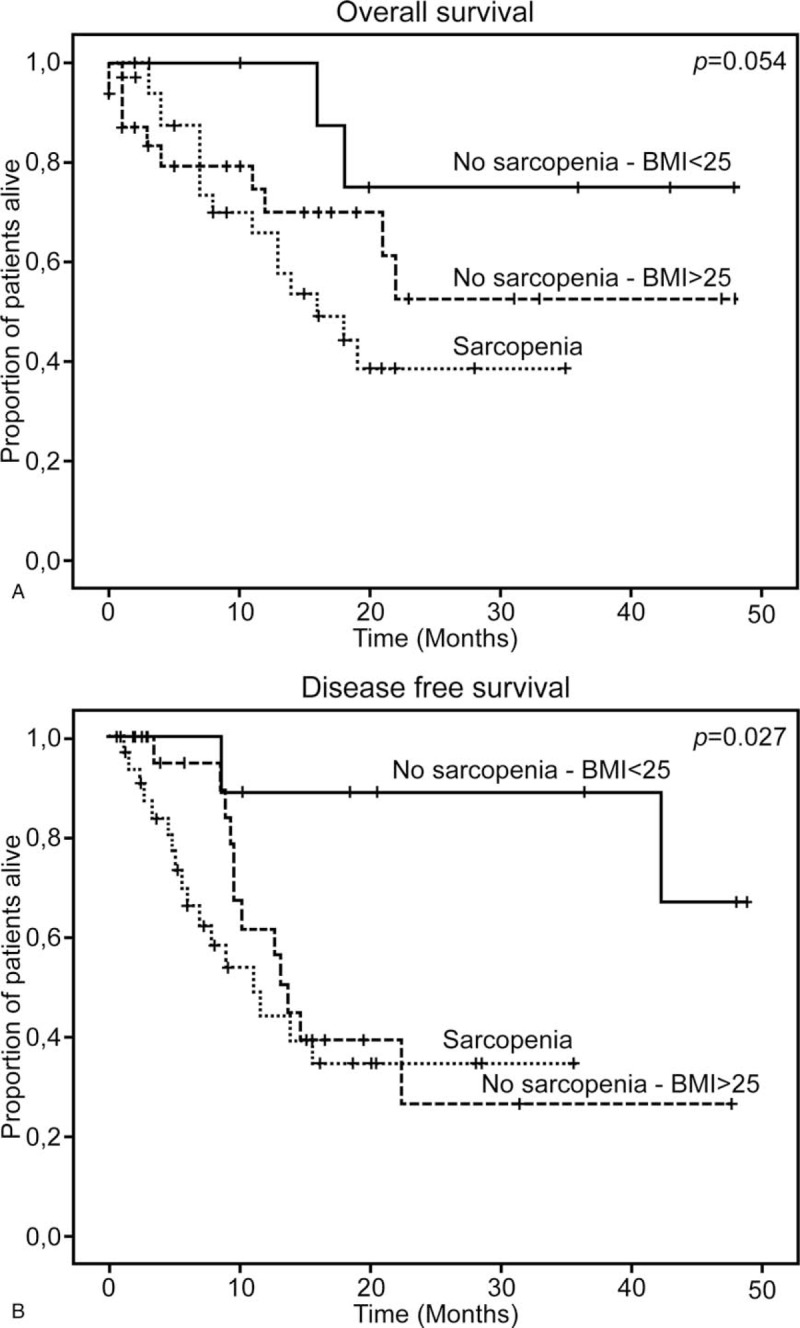
To evaluate the prevalence of sarcopenia in patients undergoing pancreatic surgery and to examine its impact on the surgical outcomes and survival of patients.Skeletal muscle index (SMI) was measured on preoperative CT. A patient was considered sarcopenic if SMI was <38.5 cm/m for a female or <52.4 cm/m for a male. Postoperative pancreatic fistula (POPF) and severe morbidity (Clavien≥3) were analyzed. Survival of patients with cancer was calculated using the Kaplan-Meier method.In total, 107 consecutive patients were included. Among them, 50 (47%) patients were sarcopenic and 65 (60%) were undernourished. The rates of severe morbidity and mortality were comparable between sarcopenic and nonsarcopenic groups. However, all POPF grade B or C and deaths occurred in the sarcopenic or nonsarcopenic overweight group (BMI > 25) with significantly lengthened hospital stays (P = .003). After pancreatectomy for cancer, 31 (40.2%) patients showed postoperative recurrence and 23 (29.9%) died after a median follow-up of 15 ± 13.5 months. Despite comparable histological types and stages, the median overall and disease-free survivals were lower in sarcopenic patients (16 months vs not reached, P = .02 and 11.1 months vs 22.5 months; P = .04, respectively). The multivariate analysis revealed that, sarcopenia trended to increase the risk of death (HR = 2.04, P = .07).Sarcopenia negatively impacted short- and long-term outcomes in patients undergoing pancreatectomy.
Conflict of interest statement
The authors have no conflicts of interest to disclose.
Figures
References
-
- Amini N, Spolverato G, Kim Y, et al. Trends in hospital volume and failure to rescue for pancreatic surgery. J Gastrointest Surg 2015;19:1581–92. - PubMed
-
- Büchler MW, Wagner M, Schmied BM, et al. Changes in morbidity after pancreatic resection: toward the end of completion pancreatectomy. Arch Surg 2003;138:1310–4. - PubMed
-
- Bachmann J, Heiligensetzer M, Krakowski-Roosen H, et al. Cachexia worsens prognosis in patients with resectable pancreatic cancer. J Gastrointest Surg 2008;12:1193–201. - PubMed
-
- Mourão F, Amado D, Ravasco P, et al. Nutritional risk and status assessment in surgical patients: a challenge amidst plenty. Nutr Hosp 2004;19:83–8. http://www.ncbi.nlm.nih.gov/pubmed/15049409 - PubMed
-
- La Torre M, Ziparo V, Nigri G, et al. Malnutrition and pancreatic surgery: prevalence and outcomes. J Surg Oncol 2013;107:702–8. - PubMed
Publication types
MeSH terms
LinkOut - more resources
Full Text Sources
Medical
