. 2018 Oct 2;9(5):e01211-18.
doi: 10.1128/mBio.01211-18.

Cyclosporine Biosynthesis in Tolypocladium inflatum Benefits Fungal Adaptation to the Environment

Affiliations

Cyclosporine Biosynthesis in Tolypocladium inflatum Benefits Fungal Adaptation to the Environment

Xiuqing Yang et al. mBio. .

Abstract

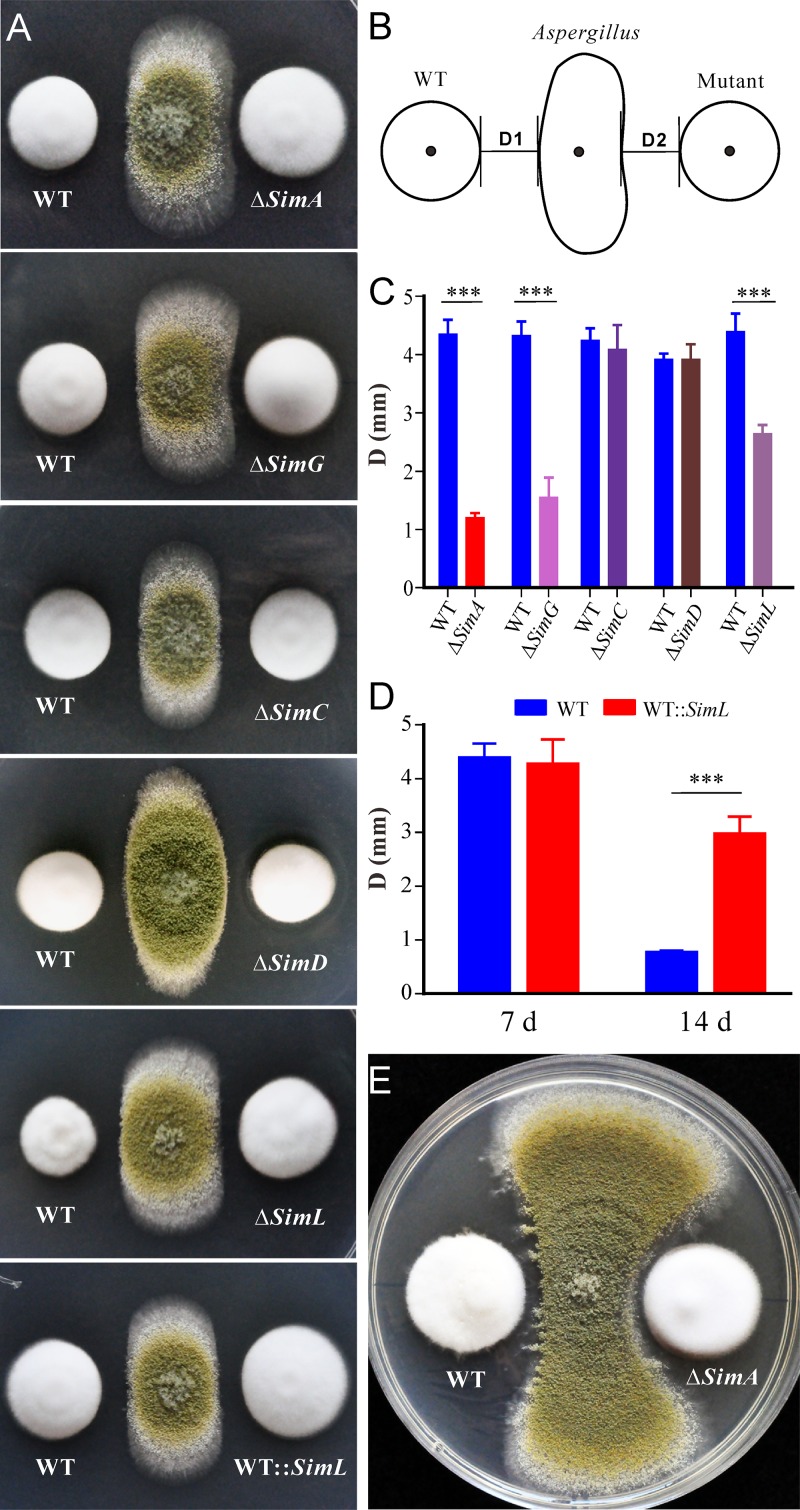
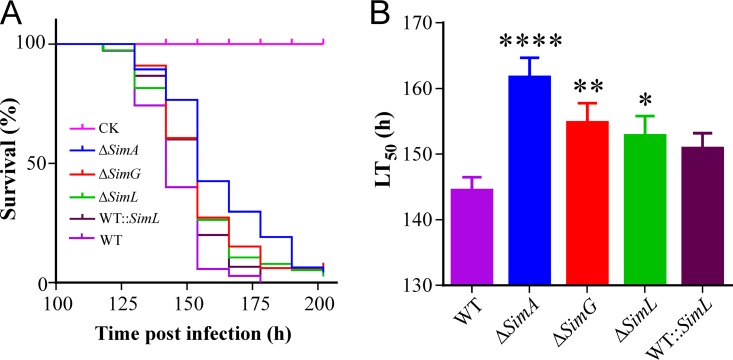
The cycloundecapeptide cyclosporin A (CsA) was first isolated from the insect-pathogenic fungus Tolypocladium inflatum for its antifungal activity and later developed as an immunosuppressant drug. However, the full biosynthetic mechanism of CsA remains unknown and has puzzled researchers for decades. In this study, the biosynthetic gene cluster is suggested to include 12 genes encoding enzymes, including the nonribosomal peptide synthetase (NRPS) (SimA) responsible for assembling the 11 amino acid substrates of cyclosporine and a polyketide synthase (PKS) (SimG) to mediate the production of the unusual amino acid (4R)-4-[(E)-2-butenyl]-4-methyl-l-threonine (Bmt). Individual deletion of 10 genes, isolation of intermediates, and substrate feeding experiments show that Bmt is biosynthesized by three enzymes, including SimG, SimI, and SimJ. The substrate d-alanine is catalyzed from l-alanine by alanine racemase SimB. Gene cluster transcription is regulated by a putative basic leucine zipper (bZIP)-type protein encoded by the cluster gene SimL We also found that the cluster cyclophilin (SimC) and transporter (SimD) genes contribute to the tolerance of CsA in the CsA-producing fungus. We also found that cyclosporine production could enable the fungus to outcompete other fungi during cocultivation tests. Deletion of the CsA biosynthetic genes also impaired fungal virulence against insect hosts. Taking all the data together, in addition to proposing a biosynthetic pathway of cyclosporines, the results of this study suggest that CsA produced by this fungus might play important ecological roles in fungal environment interactions.IMPORTANCE The cyclopeptide cyclosporin A was first isolated from the filamentous fungus Tolypocladium inflatum showing antifungal activity and was later developed as an immunosuppressant drug. We report the biosynthetic mechanism of cyclosporines that are mediated by a cluster of genes encoding NRPS and PKS controlled by a bZIP-type transcriptional regulator. The two unusual amino acids Bmt and d-Ala are produced by the PKS pathway and alanine racemase, respectively. The cyclophilin and transporter genes jointly contribute to fungal self-protection against cyclosporines. Cyclosporine confers on T. inflatum the abilities to outcompete other fungi in competitive interactions and to facilitate fungal infection of insect hosts, which therefore benefits fungal adaptations to different environments.

Keywords: Tolypocladium inflatum; antifungal activity; biosynthetic pathway; cyclosporine; virulence.


Figures

FIG 1
FIG 1
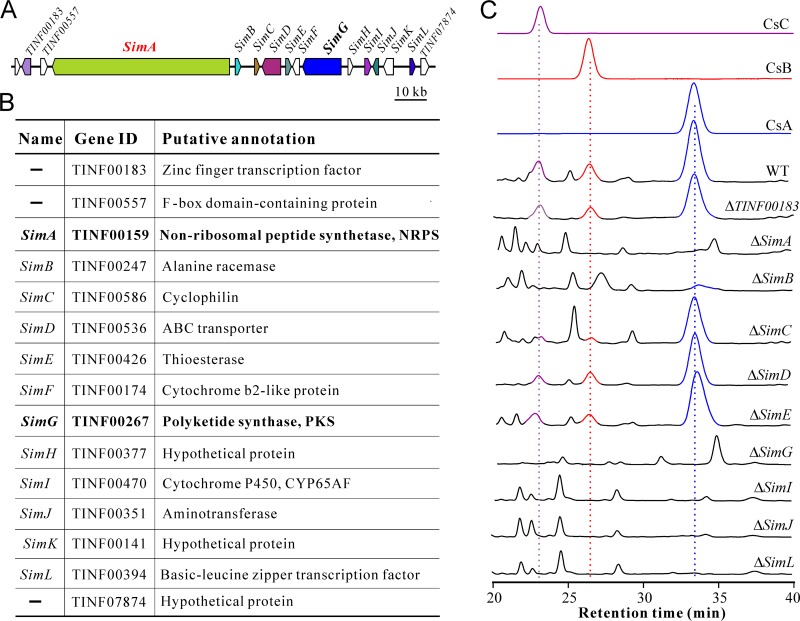
Prediction and functional verification of the CSN biosynthetic gene cluster. (A) Schematic map of the biosynthetic gene cluster. The genes are named following the previously designated SimA gene for the core NRPS gene. (B) Annotation of the gene contents within the gene cluster. ID, identifier. (C) Loss-of-function verification of the contributions of different genes to CSN biosynthesis. HPLC analysis of CSN production by the WT and different null mutants of T. inflatum. The standards CsA, CsB, and CsC were included in parallel analysis.
FIG 2
FIG 2
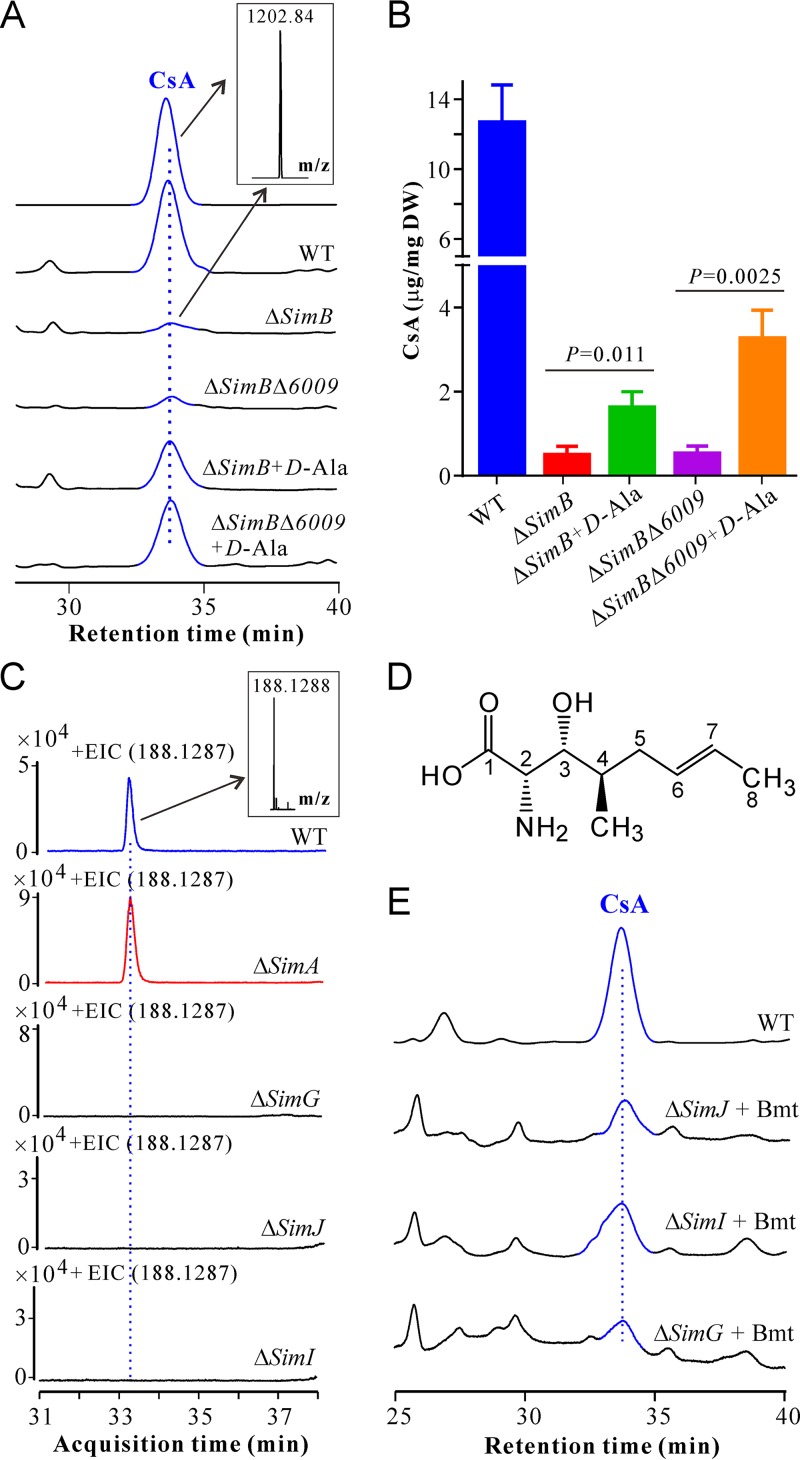
Verification of the genes involved in d-Ala conversion and Bmt biosynthesis. (A) HPLC analysis of CsA production by WT and different mutants with or without the addition of d-Ala. The inset shows the mass spectra detected for the CsA and ΔsimB samples. m/z, [M+H]+; ΔSimBΔ6009, ΔSimB ΔTINF06009 double mutant. (B) Quantification analysis of CsA production by WT and different mutants. The strains were grown in fructose CSN induction medium with or without the supplementation of d-Ala (at a final concentration of 20 mM) for 10 days. The mycelia were then harvested for CSN extraction. Values are means plus standard errors (SE) (error bars). DW, mycelium dry weight. (C) LC-MS analysis of the extracted ion chromatography (EIC) showing the production or nonproduction of Bmt by WT and mutant strains. m/z, [M+H]+. (D) Chemical structure of Bmt. (E) Supplementation of Bmt (at a final concentration of 85 μM) in the growth medium enabled the null mutants to produce CsA (peaks shown in blue).
FIG 3
FIG 3
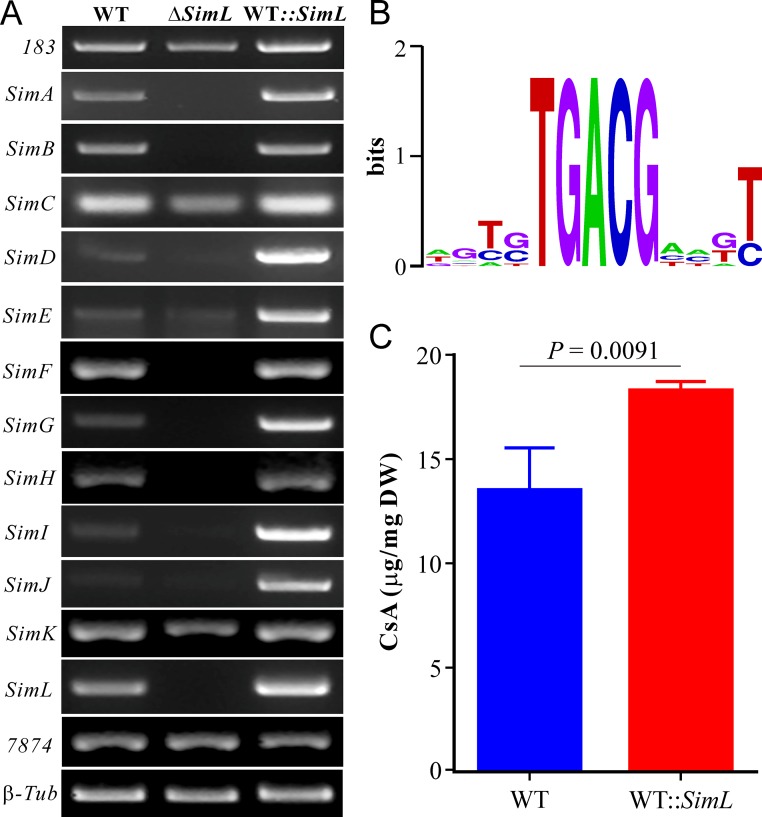
Functional verification of the pathway-specific transcription factor SimL. (A) RT-PCR analysis of gene expression. The WT, ΔSimL, and WT::SimL strains were grown in fructose CSN induction medium for 10 days, and the mycelia were harvested for RNA extraction and gene expression analysis. TINF00183 and TINF07874 are indicated as 183 and 7874, respectively. β-Tub, β-Tubulin. (B) In silico analysis of the putative binding motif by the bZIP-type TF SimL. (C) Comparative quantification of CsA production. The WT and WT::SimL strains were grown in fructose CSN induction medium for 10 days, and the mycelia were harvested for cyclosporine extraction. There were three replicates for each sample. Values are means plus SE.
FIG 4
FIG 4
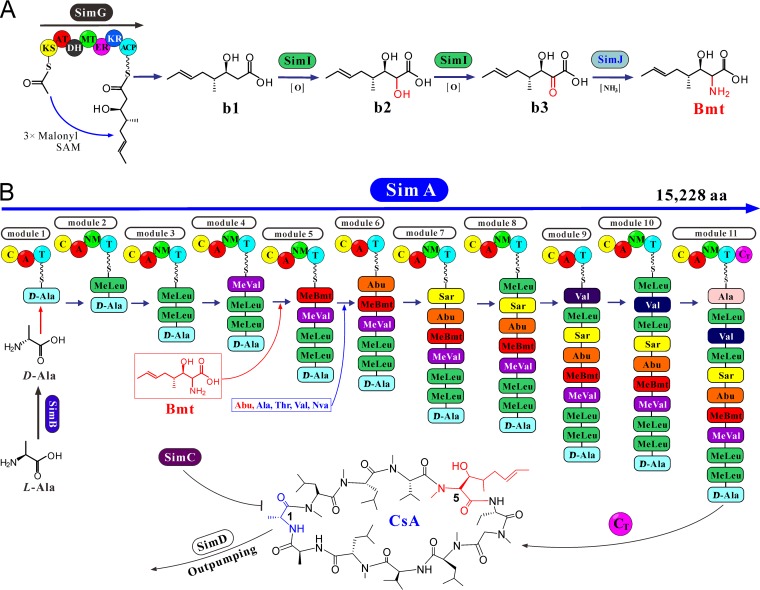
Proposed pathway for CsA biosynthesis. (A) Bmt biosynthesis by the PKS pathway. The PKS SimG domains include the following: β-ketoacyl synthase (KS), acyltransferase (AT), dehydrogenase (DH), methyltransferase (MT), enoylreductase (ER), ketoreductase (KR), acyl carrier protein (ACP), S-adenosylmethionine (SAM). The chemical structure of compounds b1 to b3 and Bmt are shown. (B) Schematic structure of NRPS SimA and the machinery of CsA biosynthesis. There are 11 modules of SimA, and each module contains the condensation (C), adenylation (A), thiolation (T), and/or N-methylation (NM) domains. The terminal C domain (CT) is implicated in cyclization of the peptidyl chains to form CsA and its analogs. The cyclophilin SimC and exporter SimD may jointly contribute to cell tolerance of CSNs. Abu, aminobutyric acid; Sar, sarcocine; Nva, norvaline; MeLeu, methylleucine; aa, amino acids.
FIG 5
FIG 5
Antifungal effect of CsA production. (A) Fungal cocultivation tests. The WT and mutants of T. inflatum were inoculated on PDA plates in parallel for 3 days, and the strain of A. flavus was then inoculated between the two T. inflatum colonies for 4 days. (B) Schematic diagram showing how the colony edge distances between the WT T. inflatum and Aspergillus (D1) or between the T. inflatum mutant and Aspergillus (D2) were measured. (C) Comparison of the colony edge distances between strains. Values are means plus SE. Values that are significantly different (P < 0.001 by two-tailed t test) are indicated by a bar and three asterisks. (D) Comparison of the colony edge distances between WT and WT::SimL strains after different incubation times (7 or 14 days [d]). Values are means plus SE. ***, P < 0.001. (E) Representative phenotypes of a fungal pair after inoculation and 3 weeks of growth of T. inflatum.
FIG 6
FIG 6
Insect bioassays. (A) Survival of insects after injection with the spores of the WT and different mutants. Control insects (CK) were injected with 0.05% Tween 20. (B) Comparison of the LT50 values for the WT and different mutants. Values are means plus SE. Values that are significantly different from the value for the WT by log rank tests are indicated by asterisks as follows: ****, P < 0.0001; **, P = 0.0087; *, P = 0.0182.

References

    1. Bushley KE, Raja R, Jaiswal P, Cumbie JS, Nonogaki M, Boyd AE, Owensby CA, Knaus BJ, Elser J, Miller D, Di Y, McPhail KL, Spatafora JW. 2013. The genome of Tolypocladium inflatum: evolution, organization, and expression of the cyclosporin biosynthetic gene cluster. PLoS Genet 9:e1003496. doi:10.1371/journal.pgen.1003496. - DOI - PMC - PubMed
    1. Borel JF, Feurer C, Gubler HU, Stähelin H. 1994. Biological effects of cyclosporin A: a new antilymphocytic agent. Agents Actions 43:179–186. doi:10.1007/BF01986686. - DOI - PubMed
    1. Survase SA, Kagliwal LD, Annapure US, Singhal RS. 2011. Cyclosporin A—a review on fermentative production, downstream processing and pharmacological applications. Biotechnol Adv 29:418–435. doi:10.1016/j.biotechadv.2011.03.004. - DOI - PubMed
    1. Lawen A, Zocher R. 1990. Cyclosporin synthetase. The most complex peptide synthesizing multienzyme polypeptide so far described. J Biol Chem 265:11355–11360. - PubMed
    1. Weber G, Leitner E. 1994. Disruption of the cyclosporin synthetase gene of Tolypocladium niveum. Curr Genet 26:461–467. doi:10.1007/BF00309935. - DOI - PubMed

Publication types

LinkOut - more resources