


The Microbiome and Radiation Induced-Bowel Injury: Evidence for Potential Mechanistic Role in Disease Pathogenesis
- PMID: 30279338
- PMCID: PMC6213333
- DOI: 10.3390/nu10101405
The Microbiome and Radiation Induced-Bowel Injury: Evidence for Potential Mechanistic Role in Disease Pathogenesis
Abstract
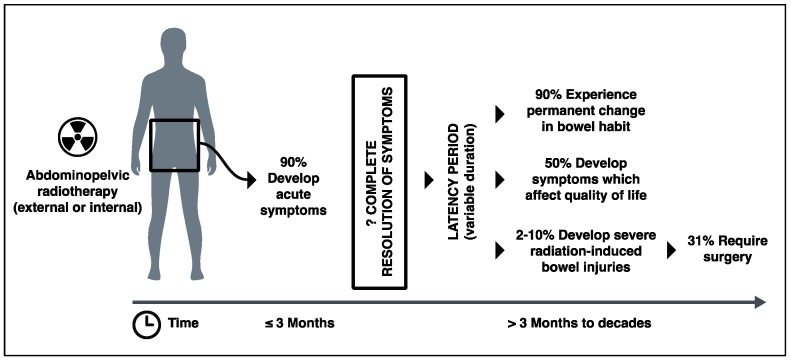
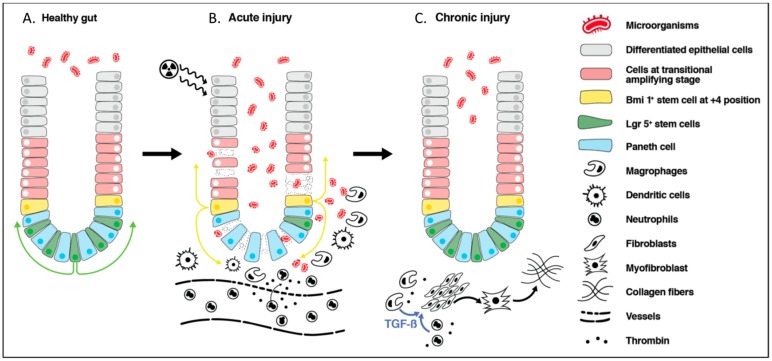
Radiotherapy has played a major role in both the curative and palliative treatment of cancer patients for decades. However, its toxic effect to the surrounding normal healthy tissue remains a major drawback. In cases of intra-abdominal and/or pelvic malignancy, healthy bowel is inevitably included in the radiation field, causing undesirable consequences that subsequently manifest as radiation-induced bowel injury, which is associated with significant morbidity and mortality. The pathophysiology of radiation-induced bowel injury is poorly understood, although we now know that it derives from a complex interplay of epithelial injury and alterations in the enteric immune, nervous, and vascular systems in genetically predisposed individuals. Furthermore, evidence supporting a pivotal role for the gut microbiota in the development of radiation-induced bowel injury has been growing. In this review, we aim to appraise our current understanding of radiation-induced bowel injury and the role of the microbiome in its pathogenesis as well as prevention and treatment. Greater understanding of the relationship between the disease mechanism of radiation-induced bowel injury and gut microbiome might shed light on potential future prevention and treatment strategies through the modification of a patient's gut microbiome.
Keywords: cancer management complications; microbiota; pelvic radiation disease; probiotics; radiation enteritis; radiation enteropathy; radiation-induced bowel injury; radiotherapy.
Conflict of interest statement
The authors declare no conflict of interest.
Figures
References
-
- Worldwide Cancer Statistics | Cancer Research UK. [(accessed on 6 July 2018)]; Available online: https://www.cancerresearchuk.org/health-professional/cancer-statistics/w....
-
- Cancer Statistics for the UK. | Cancer Research UK. [(accessed on 7 August 2018)]; Available online: http://www.cancerresearchuk.org/cancer-info/cancerstats/
Publication types
MeSH terms
Grants and funding
LinkOut - more resources
Full Text Sources
Other Literature Sources
