


A genetic perspective on the relationship between eudaimonic -and hedonic well-being
- PMID: 30279531
- PMCID: PMC6168466
- DOI: 10.1038/s41598-018-32638-1
A genetic perspective on the relationship between eudaimonic -and hedonic well-being
Abstract
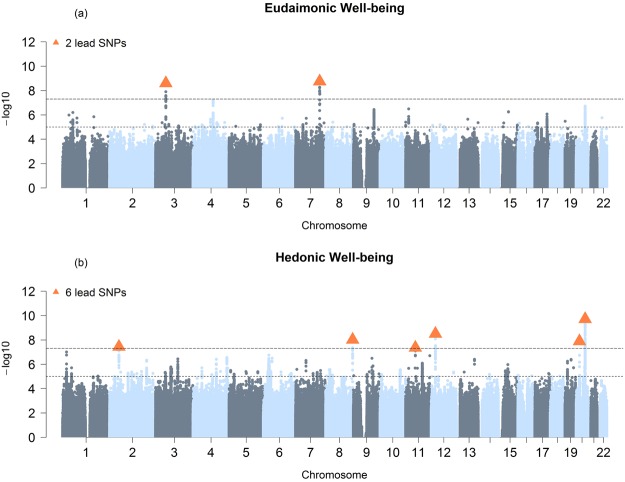
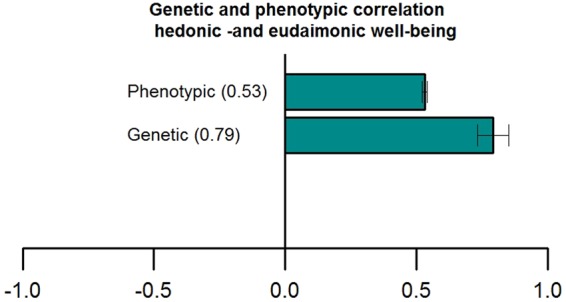
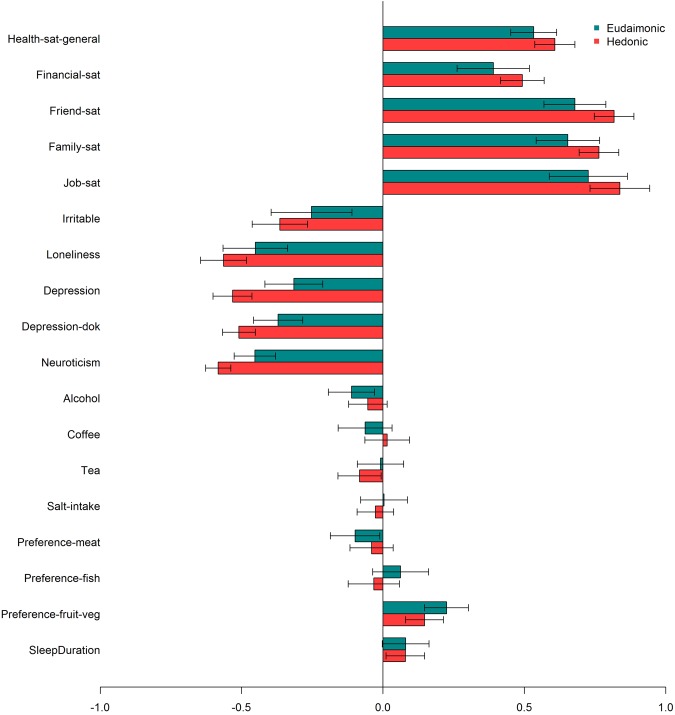
Whether hedonism or eudaimonia are two distinguishable forms of well-being is a topic of ongoing debate. To shed light on the relation between the two, large-scale available molecular genetic data were leveraged to gain more insight into the genetic architecture of the overlap between hedonic and eudaimonic well-being. Hence, we conducted the first genome-wide association studies (GWAS) of eudaimonic well-being (N = ~108 K) and linked it to a GWAS of hedonic well-being (N = ~222 K). We identified the first two genome-wide significant independent loci for eudaimonic well-being and six independent loci for hedonic well-being. Joint analyses revealed a moderate phenotypic correlation (r = 0.53) and a high genetic correlation (rg = 0.78) between eudaimonic and hedonic well-being. This indicates that the genetic etiology of hedonic and eudaimonic well-being is substantially shared, with divergent (environmental) factors contributing to their phenotypic divergence. Loci regulating expression showed significant enrichment in the brain cortex, brain cerebellum, frontal cortex, as well as the cerebellar hemisphere for eudaimonic well-being. No significant enrichment for hedonic well-being is observed, although brain tissues were top ranked. Genetic correlations patterns with a range of positive and negative related phenotypes were largely similar for hedonic -and eudaimonic well-being. Our results reveal a large overlap between the genes that influence hedonism and the genes that influence eudaimonia.
Conflict of interest statement
The authors declare no competing interests.
Figures
References
-
- Biswas-Diener R, Kashdan TB, King LA. Two traditions of happiness research, not two distinct types of happiness. J. Posit. Psychol. 2009;4:208–211. doi: 10.1080/17439760902844400. - DOI
-
- Waterman AS. The relevance of Aristotle’s conception of eudaimonia for the psychological study of happiness. Theor. Philos. Psychol. 1990;10:39–44. doi: 10.1037/h0091489. - DOI
-
- Huta V, Ryan RM. Pursuing Pleasure or Virtue: The Differential and Overlapping Well-Being Benefits of Hedonic and Eudaimonic Motives. J. Happiness Stud. 2010;11:735–762. doi: 10.1007/s10902-009-9171-4. - DOI
Publication types
MeSH terms
LinkOut - more resources
Full Text Sources
