Bid maintains mitochondrial cristae structure and function and protects against cardiac disease in an integrative genomics study
- PMID: 30281024
- PMCID: PMC6234033
- DOI: 10.7554/eLife.40907
Bid maintains mitochondrial cristae structure and function and protects against cardiac disease in an integrative genomics study
Abstract
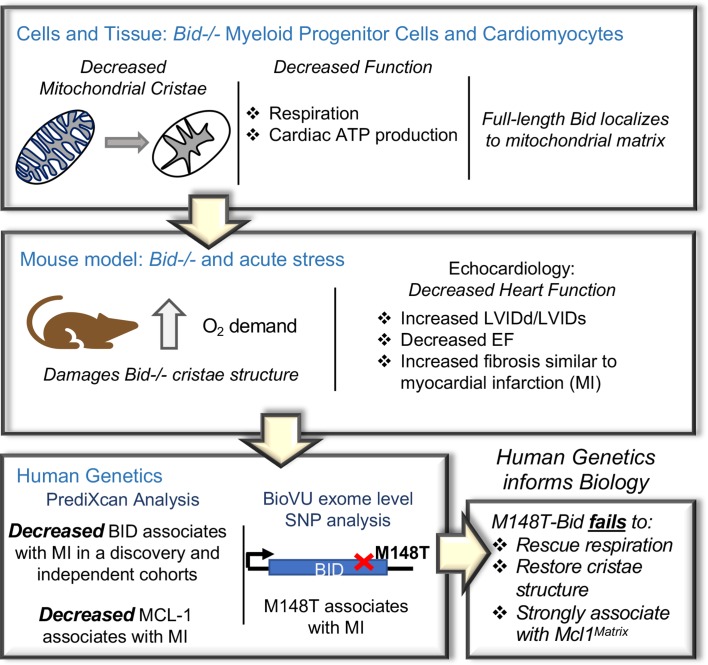
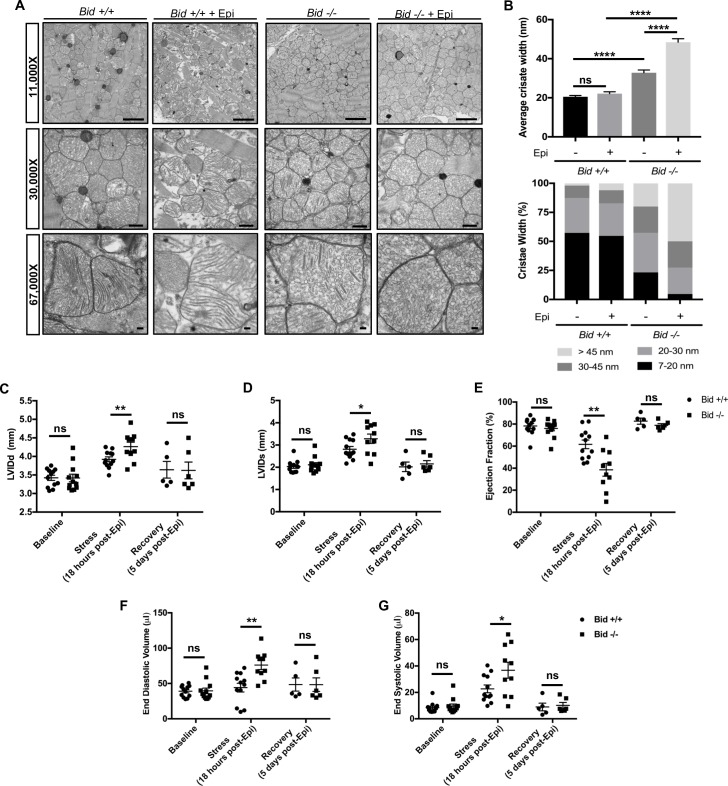
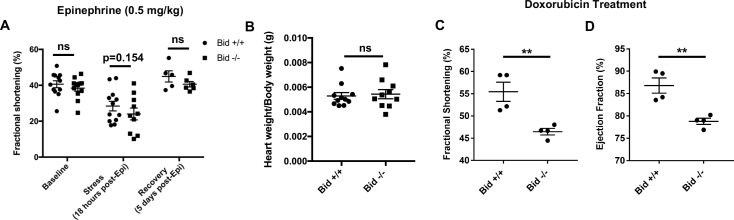
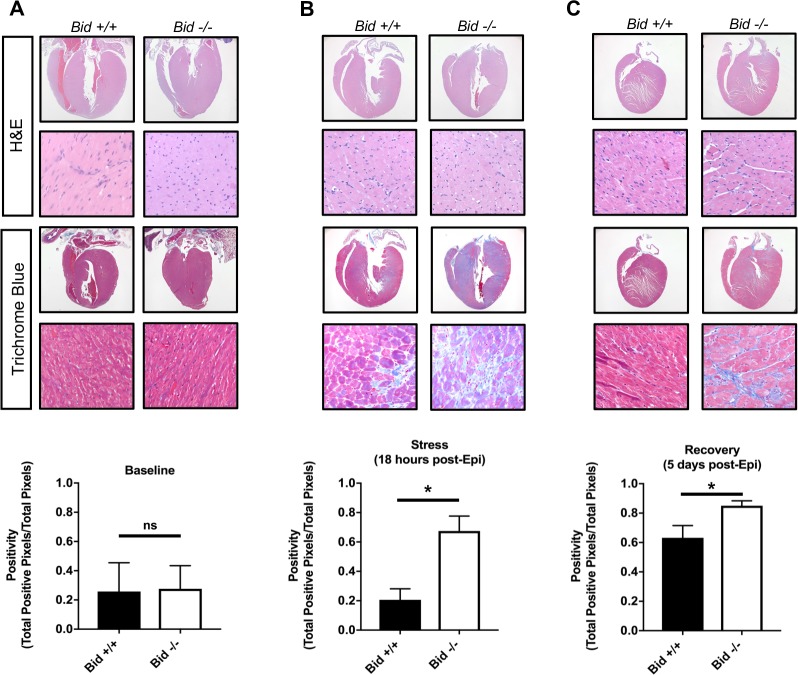
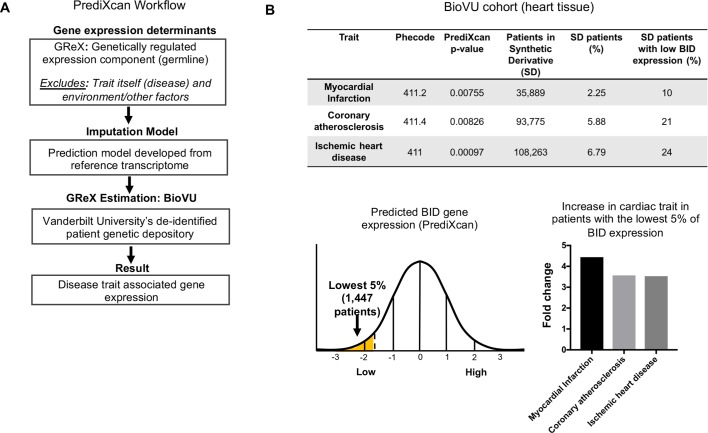
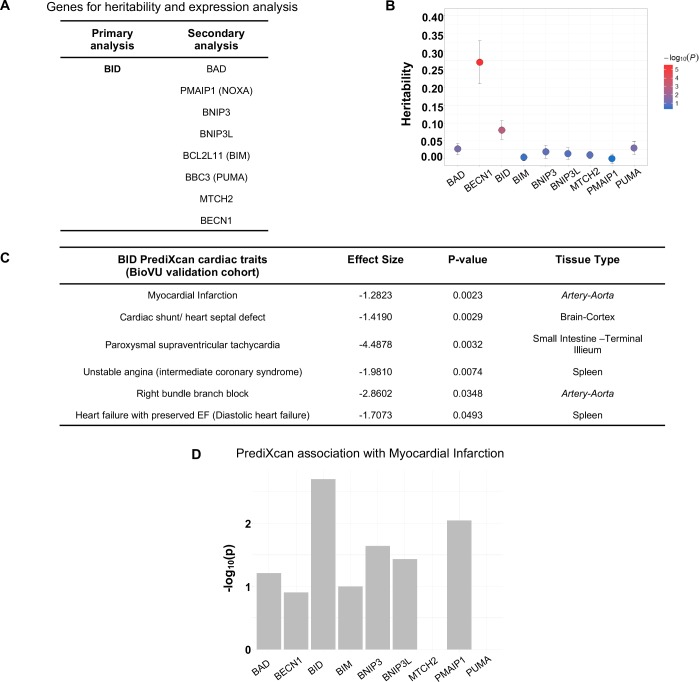
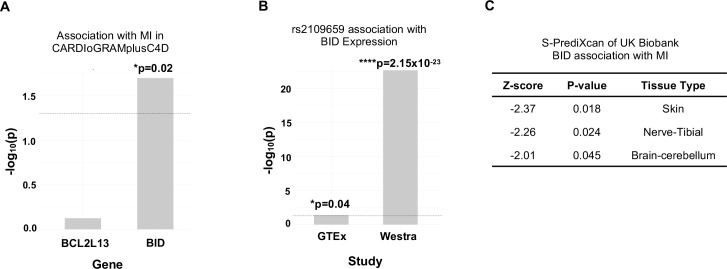
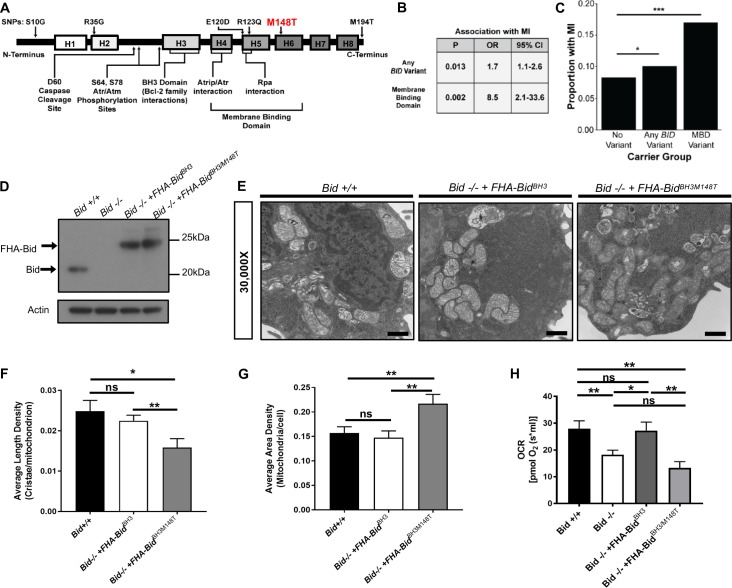
Bcl-2 family proteins reorganize mitochondrial membranes during apoptosis, to form pores and rearrange cristae. In vitro and in vivo analysis integrated with human genetics reveals a novel homeostatic mitochondrial function for Bcl-2 family protein Bid. Loss of full-length Bid results in apoptosis-independent, irregular cristae with decreased respiration. Bid-/- mice display stress-induced myocardial dysfunction and damage. A gene-based approach applied to a biobank, validated in two independent GWAS studies, reveals that decreased genetically determined BID expression associates with myocardial infarction (MI) susceptibility. Patients in the bottom 5% of the expression distribution exhibit >4 fold increased MI risk. Carrier status with nonsynonymous variation in Bid's membrane binding domain, BidM148T, associates with MI predisposition. Furthermore, Bid but not BidM148T associates with Mcl-1Matrix, previously implicated in cristae stability; decreased MCL-1 expression associates with MI. Our results identify a role for Bid in homeostatic mitochondrial cristae reorganization, that we link to human cardiac disease.
Keywords: Bcl-2 family; cell biology; cristae; electronic health record; human; human genetics & genomics; maize; mitochondria; mouse; myocardial infarction.
© 2018, Salisbury-Ruf et al.
Conflict of interest statement
CS, CB, AV, DL, QS, MH, NF, GO, WJ, QW, JF, JM, HC, LR, OB, EG, SZ No competing interests declared
Figures
References
-
- Anand SS, Islam S, Rosengren A, Franzosi MG, Steyn K, Yusufali AH, Keltai M, Diaz R, Rangarajan S, Yusuf S, INTERHEART Investigators Risk factors for myocardial infarction in women and men: insights from the INTERHEART study. European Heart Journal. 2008;29:932–940. doi: 10.1093/eurheartj/ehn018. - DOI - PubMed
-
- Barbeira AN, Dickinson SP, Bonazzola R, Zheng J, Wheeler HE, Torres JM, Torstenson ES, Shah KP, Garcia T, Edwards TL, Stahl EA, Huckins LM, Nicolae DL, Cox NJ, Im HK. Exploring the phenotypic consequences of tissue specific gene expression variation inferred from GWAS summary statistics. Nature Communications. 2018;9:1825. doi: 10.1038/s41467-018-03621-1. - DOI - PMC - PubMed
-
- Battle A, Mostafavi S, Zhu X, Potash JB, Weissman MM, McCormick C, Haudenschild CD, Beckman KB, Shi J, Mei R, Urban AE, Montgomery SB, Levinson DF, Koller D. Characterizing the genetic basis of transcriptome diversity through RNA-sequencing of 922 individuals. Genome Research. 2014;24:14–24. doi: 10.1101/gr.155192.113. - DOI - PMC - PubMed
-
- Bauer F, Elbers CC, Adan RA, Loos RJ, Onland-Moret NC, Grobbee DE, van Vliet-Ostaptchouk JV, Wijmenga C, van der Schouw YT. Obesity genes identified in genome-wide association studies are associated with adiposity measures and potentially with nutrient-specific food preference. The American Journal of Clinical Nutrition. 2009;90:951–959. doi: 10.3945/ajcn.2009.27781. - DOI - PubMed
Publication types
MeSH terms
Substances
Grants and funding
- R01 HL088347/HL/NHLBI NIH HHS/United States
- K08 HL121174/HL/NHLBI NIH HHS/United States
- P30 DK058404/DK/NIDDK NIH HHS/United States
- R01 HL133559/HL/NHLBI NIH HHS/United States
- U2C DK059637/DK/NIDDK NIH HHS/United States
- 1R01HL088347/HL/NHLBI NIH HHS/United States
- P01 GM015431/GM/NIGMS NIH HHS/United States
- P30 EY008126/EY/NEI NIH HHS/United States
- P50 GM015431/GM/NIGMS NIH HHS/United States
- P30 DK020593/DK/NIDDK NIH HHS/United States
- P30 CA068485/CA/NCI NIH HHS/United States
- 2P01 GM015431/GM/NIGMS NIH HHS/United States
- R01 MH090937/MH/NIMH NIH HHS/United States
- GRU2558/DK/NIDDK NIH HHS/United States
- 1I01BX002250/VA/VA/United States
- 1 R01HL133559/HL/NHLBI NIH HHS/United States
- K08HL121174/HL/NHLBI NIH HHS/United States
- R01 MH101820/MH/NIMH NIH HHS/United States
- U24 DK059637/DK/NIDDK NIH HHS/United States
- I01 BX002250/BX/BLRD VA/United States
LinkOut - more resources
Full Text Sources
Medical
Molecular Biology Databases
Research Materials